Unveiling the Mystery: What are the Products of Cellular Respiration?
Cellular respiration is a fundamental biological process that sustains life. It is the mechanism by which cells convert nutrients into energy, enabling organisms to grow, move, and maintain their physiological functions. The products of cellular respiration are not merely energy, but a complex interplay of molecules that have far-reaching implications for the cell and the organism as a whole.
In this comprehensive overview, we will delve into the historical background, core mechanisms, and key benefits of cellular respiration. We will explore the major products of this vital process and examine their roles in maintaining cellular and organismal homeostasis. By understanding the products of cellular respiration, we gain insight into the intricate workings of life itself.
Moreover, we will analyze the comparative aspects of cellular respiration across different organisms and discuss future trends and innovations in this field. This article aims to provide a holistic understanding of cellular respiration, shedding light on its significance in biology and its impact on various scientific disciplines.
The Complete Overview of Cellular Respiration
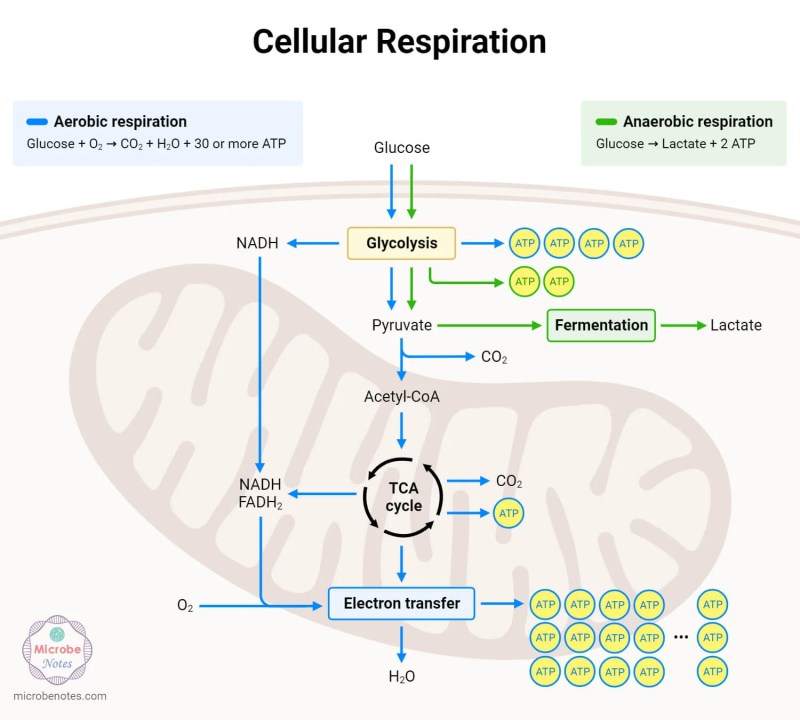
Cellular respiration is a catabolic process that breaks down complex organic molecules, primarily glucose, into simpler compounds, releasing energy in the form of adenosine triphosphate (ATP). This process involves a series of biochemical reactions that occur within the cells of organisms, from bacteria to humans.
The primary goal of cellular respiration is to generate ATP, the universal energy currency of the cell. ATP powers various cellular processes, including muscle contraction, protein synthesis, and active transport. The products of cellular respiration not only provide energy but also contribute to other essential biological functions.
Historical Background and Evolution
The study of cellular respiration began in the early 20th century with the pioneering work of scientists such as Eduard Buchner and Hans Krebs. Buchner's discovery of yeast enzymes that could ferment glucose without living cells laid the foundation for understanding cellular respiration's enzymatic nature.
Table of Contents
- The Complete Overview of Cellular Respiration
- Historical Background and Evolution
- Core Mechanisms: How Cellular Respiration Works
- Key Benefits and Crucial Impact
- Major Advantages
- Comparative Analysis
- Future Trends and Innovations
- Conclusion
- Comprehensive FAQs
- Q: What are the primary products of cellular respiration?
- Q: How does cellular respiration contribute to biosynthesis?
- Q: What is the role of glycolysis in cellular respiration?
- Q: Can cellular respiration occur without oxygen?
- Q: How is ATP produced during cellular respiration?
Hans Krebs, in the 1930s, identified the series of reactions now known as the citric acid cycle or Krebs cycle, a central component of cellular respiration. This cycle is responsible for generating key intermediates and reducing power in the form of NADH and FADH2, which are essential for ATP production. Krebs' work provided a crucial link between carbohydrate metabolism and energy release.
Core Mechanisms: How Cellular Respiration Works
Cellular respiration occurs in the mitochondria of eukaryotic cells and involves four main stages: glycolysis, the transition or acetyl-CoA formation, the citric acid cycle, and oxidative phosphorylation. Each stage contributes to the overall production of ATP and the other products of cellular respiration.
Glycolysis, which takes place in the cytoplasm, splits a molecule of glucose into two molecules of pyruvate, generating a small amount of ATP and NADH. The transition phase converts pyruvate into acetyl-CoA, which enters the citric acid cycle in the mitochondrial matrix. This cycle generates CO2, NADH, and FADH2, which are then used in oxidative phosphorylation to produce the majority of ATP.
Key Benefits and Crucial Impact
Cellular respiration is essential for maintaining life as we know it. The process provides the energy required for cellular activities and sustains the metabolic processes necessary for growth, development, and reproduction. The products of cellular respiration, particularly ATP, are the driving force behind virtually all cellular functions.
"Cellular respiration is the engine of life, converting the chemical energy stored in molecules into a usable form for the cell."
Major Advantages
- Energy Production: The primary advantage of cellular respiration is the production of ATP, which powers cellular processes and maintains cellular homeostasis.
- Carbon Dioxide Release: Cellular respiration releases CO2 as a byproduct, which is essential for regulating the pH of the cell and the organism.
- Metabolic Regulation: The process helps regulate cellular metabolism by controlling the availability of energy and metabolic intermediates.
- Biosynthetic Precursors: Some of the products of cellular respiration, such as NADH and FADH2, serve as electron donors for biosynthetic reactions, supporting the synthesis of new molecules.
- Evolutionary Significance: Cellular respiration's ability to efficiently extract energy from organic molecules has been a driving force in the evolution of complex life forms.

Comparative Analysis
| Stage | Location | Substrates | Products | ATP Yield |
|---|---|---|---|---|
| Glycolysis | Cytoplasm | Glucose | Pyruvate, NADH, ATP | 2 ATP |
| Transition | Mitochondrial Membrane | Pyruvate | Acetyl-CoA, CO2 | No ATP |
| Citric Acid Cycle | Mitochondrial Matrix | Acetyl-CoA | CO2, NADH, FADH2 | 1 ATP (directly), plus indirect yield in oxidative phosphorylation |
| Oxidative Phosphorylation | Inner Mitochondrial Membrane | NADH, FADH2 | ATP, H2O | 32-34 ATP |
Future Trends and Innovations
The study of cellular respiration continues to evolve, with emerging trends focusing on understanding the process in the context of human health and disease. Researchers are exploring how dysfunctions in cellular respiration contribute to conditions such as cancer, neurodegenerative disorders, and metabolic syndromes.
Advancements in technologies like metabolomics and systems biology are providing new insights into the complex regulatory networks that govern cellular respiration. These approaches are helping to identify novel therapeutic targets for treating metabolic disorders and improving energy metabolism.

Conclusion
The products of cellular respiration are the building blocks of life, providing the energy and molecular intermediates necessary for cellular functions. From ATP to carbon dioxide, each product plays a crucial role in maintaining cellular homeostasis and supporting the complex processes that define living organisms.
As our understanding of cellular respiration deepens, we uncover new avenues for addressing health challenges and optimizing energy production in various biological systems. This fundamental process remains a cornerstone of biological research, inspiring innovations that could shape the future of medicine and biotechnology.
Comprehensive FAQs
Q: What are the primary products of cellular respiration?
A: The primary products are ATP (adenosine triphosphate), the energy currency of the cell, and carbon dioxide (CO2), a byproduct released during the process.
Q: How does cellular respiration contribute to biosynthesis?
A: Cellular respiration generates NADH and FADH2, which serve as electron donors for biosynthetic reactions, facilitating the synthesis of new molecules.
Q: What is the role of glycolysis in cellular respiration?
A: Glycolysis is the initial stage, breaking down glucose into pyruvate and producing a small amount of ATP and NADH.
Q: Can cellular respiration occur without oxygen?
A: While oxygen is required for the most efficient form of cellular respiration (aerobic respiration), some organisms can perform anaerobic respiration, which does not require oxygen but yields less ATP.
Q: How is ATP produced during cellular respiration?
A: ATP is produced primarily during oxidative phosphorylation, where the electron transport chain uses the reducing power of NADH and FADH2 to generate a proton gradient, driving ATP synthase to synthesize ATP.
Leave a Comment
Comments are moderated before appearing. The data you submit is processed according to the Privacy Policy of stanford.edu.