Unveiling the Products in Cellular Respiration: A Comprehensive Analysis
Cellular respiration is a fundamental biological process that sustains life by converting chemical energy stored in molecules into a usable form for cells. This intricate process involves the breakdown of organic compounds, primarily glucose, to produce ATP (adenosine triphosphate), the energy currency of the cell. The products in cellular respiration are not just ATP, but also a myriad of other molecules that play crucial roles in maintaining cellular homeostasis and driving various physiological processes.
Understanding the products of cellular respiration is essential for grasping how organisms derive energy from food and utilize it for growth, development, and response to the environment. This knowledge has profound implications in fields ranging from biochemistry and physiology to medicine and agriculture. In this article, we will delve into the complete overview of cellular respiration, its historical background, core mechanisms, key benefits, comparative analysis, future trends, and conclude with a comprehensive FAQ section.
Whether you are a student, a researcher, or simply curious about the inner workings of life, this exploration into the products in cellular respiration will provide you with a comprehensive and insightful understanding of this vital biological process.
The Complete Overview of Products in Cellular Respiration
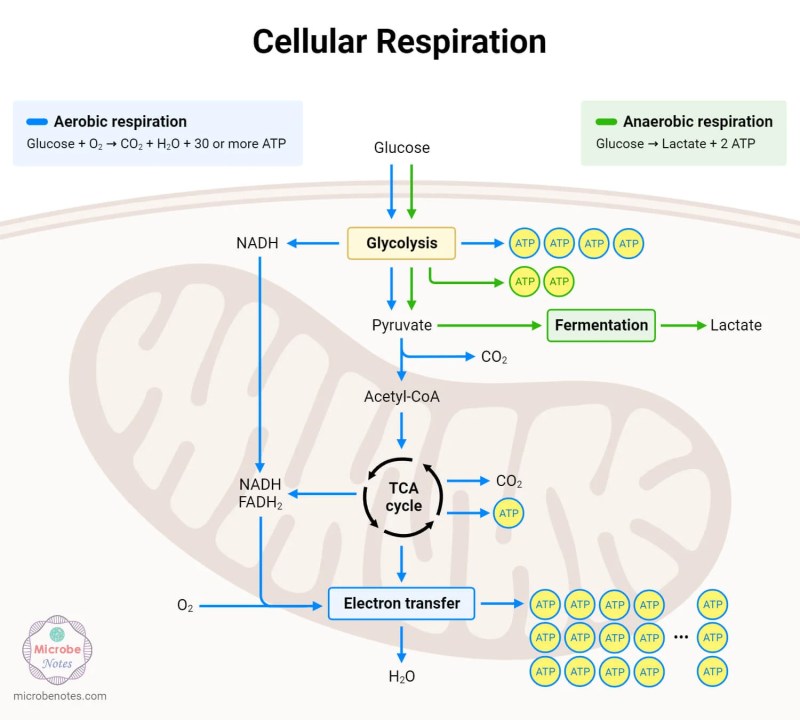
Cellular respiration is a complex, multi-step process that occurs in the cells of organisms to convert biochemical energy from nutrients into ATP. This process can be divided into three main stages: glycolysis, the citric acid cycle (or Krebs cycle), and oxidative phosphorylation (or the electron transport chain). Each stage produces a unique set of products, which collectively contribute to the overall energy yield and cellular functions.
The primary product of cellular respiration is ATP, which is synthesized from ADP (adenosine diphosphate) and inorganic phosphate (Pi) during the phosphorylation process. ATP serves as the primary energy source for various cellular activities, including muscle contraction, nerve impulse transmission, and biosynthetic reactions. However, ATP is not the only crucial product; other molecules, such as NADH, FADH2, and various metabolic intermediates, also play significant roles in cellular respiration and overall metabolism.
Historical Background and Evolution
The study of cellular respiration began in the late 19th and early 20th centuries with the pioneering work of scientists such as Eduard Buchner, Arthur Harden, and Hans von Euler-Chelpin. Their research laid the foundation for understanding the fermentation process and the role of enzymes in energy conversion. The term "cellular respiration" was coined to describe the process by which cells consume oxygen and produce carbon dioxide, mirroring the respiratory exchange observed in whole organisms.
Table of Contents
- The Complete Overview of Products in Cellular Respiration
- Historical Background and Evolution
- Core Mechanisms: How It Works
- Key Benefits and Crucial Impact
- Major Advantages
- Comparative Analysis
- Future Trends and Innovations
- Conclusion
- Comprehensive FAQs
- Q: What are the primary products of cellular respiration?
- Q: How many ATP molecules are produced in cellular respiration from one glucose molecule?
- Q: What is the role of NADH and FADH 2 in cellular respiration?
- Q: Can cellular respiration occur without oxygen?
- Q: How does cellular respiration contribute to the evolution of life?
A significant milestone was achieved in the 1930s when Otto Warburg and his colleagues discovered the central role of ATP in energy transfer and metabolism. This discovery led to a deeper understanding of how cells harness energy from nutrients and sparked further investigations into the biochemical pathways involved in cellular respiration. The detailed elucidation of the citric acid cycle and oxidative phosphorylation in the 1950s and 1960s solidified our modern understanding of this vital process.
Core Mechanisms: How It Works
Cellular respiration occurs in the cytoplasm and mitochondria of eukaryotic cells and involves a series of biochemical reactions. Glycolysis, the initial stage, takes place in the cytoplasm and converts one molecule of glucose into two molecules of pyruvate, generating a small amount of ATP and high-energy electrons carried by NADH. The pyruvate molecules then enter the mitochondria, where they are converted into acetyl-CoA, which fuels the next stage: the citric acid cycle.
In the citric acid cycle, acetyl-CoA combines with oxaloacetate to form citrate, initiating a cycle of reactions that generates significant amounts of NADH and FADH2, as well as ATP. These high-energy electron carriers are then utilized in the final stage, oxidative phosphorylation, which occurs in the inner mitochondrial membrane. Here, a proton gradient is established, driving the synthesis of ATP through the process of chemiosmosis.
Key Benefits and Crucial Impact
The products of cellular respiration are essential for maintaining life and driving various physiological processes. ATP, the primary energy currency of the cell, powers numerous cellular activities, from active transport and biosynthesis to muscle contraction and nerve signaling. The high-energy electrons carried by NADH and FADH2 are crucial for the electron transport chain, contributing to the proton gradient that drives ATP synthase and thus ATP production.
"Cellular respiration is the engine that drives life. The products of this process, particularly ATP, are the fuel for virtually every cellular activity." - Dr. Robert A. Weinberg, Biological Researcher
Major Advantages
- Efficient Energy Production: Cellular respiration enables organisms to extract and utilize energy from complex organic molecules, ensuring a steady supply of ATP for cellular processes.
- Metabolic Regulation: The products of cellular respiration, such as NADH and FADH2, play crucial roles in regulating metabolic pathways, ensuring the proper balance of energy and biomolecules within the cell.
- Adaptability: Cellular respiration can adapt to different environmental conditions and nutrient availabilities, allowing organisms to thrive in diverse ecosystems.
- Evolutionary Significance: The development of cellular respiration was a pivotal event in the evolution of life, enabling the transition from anaerobic to aerobic metabolism and contributing to the complexity and diversity of modern organisms.
- Medical and Agricultural Applications: Understanding cellular respiration has led to significant advancements in medicine and agriculture, including the development of treatments for metabolic disorders and strategies for improving crop yields and livestock health.

Comparative Analysis
| Stage | Location | Substrates | Products | Net ATP Yield |
|---|---|---|---|---|
| Glycolysis | Cytoplasm | Glucose | 2 Pyruvate, 2 NADH, 2 ATP | 2 ATP |
| Citric Acid Cycle | Mitochondrial Matrix | Acetyl-CoA, NADH, FAD | 2 ATP, 6 NADH, 2 FADH2, CO2 | 2 ATP |
| Oxidative Phosphorylation | Inner Mitochondrial Membrane | NADH, FADH2 | 34-36 ATP | 34-36 ATP |
| Total | 36-38 ATP |
Future Trends and Innovations
The study of cellular respiration continues to evolve, driven by advancements in technology and a deeper understanding of biological systems. Emerging trends include the integration of systems biology approaches to model and simulate cellular respiration, as well as the exploration of metabolic engineering techniques to optimize energy production in microorganisms for biofuel generation.
Additionally, research into the role of cellular respiration in aging and age-related diseases is gaining momentum. Understanding how mitochondrial function and the products of cellular respiration change over time may lead to novel therapeutic strategies for mitigating the effects of aging and treating metabolic disorders. The development of advanced imaging techniques and single-cell analysis methods will further enhance our ability to study cellular respiration in real-time and in various physiological contexts.

Conclusion
The products in cellular respiration are the cornerstone of life, providing the energy and metabolic intermediates necessary for cellular functions and overall organismal survival. From the pioneering discoveries of early biochemists to the cutting-edge research of today, our understanding of this vital process has grown exponentially. As we continue to explore the intricacies of cellular respiration, new insights and applications are sure to emerge, shaping our understanding of biology and driving innovations in medicine, agriculture, and biotechnology.
Whether through the development of novel therapies, the optimization of bioenergy production, or the fundamental advancement of scientific knowledge, the products of cellular respiration will undoubtedly remain a focal point in biological research and its applications for years to come.
Comprehensive FAQs
Q: What are the primary products of cellular respiration?
A: The primary product is ATP (adenosine triphosphate), the energy currency of the cell. Other crucial products include NADH, FADH2, and various metabolic intermediates.
Q: How many ATP molecules are produced in cellular respiration from one glucose molecule?
A: Approximately 36-38 ATP molecules are produced from one glucose molecule through the combined stages of glycolysis, the citric acid cycle, and oxidative phosphorylation.
Q: What is the role of NADH and FADH2 in cellular respiration?
A: NADH and FADH2 are high-energy electron carriers. They transport electrons from glycolysis and the citric acid cycle to the electron transport chain, where they contribute to the proton gradient that drives ATP synthesis.
Q: Can cellular respiration occur without oxygen?
A: In the absence of oxygen, cells can perform anaerobic respiration, which includes glycolysis and some forms of fermentation. However, aerobic respiration (with oxygen) is much more efficient and produces significantly more ATP.
Q: How does cellular respiration contribute to the evolution of life?
A: The development of cellular respiration, particularly the transition from anaerobic to aerobic metabolism, was a pivotal event in the evolution of life. It enabled the extraction of more energy from nutrients, facilitating the evolution of complex organisms and the diversity of life on Earth.
Leave a Comment
Comments are moderated before appearing. The data you submit is processed according to the Privacy Policy of stanford.edu.