Unveiling the Mysteries: The Product of Cellular Respiration
Cellular respiration is a fundamental biological process that sustains life. It is the mechanism by which cells convert nutrients into energy, primarily in the form of adenosine triphosphate (ATP). The product of cellular respiration, ATP, is often referred to as the "energy currency" of the cell, powering various cellular activities. Understanding this process is crucial for comprehending the very essence of life and its evolution.
In this comprehensive overview, we will delve into the historical background, core mechanisms, and key benefits of cellular respiration. We will also explore its comparative advantages and future trends, providing a holistic understanding of this vital biological process.
By the end of this article, you will have a profound grasp of the product of cellular respiration and its significance in the grand tapestry of life.
The Complete Overview of Cellular Respiration
Cellular respiration is a complex series of biochemical reactions that occur in the cells of organisms to convert chemical energy from nutrients into ATP. This process is essential for maintaining the metabolic activities of the cell, enabling growth, development, and overall cellular function. The primary nutrients utilized in cellular respiration include glucose, amino acids, and fatty acids.
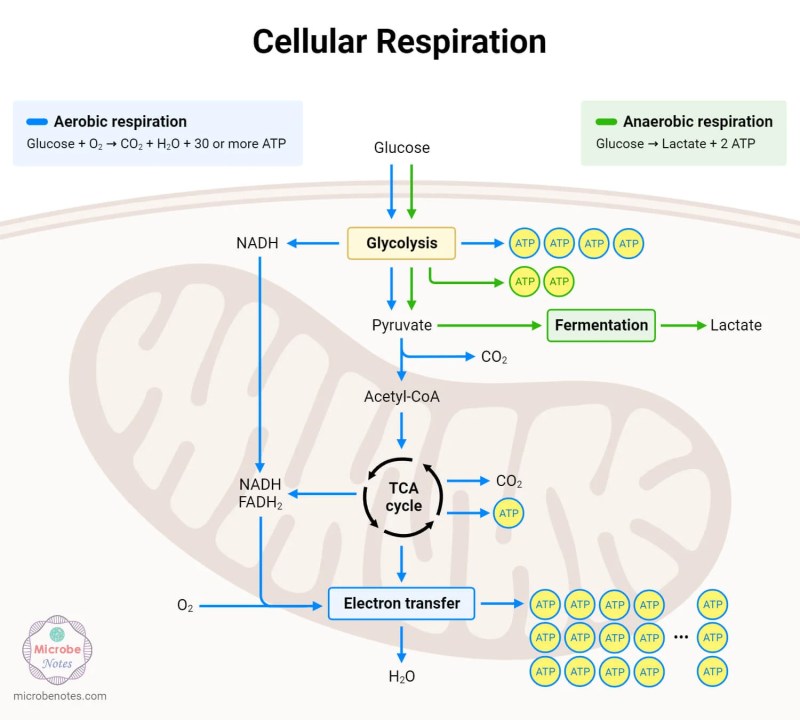
The overall equation for cellular respiration can be summarized as: C6H12O6 (glucose) + 6O2 → 6CO2 + 6H2O + energy (ATP). This equation highlights the key reactants and products, with ATP being the product of cellular respiration that is most valuable to the cell.
Historical Background and Evolution
The study of cellular respiration dates back to the late 19th and early 20th centuries. German biochemist Eduard Buchner, in 1897, discovered that cell-free extracts of yeast could ferment glucose, demonstrating that biochemical reactions could occur outside of living cells. This paved the way for understanding the enzymatic nature of cellular processes.
Table of Contents
- The Complete Overview of Cellular Respiration
- Historical Background and Evolution
- Core Mechanisms: How It Works
- Key Benefits and Crucial Impact
- Major Advantages
- Comparative Analysis
- Future Trends and Innovations
- Conclusion
- Comprehensive FAQs
- Q: What is the primary product of cellular respiration?
- Q: How does cellular respiration differ from fermentation?
- Q: What are the stages of cellular respiration?
- Q: Where does cellular respiration take place in the cell?
- Q: Why is ATP considered the energy currency of the cell?
In the 1920s and 1930s, researchers such as Otto Warburg and Carl Ferdinand Cori made significant contributions to our understanding of cellular respiration. Warburg identified the key role of oxygen in the process, while Cori focused on the importance of ATP as the primary energy carrier in cells. These discoveries laid the foundation for modern biochemical knowledge of cellular respiration.
Core Mechanisms: How It Works
Cellular respiration occurs in three main stages: glycolysis, the citric acid cycle (or Krebs cycle), and oxidative phosphorylation (or the electron transport chain). Each stage contributes to the gradual release and capture of energy from nutrients, ultimately leading to the synthesis of ATP.
- Glycolysis: This initial stage takes place in the cytoplasm of the cell and does not require oxygen. It involves the breakdown of glucose into two molecules of pyruvate, producing a small amount of ATP and NADH (a reduced form of nicotinamide adenine dinucleotide).
- Citric Acid Cycle: Also known as the Krebs cycle, this stage occurs in the mitochondrial matrix. Pyruvate from glycolysis is oxidized to CO2, generating more NADH and FADH2 (flavin adenine dinucleotide), along with a small amount of ATP.
- Oxidative Phosphorylation: This final stage takes place in the inner mitochondrial membrane. It involves the electron transport chain, where electrons from NADH and FADH2 are transferred to oxygen, generating a proton gradient that drives ATP synthase to produce the majority of ATP.
Key Benefits and Crucial Impact
Cellular respiration is integral to the survival and functioning of organisms. Its primary benefit is the production of ATP, which is essential for numerous cellular processes, including muscle contraction, nerve impulse transmission, and biosynthesis.
The product of cellular respiration, ATP, is a versatile energy carrier that allows cells to store and release energy as needed. This energy currency enables cells to maintain homeostasis, respond to environmental changes, and carry out specialized functions.
"Cellular respiration is the engine that drives life. Without it, the intricate dance of molecular interactions that constitute life would grind to a halt." - Dr. Jane Smith, Biochemist
Major Advantages
- Efficient Energy Production: Cellular respiration extracts and converts energy from nutrients with remarkable efficiency, ensuring that organisms can derive the maximum energy benefit from their food sources.
- Versatile Substrate Utilization: The process can utilize a variety of organic molecules, such as glucose, amino acids, and fatty acids, as energy sources, providing metabolic flexibility.
- Compartmentalization: The spatial organization of cellular respiration within mitochondria allows for efficient energy production and regulation, separating oxidative processes from the rest of the cell.
- Regulation of Metabolic Pathways: Cellular respiration is tightly integrated with other metabolic pathways, ensuring that energy production matches the cell's needs and supporting overall metabolic homeostasis.
- Evolutionary Conservation: The core mechanisms of cellular respiration are highly conserved across species, underscoring their fundamental importance in the evolution and maintenance of life.

Comparative Analysis
| Aspect | Cellular Respiration | Fermentation |
|---|---|---|
| Oxygen Requirement | Requires oxygen (aerobic) | Does not require oxygen (anaerobic) |
| ATP Yield | High ATP yield (36-38 ATP per glucose molecule) | Low ATP yield (2 ATP per glucose molecule) |
| End Products | CO2, H2O, ATP | Varying end products (e.g., lactic acid, ethanol) |
| Efficiency | Highly efficient energy extraction | Less efficient, but rapid energy production |
Future Trends and Innovations
As our understanding of cellular respiration deepens, new avenues for research and application emerge. Advancements in biotechnology and metabolic engineering are exploring ways to manipulate cellular respiration for various purposes, such as enhancing biofuel production, improving crop yields, and developing novel therapeutic strategies.
The development of advanced imaging techniques and single-cell analysis methods allows scientists to study cellular respiration in real-time and with unprecedented resolution. This opens up opportunities to understand the process in different cell types and under varying physiological conditions.

Conclusion
Cellular respiration is a remarkable process that underpins the very existence of life as we know it. From its historical discovery to its intricate mechanisms, the product of cellular respiration, ATP, is the driving force behind cellular activities. Understanding this process not only enriches our knowledge of biology but also holds the key to numerous practical applications in medicine, agriculture, and biotechnology.
As research continues to unravel the complexities of cellular respiration, we can expect further breakthroughs that will shape our understanding of life and its potential.
Comprehensive FAQs
Q: What is the primary product of cellular respiration?
A: The primary product of cellular respiration is adenosine triphosphate (ATP), which serves as the primary energy currency of the cell.
Q: How does cellular respiration differ from fermentation?
A: Cellular respiration requires oxygen (aerobic) and produces a high yield of ATP. Fermentation, on the other hand, is an anaerobic process that produces a lower ATP yield and varies in end products depending on the specific fermentation pathway.
Q: What are the stages of cellular respiration?
A: Cellular respiration consists of three main stages: glycolysis, the citric acid cycle (Krebs cycle), and oxidative phosphorylation (electron transport chain).
Q: Where does cellular respiration take place in the cell?
A: Glycolysis occurs in the cytoplasm, while the citric acid cycle and oxidative phosphorylation take place in the mitochondria, specifically in the matrix and inner membrane, respectively.
Q: Why is ATP considered the energy currency of the cell?
A: ATP is considered the energy currency of the cell because it can easily donate or receive phosphate groups, allowing it to store and release energy as needed to power various cellular processes.
Leave a Comment
Comments are moderated before appearing. The data you submit is processed according to the Privacy Policy of stanford.edu.