Unveiling the Mystery: What Are the Products of Cellular Respiration?
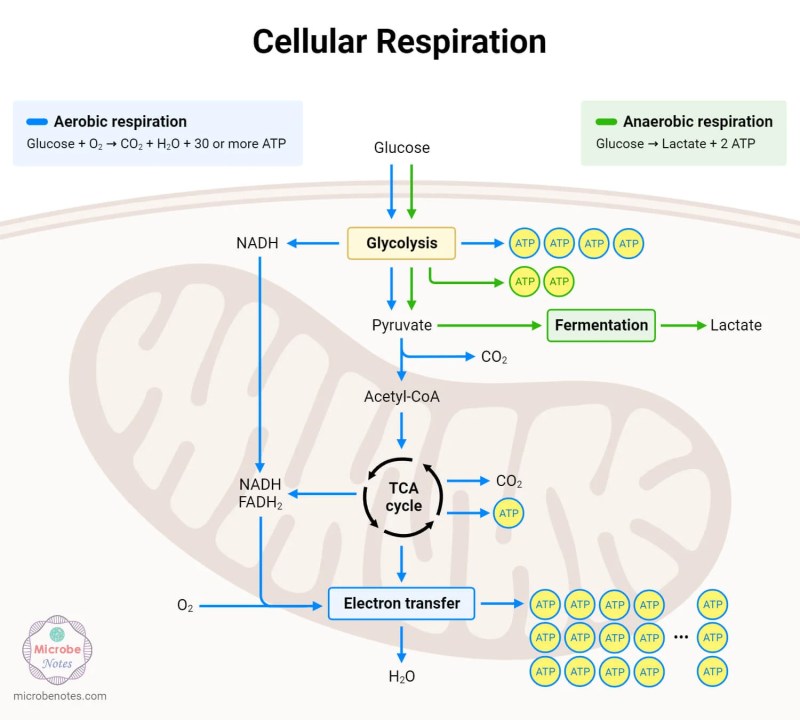
The Complete Overview of What Are the Products of Cellular Respiration
Cellular respiration is a fundamental biological process that occurs in the cells of organisms to convert biochemical energy from nutrients into adenosine triphosphate (ATP), the "currency" of cellular energy. This complex process involves the breakdown of glucose and other organic molecules, ultimately resulting in the production of ATP, carbon dioxide, and water. Understanding what are the products of cellular respiration is crucial for comprehending how living beings derive energy from food.
The significance of cellular respiration lies in its ability to provide the energy required for various cellular processes, including biosynthesis, active transport, and motility. This process is not merely a series of chemical reactions but a finely tuned cellular machinery that has evolved to efficiently harness energy. The products of cellular respiration, particularly ATP, are essential for the maintenance of life and the continuation of biological activities.
Historical Background and Evolution
The concept of cellular respiration has evolved significantly since its inception. Early scientists, such as Antoine Lavoisier, laid the foundation by recognizing the role of oxygen in the burning of substances, which later translated into understanding the oxidative nature of respiration. Over time, the research efforts of numerous biologists and chemists led to the identification of the key players in cellular respiration, including the discovery of ATP by Karl Lohmann and the elucidation of its structure by Alexander Todd.A pivotal moment came with the establishment of the glycolysis pathway by Gustav Embden, Otto Meyerhof, and Jakub Karol Parnas, which clarified how glucose is initially broken down in the cell. Subsequent research expanded our understanding of the Krebs cycle (or citric acid cycle) and the electron transport chain, further detailing the intricate steps involved in cellular respiration. These collective contributions have enabled us to comprehend the comprehensive answer to what are the products of cellular respiration.
Core Mechanisms: How It Works
Cellular respiration can be divided into three primary stages: glycolysis, the Krebs cycle, and the electron transport chain. Each stage contributes to the overall production of ATP, carbon dioxide, and water.1. Glycolysis: This initial stage occurs in the cytoplasm of the cell and does not require oxygen. During glycolysis, one molecule of glucose is broken down into two molecules of pyruvate, yielding a net gain of two ATP molecules and two high-energy electrons in the form of NADH.
2. Krebs Cycle (or Citric Acid Cycle): The pyruvate molecules produced in glycolysis enter the mitochondria, where they are converted into acetyl-CoA, which then undergoes a series of reactions in the Krebs cycle. This cycle generates additional ATP, NADH, and FADH₂, along with carbon dioxide as a byproduct.
3. Electron Transport Chain: The high-energy electrons carried by NADH and FADH₂ are transferred through a series of protein complexes in the inner mitochondrial membrane. This electron transport chain drives the synthesis of a significant amount of ATP through a process called chemiosmosis. Water is also produced as the final product when oxygen accepts the electrons at the end of the chain.
Key Benefits and Crucial Impact
The products of cellular respiration are integral to the survival and functioning of living organisms. ATP serves as the primary energy source for various cellular activities, enabling processes such as muscle contraction, nerve impulse transmission, and biosynthesis. Carbon dioxide and water, while not directly beneficial, are essential byproducts that contribute to other physiological processes and maintain the balance of the biosphere."Cellular respiration is the cornerstone of life, providing the energy necessary for cells to function and evolve."
— Textbook of Biochemistry, 2nd Edition
Major Advantages
- Efficient Energy Production: Cellular respiration allows organisms to extract and utilize energy from complex organic molecules, ensuring a steady supply of ATP for cellular needs.
- Adaptability: The process can occur in the presence or absence of oxygen (aerobic or anaerobic respiration), demonstrating the adaptability of life forms to different environmental conditions.
- Evolutionary Significance: The evolution of cellular respiration paved the way for more complex life forms by enabling higher energy yields, thus facilitating the development of multicellular organisms.
- Homeostatic Maintenance: The byproducts of cellular respiration, such as carbon dioxide and water, contribute to maintaining homeostasis in organisms and the broader ecosystem.
- Integration with Other Pathways: The products of cellular respiration, particularly ATP, are utilized in numerous other biochemical pathways, highlighting the interconnectedness of cellular processes.

Comparative Analysis
| Stage | Location | Products | Oxygen Requirement |
|---|---|---|---|
| Glycolysis | Cytoplasm | 2 ATP, 2 NADH, 2 Pyruvate | Not required |
| Krebs Cycle | Mitochondrial Matrix | 2 ATP, 6 NADH, 2 FADH₂, 4 CO₂ | Required |
| Electron Transport Chain | Inner Mitochondrial Membrane | ~34 ATP, 6 H₂O | Required |
| Total | ~36-38 ATP, 6 H₂O, ~6 CO₂ |
Future Trends and Innovations
The study of cellular respiration continues to evolve, with ongoing research focused on understanding the intricacies of mitochondrial function and its role in various diseases. Advances in biotechnology and genetics are shedding light on how mutations and dysfunctions in respiratory pathways contribute to conditions such as mitochondrial diseases and metabolic disorders.Additionally, the concept of manipulating cellular respiration for bioenergy production and sustainable energy solutions is gaining traction. Scientists are exploring ways to enhance the efficiency of cellular respiration in microorganisms for the generation of biofuels and other valuable compounds. These developments underscore the enduring significance of understanding what are the products of cellular respiration in both fundamental biology and applied sciences.
Table of Contents
- The Complete Overview of What Are the Products of Cellular Respiration
- Historical Background and Evolution
- Core Mechanisms: How It Works
- Key Benefits and Crucial Impact
- Major Advantages
- Comparative Analysis
- Future Trends and Innovations
- Conclusion
- Comprehensive FAQs
- Q: What is the primary product of cellular respiration?
- Q: Are carbon dioxide and water also considered products of cellular respiration?
- Q: How many ATP molecules are produced in cellular respiration?
- Q: Can cellular respiration occur without oxygen?
- Q: Why is understanding the products of cellular respiration important?

Conclusion
The products of cellular respiration—ATP, carbon dioxide, and water—are the result of a complex and highly efficient process that has sustained life on Earth for billions of years. From the initial breaking down of glucose in glycolysis to the final electron transport chain, each stage contributes to the energy production that drives cellular activities. Understanding this process not only illuminates the fundamental workings of life but also offers insights into the potential for future innovations in energy production and disease treatment.Comprehensive FAQs
Q: What is the primary product of cellular respiration?
A: The primary product of cellular respiration is adenosine triphosphate (ATP), which serves as the primary energy currency of the cell.
Q: Are carbon dioxide and water also considered products of cellular respiration?
A: Yes, carbon dioxide (CO₂) and water (H₂O) are essential byproducts of cellular respiration. While they are not the primary energy-carrying products, they are crucial for maintaining the balance of physiological processes and the ecosystem.
Q: How many ATP molecules are produced in cellular respiration?
A: The exact number varies depending on the type of molecule being oxidized and the efficiency of the process, but generally, cellular respiration produces around 36-38 ATP molecules per molecule of glucose.
Q: Can cellular respiration occur without oxygen?
A: Yes, the initial stage of cellular respiration, glycolysis, can occur without oxygen. However, the subsequent stages (Krebs cycle and electron transport chain) require oxygen for the complete oxidation of nutrients and maximum ATP production.
Q: Why is understanding the products of cellular respiration important?
A: Understanding the products of cellular respiration is crucial for comprehending how living organisms derive energy from food, maintain cellular functions, and evolve. It also has implications for medical research, biotechnology, and sustainable energy solutions.
Leave a Comment
Comments are moderated before appearing. The data you submit is processed according to the Privacy Policy of stanford.edu.