Unveiling the Framework of Life: 5 Major Functions of the Skeletal System
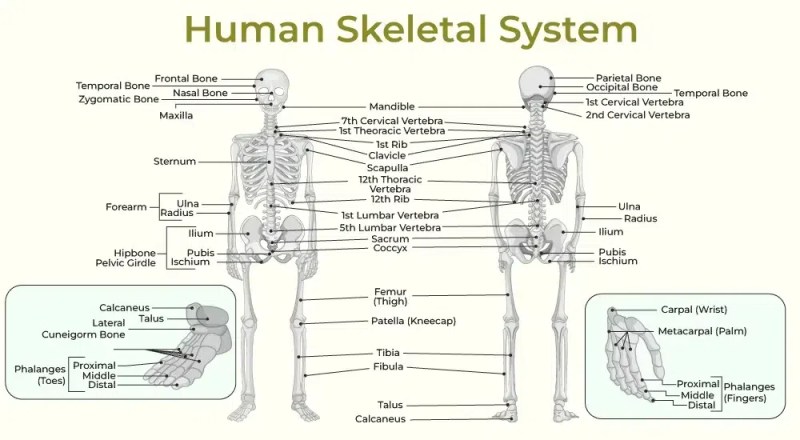
The Complete Overview of the Skeletal System's Functions
The human body, a marvel of intricate design, owes its structure and resilience to the skeletal system. This network of bones, cartilage, and connective tissue serves as the body's foundation, performing vital functions that enable movement, protection, and overall physiological homeostasis. Understanding the skeletal system's multifaceted roles is essential for appreciating its significance in human health and well-being.
Comprising approximately 206 bones in adults, the skeletal system is not merely a static framework but a dynamic, living tissue that adapts and grows throughout life. Its contributions extend beyond structural support, encompassing a wide range of physiological processes. This article delves into the five major functions of the skeletal system, shedding light on its intricate mechanisms and profound impact on human biology.
Historical Background and Evolution
The study of the skeletal system dates back to ancient civilizations, with early anatomists like Galen and Vesalius making significant contributions to our understanding of bone structure and function. Over centuries, our knowledge has evolved from simple observations to detailed anatomical maps and physiological insights. The discovery of DNA and subsequent advancements in genetics have further illuminated the complex interplay between skeletal development and genetic factors.The evolution of the skeletal system in humans reflects our species' transition from quadrupedal to bipedal locomotion. This shift led to adaptations in bone structure, such as the lengthening of the legs and the development of a more robust pelvic girdle, enabling humans to walk and run efficiently on two legs. The study of fossil records and comparative anatomy among related species continues to provide valuable insights into the evolution of the skeletal system.
Core Mechanisms: How the Skeletal System Works
The skeletal system operates through a combination of mechanical and biological processes. At its core is the bone, a rigid organ composed of collagen fibers and minerals like calcium and phosphorus. Bones are formed through a process called ossification, where specialized cells, known as osteoblasts, lay down bone matrix. This matrix is then mineralized, giving bones their strength and rigidity.The skeletal system's functions are facilitated by its interaction with other systems, particularly the muscular system. Muscles attach to bones via tendons, enabling movement when muscles contract and pull on these bony levers. Additionally, the skeletal system houses and protects vital organs, such as the brain, heart, and lungs, through the intricate design of the skull, ribcage, and spinal column.
Key Benefits and Crucial Impact
The skeletal system's contributions to human biology are profound and multifaceted. Beyond the obvious role in providing structural support and facilitating movement, the bones serve as a reservoir for essential minerals, helping to maintain overall mineral homeostasis in the body. Moreover, bone marrow, found within the cavities of long bones, is responsible for producing red and white blood cells, playing a critical role in oxygen transport and immune function."The skeletal system is the body's architectural blueprint, defining our shape and enabling a wide range of movements. Its functions are essential not only for mobility but also for the protection of vital organs and the maintenance of overall physiological balance."
Major Advantages of the Skeletal System
- Structural Support: Bones provide the body with a strong, yet lightweight, framework, enabling us to stand upright and move efficiently.
- Movement and Leverage: The skeletal system, in conjunction with the muscular system, facilitates a wide range of movements through the lever-like action of bones and muscles.
- Protection: Vital organs are shielded from external impacts and potential damage by the strategic placement of bones, such as the skull protecting the brain.
- Mineral Storage: Bones store essential minerals like calcium and phosphorus, releasing them into the bloodstream as needed to maintain proper concentrations.
- Blood Cell Production: Bone marrow is responsible for hematopoiesis, the process of forming blood cells, which is crucial for oxygen transport and immune defense.

Comparative Analysis
| Function | Skeletal System | Other Systems |
|---|---|---|
| Structural Support | Provides rigid framework and leverage for movement | Muscular system: Enables movement through muscle contraction |
| Protection | Protects vital organs with bone structure | Integumentary system: Skin provides a physical barrier against pathogens |
| Mineral Homeostasis | Stores and releases minerals like calcium | Endocrine system: Regulates mineral levels through hormone secretion |
| Blood Cell Production | Bone marrow produces blood cells | Lymphatic system: Plays a role in immune response and fluid balance |
Future Trends and Innovations
Advancements in medical technology and our understanding of the skeletal system continue to open new avenues for research and treatment. Regenerative medicine, for instance, explores the potential of stem cells to repair or replace damaged bone tissue, offering hope for improved fracture healing and the treatment of degenerative bone diseases.Moreover, the development of advanced biomaterials and 3D printing techniques holds promise for creating custom-fit prosthetics and implants, enhancing the quality of life for individuals with severe skeletal injuries or congenital disorders. As our knowledge deepens, the future of skeletal system healthcare looks poised for transformative changes.
Table of Contents
- The Complete Overview of the Skeletal System's Functions
- Historical Background and Evolution
- Core Mechanisms: How the Skeletal System Works
- Key Benefits and Crucial Impact
- Major Advantages of the Skeletal System
- Comparative Analysis
- Future Trends and Innovations
- Conclusion
- Comprehensive FAQs
- Q: What are the primary components of the skeletal system?
- Q: How does the skeletal system contribute to mineral homeostasis in the body?
- Q: What is the role of bone marrow in the skeletal system?
- Q: How does the skeletal system adapt to changes in physical activity?
- Q: What are some common disorders of the skeletal system?

Conclusion
The skeletal system, with its 5 major functions, is a testament to the body's remarkable complexity and adaptability. From providing structural support to housing the marrow that produces our blood cells, bones are far more than inert structures. They are dynamic, living tissues that evolve with us throughout our lives. Understanding these functions not only enriches our appreciation for human biology but also opens doors to innovative medical approaches, ensuring better health and well-being for future generations.Comprehensive FAQs
Q: What are the primary components of the skeletal system?
A: The skeletal system consists of bones, cartilage, and connective tissue. Bones provide rigid support and leverage for movement, while cartilage offers flexibility and shock absorption. Connective tissue, such as tendons and ligaments, connects bones to muscles and other structures.
Q: How does the skeletal system contribute to mineral homeostasis in the body?
A: Bones act as a reservoir for essential minerals, particularly calcium and phosphorus. When blood levels of these minerals are low, bones release them to maintain proper concentrations. This process is regulated by hormones, such as parathyroid hormone and vitamin D.
Q: What is the role of bone marrow in the skeletal system?
A: Bone marrow, found within the cavities of long bones, is responsible for hematopoiesis, the process of forming blood cells. It produces red blood cells, which carry oxygen, and white blood cells, which are crucial for immune function.
Q: How does the skeletal system adapt to changes in physical activity?
A: The skeletal system adapts to physical activity through a process called bone remodeling. This involves the continuous breakdown (resorption) and formation of bone tissue. Weight-bearing exercises, for instance, stimulate bone formation, leading to increased bone density and strength.
Q: What are some common disorders of the skeletal system?
A: Common skeletal disorders include osteoporosis, a condition characterized by low bone mass and increased fracture risk; arthritis, which involves inflammation of the joints; and congenital bone disorders, such as achondroplasia, which affects bone growth and results in dwarfism.
Leave a Comment
Comments are moderated before appearing. The data you submit is processed according to the Privacy Policy of stanford.edu.