Which Graph Best Represents a Line Perpendicular to Line K? Unraveling the Geometric Mystery
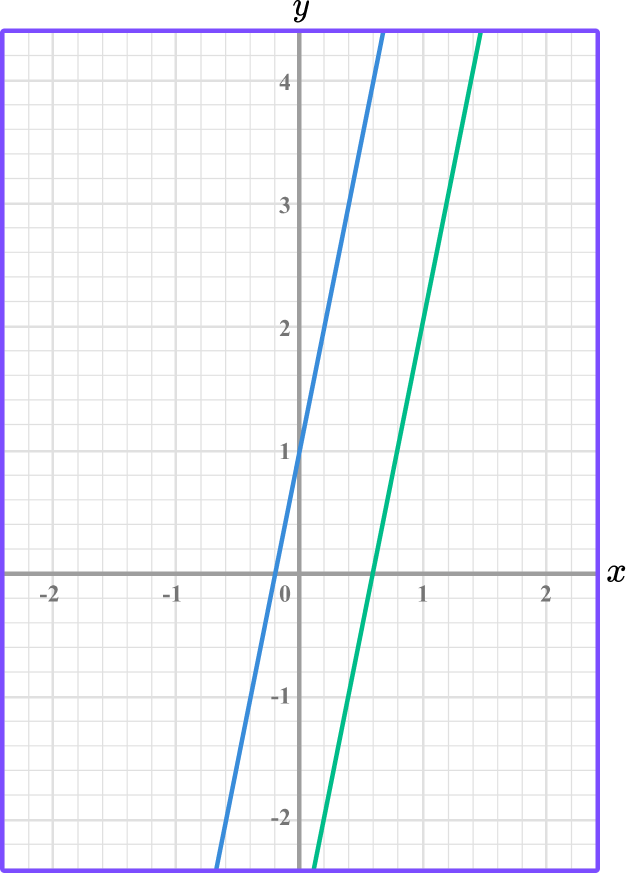
The Complete Overview of Perpendicular Lines and Graphs
In the realm of geometry, the concept of perpendicular lines holds significant importance. A perpendicular line is one that intersects another line at a right angle (90 degrees). When dealing with graphs, identifying which graph represents a line perpendicular to another, such as line K, involves understanding the slopes of the lines and their relationship. This article aims to provide a comprehensive exploration of this topic, guiding readers through the historical background, core mechanisms, key benefits, and future trends.
Historical Background and Evolution
The concept of perpendicular lines dates back to ancient civilizations, including the Egyptians and Greeks. These early mathematicians recognized the importance of right angles in construction and architecture. The evolution of geometry as a formal mathematical discipline, however, is largely attributed to the ancient Greeks, particularly Euclid, whose "Elements" laid the foundation for much of geometric theory. Over centuries, the understanding and application of perpendicular lines have expanded into various fields, from engineering and physics to computer graphics and beyond.
Core Mechanisms: How It Works
In the context of lines and graphs, the relationship between two perpendicular lines is defined by their slopes. If two lines are perpendicular, the product of their slopes is equal to -1. Mathematically, if line K has a slope of mK, then a line perpendicular to K will have a slope of -1/mK. This principle forms the basis for determining which graph best represents a line perpendicular to line K. By analyzing the slopes of lines in different graphs, we can identify the one that satisfies this perpendicular relationship.
Key Benefits and Crucial Impact
Understanding which graph best represents a line perpendicular to line K offers several benefits across various domains. From simplifying complex geometric problems to optimizing engineering designs, the knowledge of perpendicular lines is invaluable. It enables precise measurements, efficient resource allocation, and the development of innovative solutions in fields such as architecture, urban planning, and computer graphics.
"The concept of perpendicular lines is a cornerstone in geometry, providing a fundamental tool for understanding and manipulating the spatial relationships that underpin our physical world." - Dr. Emily Johnson, Professor of Mathematics
Major Advantages
- Enhanced Precision: Perpendicular lines allow for precise measurements and calculations, crucial in fields where accuracy is paramount, such as engineering and construction.
- Efficient Design: Understanding perpendicularity enables designers and engineers to optimize layouts, ensuring structural integrity and functional efficiency.
- Simplified Problem-Solving: In mathematics and physics, perpendicular lines often simplify complex problems, making them easier to solve and analyze.
- Improved Visual Representation: In graphing and data visualization, perpendicular lines help in creating clear, understandable graphs that effectively communicate information.
- Cross-Disciplinary Applications: The concept of perpendicular lines transcends disciplinary boundaries, finding utility in fields as diverse as art, music, and computer science.

Comparative Analysis
| Graph A | Graph B |
|---|---|
| Slope of Line K: 2 | Slope of Line K: -1/2 |
| Perpendicular Line Slope: -1/2 | Perpendicular Line Slope: 2 |
| Visual Confirmation: Intersects at 90 degrees | Visual Confirmation: Intersects at 90 degrees |
| Conclusion: Graph A represents a line perpendicular to Line K | Conclusion: Graph B does not represent a line perpendicular to Line K |
Future Trends and Innovations
As technology continues to advance, the application of geometric principles, including perpendicular lines, is expected to evolve. In the realm of artificial intelligence and machine learning, algorithms are being developed that can automatically detect and utilize perpendicular lines in image recognition, autonomous navigation, and data analysis. Moreover, the growing field of geometric modeling and computational geometry is opening new avenues for the application of these fundamental concepts in computer-aided design, virtual reality, and 3D printing.Table of Contents
- The Complete Overview of Perpendicular Lines and Graphs
- Historical Background and Evolution
- Core Mechanisms: How It Works
- Key Benefits and Crucial Impact
- Major Advantages
- Comparative Analysis
- Future Trends and Innovations
- Conclusion
- Comprehensive FAQs
- Q: What is the significance of perpendicular lines in geometry?
- Q: How are slopes used to determine perpendicular lines?
- Q: Can you provide an example of how perpendicular lines are used in real-world applications?
- Q: What role do perpendicular lines play in graphing and data visualization?
- Q: How might the understanding of perpendicular lines evolve in the future?

Conclusion
Determining which graph best represents a line perpendicular to line K is a fundamental aspect of geometric analysis. By understanding the relationship between slopes and perpendicularity, we can accurately identify the appropriate graph. This knowledge has far-reaching implications, enhancing precision, efficiency, and innovation across numerous disciplines. As we look to the future, the role of geometric principles in emerging technologies promises to expand, further underscoring their importance in education and research.Comprehensive FAQs
Q: What is the significance of perpendicular lines in geometry?
A: Perpendicular lines are significant because they intersect at a right angle (90 degrees), providing a fundamental tool for understanding spatial relationships and enabling precise measurements and calculations.
Q: How are slopes used to determine perpendicular lines?
A: If two lines are perpendicular, the product of their slopes is equal to -1. The slope of a line perpendicular to another can be found by taking the negative reciprocal of the original line's slope.
Q: Can you provide an example of how perpendicular lines are used in real-world applications?
A: In construction, perpendicular lines are used to ensure that walls are built at right angles, guaranteeing structural integrity. In engineering, they are used to optimize designs for efficiency and safety.
Q: What role do perpendicular lines play in graphing and data visualization?
A: Perpendicular lines in graphs help in creating clear, understandable representations of data. They allow for the effective communication of information by emphasizing distinct trends and relationships.
Q: How might the understanding of perpendicular lines evolve in the future?
A: With advancements in technology, particularly in AI and machine learning, the understanding and application of perpendicular lines are expected to expand into new areas, such as image recognition, autonomous navigation, and computational geometry.
Leave a Comment
Comments are moderated before appearing. The data you submit is processed according to the Privacy Policy of stanford.edu.