Understanding Intersections: When Lines Cross at Point E
In the realm of geometry, the intersection of lines is a fundamental concept that forms the basis for more complex mathematical explorations. When two lines, AB and CD, cross each other in a plane, they create a unique point of intersection, denoted as E. This seemingly simple occurrence has profound implications in various fields, from architecture and engineering to physics and art. In this article, we delve into the intricacies of this concept, tracing its historical significance, understanding its core mechanisms, and exploring its wide-ranging applications.
The intersection at point E is not merely a geometric curiosity; it represents a fundamental principle in understanding space, shape, and form. Whether you're designing a building, plotting a route, or unraveling the mysteries of the universe, the intersection of lines plays a crucial role. By examining how AB and CD intersect at E, we open a window into the precise and elegant language of mathematics, revealing its power to describe and predict the world around us.
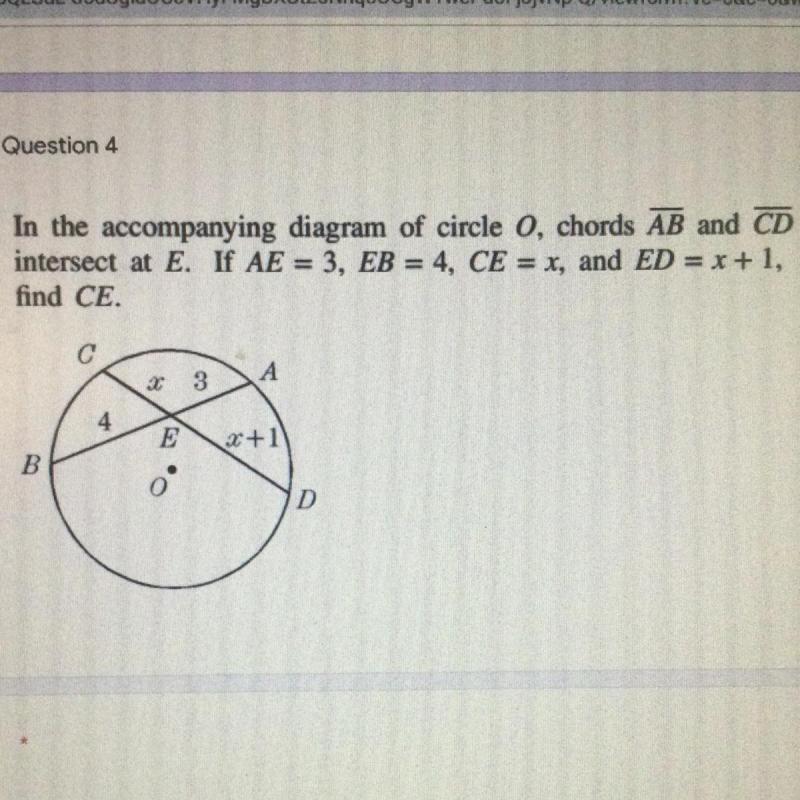
In the accompanying diagram AB and CD intersect at E, creating a visual representation of this fundamental concept. This intersection point serves as a cornerstone for numerous geometric theorems and practical applications. As we navigate through this exploration, we will uncover the historical roots of this idea, dissect its underlying mechanisms, and illuminate its enduring significance in the modern world.
The Complete Overview of Intersections at Point E
The intersection of lines AB and CD at point E is a geometric event with far-reaching consequences. This seemingly simple occurrence encapsulates the essence of plane geometry, where two-dimensional shapes and their properties are studied. At its core, the intersection at E represents the point where the two lines meet, creating a unique coordinate that holds immense value for various disciplines.
In practical terms, understanding intersections is crucial for anyone working with spatial relationships. Architects, engineers, cartographers, and even artists rely on this concept to ensure accuracy and precision in their work. Whether it's designing a building's layout, mapping a city's infrastructure, or creating a visually appealing composition, the intersection of lines plays a pivotal role in achieving the desired outcomes.
Historical Background and Evolution
The study of intersections and geometric principles has a rich history dating back to ancient civilizations. The ancient Egyptians, for instance, utilized geometric concepts in their monumental architecture, ensuring precise alignments and proportions. However, it was the ancient Greeks who laid the formal foundations of geometry, transforming it into a rigorous mathematical discipline.
Table of Contents
- The Complete Overview of Intersections at Point E
- Historical Background and Evolution
- Core Mechanisms: How Intersections Work
- Key Benefits and Crucial Impact
- Major Advantages
- Comparative Analysis
- Future Trends and Innovations
- Conclusion
- Comprehensive FAQs
- Q: What does it mean when two lines intersect at a point?
- Q: How is the intersection point E calculated in a Cartesian coordinate system?
- Q: What are some practical applications of understanding intersections in everyday life?
- Q: How do intersections differ from other geometric concepts, such as parallel lines or perpendicular lines?
- Q: Can intersections be used in three-dimensional space, or is it limited to 2D planes?
One of the most influential Greek mathematicians, Euclid, compiled his geometric knowledge into a treatise titled Elements, which became the standard textbook for geometry for over 2,000 years. In this work, Euclid systematically presented geometric theorems and proofs, including those related to intersections. He defined intersection points as the places where lines, rays, or segments meet, and he developed numerous propositions and proofs based on these definitions.
Over centuries, geometric principles evolved and expanded, incorporating new ideas and applications. The Renaissance period saw a revival of interest in geometry, with artists and architects like Leonardo da Vinci and Filippo Brunelleschi applying geometric principles in their groundbreaking works. The development of coordinate geometry in the 17th century by René Descartes further revolutionized the field, providing a powerful tool for representing and analyzing intersections in a Cartesian plane.
Core Mechanisms: How Intersections Work
At its most basic level, an intersection occurs when two or more geometric objects meet or cross each other. In the case of lines AB and CD, their intersection at point E signifies that these lines share a common point. This point can be precisely located by solving the system of equations representing the two lines.
In a Cartesian coordinate system, where each point is represented by its x and y coordinates, the intersection point E can be found by setting the equations of the two lines equal to each other and solving for x and y. This process yields a single solution, indicating the coordinates of the intersection point. This method is fundamental in algebraic geometry and forms the basis for more advanced techniques in solving geometric problems.
Key Benefits and Crucial Impact
The concept of lines intersecting at point E has profound implications across various domains. Its significance lies in the precision and accuracy it brings to spatial representation and problem-solving. Here are some key benefits and impacts:
"Geometry is the language of the universe; it is the foundation of all matter and energy, and its principles govern the very fabric of reality."
Major Advantages
- Precision in Design: Architects and engineers rely on intersections to ensure accurate alignments and proportions in their designs. Whether it's the placement of columns in a building or the alignment of roads in an urban plan, intersections provide crucial reference points.
- Navigation and Mapping: In cartography and navigation, intersections help mapmakers create accurate representations of the Earth's surface. By plotting the intersections of meridians and parallels, cartographers can construct precise maps, aiding in navigation and territorial demarcation.
- Artistic Composition: Artists use intersections to create visually appealing compositions. Whether in painting, sculpture, or graphic design, the strategic placement of lines and shapes, guided by intersections, can evoke balance, harmony, and aesthetic pleasure.
- Mathematical Problem-Solving: In pure mathematics, intersections are essential for solving complex equations and proving theorems. They provide a concrete framework for analyzing geometric relationships and deriving new insights.
- Scientific Research: Scientists in various fields, such as physics and astronomy, utilize intersections to model and understand natural phenomena. For instance, in astronomy, the intersection of celestial bodies' orbits helps predict eclipses and other astronomical events.
Comparative Analysis
| Category | Intersections at Point E | Other Intersection Types |
|---|---|---|
| Definition | Two lines AB and CD meet at a single point E | Can involve more than two lines, rays, or segments; can create multiple intersection points |
| Applications | Architecture, engineering, art, navigation, mathematics | Computer graphics, robotics, 3D modeling, complex geometric analysis |
| Mathematical Complexity | Relatively simple; involves solving a system of two equations | Can be more complex, requiring advanced algebraic or geometric techniques |
| Visual Representation | Clear and intuitive; easily depicted in 2D diagrams | May require 3D models or complex visualizations for understanding |
Future Trends and Innovations
As technology advances and new fields emerge, the concept of intersections continues to evolve and adapt. In the digital age, computer graphics and 3D modeling have opened up new avenues for exploring intersections in complex geometric environments. Advanced algorithms can now calculate and render intersections in real-time, enabling innovative applications in virtual reality, augmented reality, and computer-aided design.
Moreover, the integration of artificial intelligence and machine learning is revolutionizing how we analyze and interpret intersections. These technologies can automatically detect and classify intersections in images and videos, facilitating tasks such as autonomous navigation, object recognition, and medical imaging analysis. By learning from vast datasets, AI models can identify patterns and make predictions based on intersectional data, opening up new possibilities in various industries.

Conclusion
In the accompanying diagram AB and CD intersect at E, illustrating a fundamental concept with profound implications. From ancient civilizations to modern times, the understanding of intersections has shaped our world, influencing architecture, art, science, and technology. By grasping the historical context, core mechanisms, and wide-ranging applications of this concept, we gain a deeper appreciation for the power of geometry and its enduring relevance in our lives.
As we look to the future, the potential for intersections to drive innovation and discovery remains boundless. With advancements in computing, AI, and other technologies, we can expect even more sophisticated applications of this timeless geometric principle. Whether in the design of futuristic cities, the exploration of the cosmos, or the creation of immersive digital experiences, the intersection of lines at point E will continue to inspire and guide our quest for knowledge and progress.
Comprehensive FAQs
Q: What does it mean when two lines intersect at a point?
A: When two lines intersect at a point, it signifies that they share a common coordinate. This point of intersection is the solution to the system of equations representing the two lines.
Q: How is the intersection point E calculated in a Cartesian coordinate system?
A: In a Cartesian coordinate system, the intersection point E is calculated by setting the equations of the two lines equal to each other and solving for the x and y coordinates that satisfy both equations simultaneously.
Q: What are some practical applications of understanding intersections in everyday life?
A: Understanding intersections is crucial in various fields. Architects use it for precise building designs, engineers for infrastructure planning, cartographers for accurate mapping, and artists for aesthetic compositions. It also plays a role in navigation, scientific research, and computer graphics.
Q: How do intersections differ from other geometric concepts, such as parallel lines or perpendicular lines?
A: Intersections specifically refer to the points where lines, rays, or segments meet. Parallel lines, by definition, never intersect, while perpendicular lines intersect at right angles. Intersections provide a framework for analyzing these relationships and are fundamental in geometric problem-solving.
Q: Can intersections be used in three-dimensional space, or is it limited to 2D planes?
A: While the concept of intersections is often illustrated in 2D planes, it can be extended to three-dimensional space. In 3D geometry, intersections can involve planes, lines, and points, and they play a crucial role in fields like computer graphics, robotics, and engineering design.
Leave a Comment
Comments are moderated before appearing. The data you submit is processed according to the Privacy Policy of stanford.edu.