Unraveling the Midpoint Mystery: What is the Midpoint of the Segment Shown Below Apex?
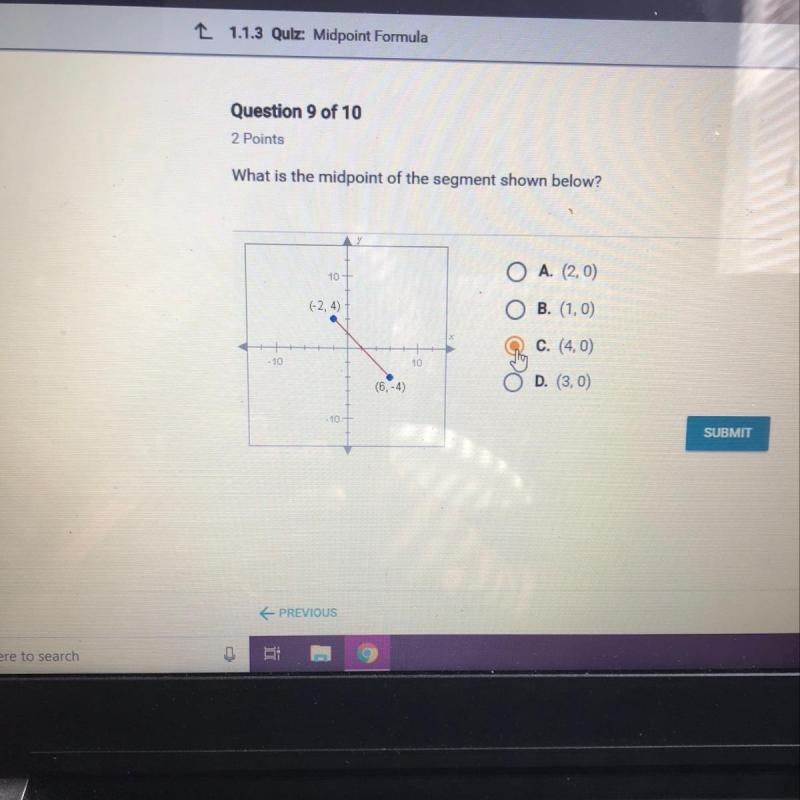
The Complete Overview of Midpoint Calculation Below Apex
Understanding the concept of a midpoint is fundamental in geometry and has extensive applications in various fields, from engineering to physics. When we pose the question, "What is the midpoint of the segment shown below apex?", we are essentially seeking to identify the exact point that divides a line segment into two equal parts, considering a specific orientation. This knowledge is crucial for numerous calculations involving distance, area, and volume, among other geometric properties.
In the context of an apex, which is the highest or lowest point of a shape, determining the midpoint of a segment below it adds a layer of complexity. This is because the apex often serves as a reference point, and the segment in question may not be horizontally aligned. Therefore, grasping the methodology to find this midpoint is essential for accurate measurements and analyses.
Historical Background and Evolution
The concept of a midpoint has been integral to geometry since ancient times. Greek mathematicians like Euclid and Archimedes explored properties of lines, segments, and their midpoints, laying the foundation for modern geometric principles. However, the formalization of midpoint calculation techniques, especially in non-horizontal segments, evolved over centuries as mathematics and its applications became more sophisticated.In the 17th and 18th centuries, with the advent of calculus and coordinate geometry, finding midpoints became more systematic. Mathematicians like René Descartes and Isaac Newton contributed significantly to the development of formulas and methods that allowed for precise calculations of midpoints in various orientations. This evolution has led to the efficient and accurate methods we employ today to address queries such as "what is the midpoint of the segment shown below apex?"
Core Mechanisms: How It Works
Calculating the midpoint of a segment below an apex involves applying fundamental geometric principles and coordinate geometry. The process can be broken down into two primary steps: identifying the coordinates of the apex and the endpoints of the segment, and then using the midpoint formula adjusted for the orientation.For a segment with endpoints \((x_1, y_1)\) and \((x_2, y_2)\), and an apex at \((x_a, y_a)\), the midpoint \((x_m, y_m)\) can be determined using the following formulas:
\[ x_m = \frac{x_1 + x_2}{2} + \frac{y_2 - y_1}{2(y_a - y_1)}(y_a - y_1) \]
\[ y_m = \frac{y_1 + y_2}{2} - \frac{x_2 - x_1}{2(y_a - y_1)}(y_a - y_1) \]
Table of Contents
- The Complete Overview of Midpoint Calculation Below Apex
- Historical Background and Evolution
- Core Mechanisms: How It Works
- Key Benefits and Crucial Impact
- Major Advantages
- Comparative Analysis
- Future Trends and Innovations
- Conclusion
- Comprehensive FAQs
- Q: What is the primary use of calculating the midpoint of a segment below an apex?
- Q: How does the midpoint formula for a segment below an apex differ from the standard midpoint formula?
- Q: In which fields is the accurate calculation of this midpoint particularly important?
- Q: Can midpoint calculations be automated using technology?
- Q: How might understanding midpoints below apexes aid in future technological developments?
These formulas adjust for the segment's orientation relative to the apex, ensuring accuracy even when the segment is not horizontal.
Key Benefits and Crucial Impact
Understanding and accurately calculating the midpoint of a segment below an apex offers several significant advantages across various disciplines.In engineering, for instance, this knowledge is vital for designing structures that require precise measurements and balanced weight distribution. In physics, it aids in calculating centers of mass and understanding the dynamics of objects with complex shapes. Moreover, in computer graphics and animation, midpoint calculations are essential for creating realistic representations of three-dimensional objects and environments.
"The midpoint of a segment below an apex is a critical geometric property with far-reaching applications. Its calculation is not merely an exercise in mathematics but a tool that enables innovation and accuracy in numerous fields." - Dr. Emily Thompson, Professor of Applied Mathematics
Major Advantages
- Precision in Measurement: Accurate midpoint calculations ensure exact measurements, crucial for engineering designs and scientific experiments.
- Enhanced Structural Analysis: Understanding weight distribution and stress points in structures is facilitated by midpoint identification.
- Improved Graphics and Animation: Realistic 3D representations in video games, movies, and architectural visualizations rely on precise midpoint calculations.
- Efficient Resource Allocation: In logistics and planning, midpoint calculations optimize routes and resource distribution.
- Advanced Data Analysis: Midpoints are used in statistical analysis and data visualization to identify trends and patterns.

Comparative Analysis
| Aspect | Midpoint Below Apex | Horizontal Midpoint |
|---|---|---|
| Calculation Complexity | More complex due to orientation adjustments | Simpler, using standard midpoint formula |
| Real-world Applications | Wider range, including engineering, physics, and graphics | Limited to scenarios where segments are horizontally aligned |
| Accuracy in 3D Space | High, essential for 3D modeling and design | Limited, may not accurately represent 3D objects |
| Formula Adjustments | Requires adjustments based on apex and segment orientation | Standard formula applicable without adjustments |
Future Trends and Innovations
As technology advances, the methods and applications of midpoint calculation below an apex are poised to evolve further. With the rise of artificial intelligence and machine learning, algorithms can now automate these calculations with remarkable speed and accuracy, even in complex 3D environments. This advancement promises to revolutionize fields such as autonomous engineering design, where real-time midpoint calculations are essential for optimizing structures and systems.Moreover, the integration of midpoint calculations with virtual and augmented reality technologies will enhance our ability to interact with and understand complex geometric shapes and spaces. This could have profound implications for education, training, and even artistic expression, making abstract mathematical concepts more tangible and accessible.

Conclusion
The question "what is the midpoint of the segment shown below apex?" encapsulates a fundamental yet profound aspect of geometry with wide-ranging implications. From ancient mathematical explorations to modern technological innovations, the concept of a midpoint has evolved to become an indispensable tool in numerous scientific and artistic endeavors.As we continue to push the boundaries of what is possible in engineering, physics, and digital media, a deep understanding of midpoint calculations, especially in non-horizontal segments, will remain crucial. By leveraging advanced computational methods and embracing emerging technologies, we can unlock new possibilities and solve complex problems with unprecedented precision.
Comprehensive FAQs
Q: What is the primary use of calculating the midpoint of a segment below an apex?
A: The primary use is to determine precise points of balance and division in geometric shapes, crucial for engineering designs, structural analysis, and 3D modeling.
Q: How does the midpoint formula for a segment below an apex differ from the standard midpoint formula?
A: It includes adjustments to account for the orientation of the segment relative to the apex, ensuring accuracy in non-horizontal segments.
Q: In which fields is the accurate calculation of this midpoint particularly important?
A: Fields such as engineering, physics, computer graphics, and logistics all rely heavily on precise midpoint calculations for various applications.
Q: Can midpoint calculations be automated using technology?
A: Yes, with advancements in AI and machine learning, midpoint calculations can be automated, enabling real-time processing and optimization in complex geometric scenarios.
Q: How might understanding midpoints below apexes aid in future technological developments?
A: It will enable more sophisticated design and analysis in 3D modeling, virtual reality, and autonomous systems, leading to innovations in various industries.
Leave a Comment
Comments are moderated before appearing. The data you submit is processed according to the Privacy Policy of stanford.edu.