Unraveling the Mystery: What is the Volume of the Regular Pyramid Below?

Unveiling the Secrets of Pyramidal Volume
In the realm of geometry, few shapes captivate the mind as elegantly as the pyramid. From the majestic structures of ancient Egypt to the modern architectural marvels, pyramids have stood the test of time. But beyond their imposing presence, understanding the volume of a regular pyramid holds immense significance in various fields, from engineering to physics. This article aims to provide a comprehensive exploration of the topic: "what is the volume of the regular pyramid below?"
The volume of a regular pyramid, a fundamental geometric concept, refers to the measure of the space occupied by the pyramid. This seemingly simple question opens doors to a world of mathematical intricacies and practical applications. Whether you're an architecture enthusiast, a mathematics student, or a curious learner, understanding how to calculate the volume of a regular pyramid is a valuable skill.
As we embark on this journey, we will delve into the historical roots of pyramid geometry, unravel the core mechanisms behind volume calculation, and explore the far-reaching impacts of this knowledge. By the end, you'll not only grasp the answer to "what is the volume of the regular pyramid below?" but also appreciate its profound implications.
The Complete Overview of Pyramid Volume
A regular pyramid, in its purest form, is a three-dimensional shape with a polygonal base and triangular faces that meet at a common point, known as the apex. The volume of such a pyramid is a measure of the space it occupies, calculated using a precise formula that takes into account the base area and the height.
Historical Background and Evolution
The study of pyramids and their volumes traces back to ancient civilizations, most notably the Egyptians, who mastered the art of pyramid construction. The Great Pyramids of Giza, built around 2560 BCE, stand as testaments to their advanced understanding of geometry and mathematics. These ancient architects and mathematicians laid the foundation for modern geometric principles, including volume calculation.
Over centuries, mathematicians and scholars refined and expanded upon these ancient concepts. The Greek mathematician Pythagoras and his followers made significant contributions, exploring the relationships between the sides and angles of right-angled triangles, which are essential in understanding pyramid geometry. Later, Euclid's "Elements" provided a comprehensive treatment of geometry, including pyramids, solidifying the theoretical framework for volume calculation.
Core Mechanisms: How to Calculate the Volume
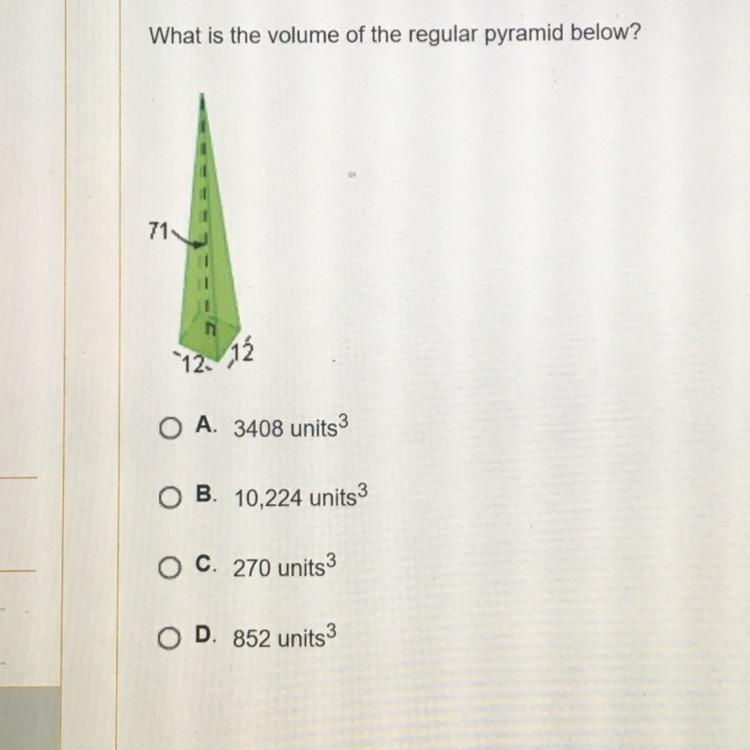
The volume of a regular pyramid is calculated using the following formula:
Table of Contents
- Unveiling the Secrets of Pyramidal Volume
- The Complete Overview of Pyramid Volume
- Historical Background and Evolution
- Core Mechanisms: How to Calculate the Volume
- Key Benefits and Crucial Impact
- Major Advantages:
- Comparative Analysis
- Future Trends and Innovations
- Conclusion
- Comprehensive FAQs
- Q: What is the difference between a regular pyramid and an irregular pyramid in terms of volume calculation?
- Q: How do you calculate the volume of a pyramid with a triangular base?
- Q: Can you explain the practical application of pyramid volume in architecture?
- Q: What role does the height of the pyramid play in volume calculation?
- Q: Are there any real-world examples where understanding pyramid volume is essential?
Volume = (1/3) × Base Area × Height
Here's a breakdown of the key components:
- Base Area: This refers to the area of the polygonal base of the pyramid. For a regular pyramid with an n-sided base, the base area can be calculated using the formula: (n/4) × (side length)2 × cot(π/n).
- Height: The height of the pyramid is the perpendicular distance from the base to the apex.
The formula itself is a derivative of the more general formula for the volume of a cone, reflecting the structural similarities between the two shapes.
Key Benefits and Crucial Impact
Understanding the volume of a regular pyramid has far-reaching implications across various disciplines:
"The study of pyramids and their volumes is not merely an exercise in mathematics; it is a gateway to understanding the world around us, from the grand architectural feats of the past to the intricate workings of nature."
Major Advantages:
- Architecture and Construction: Architects and engineers rely on pyramid volume calculations for designing and constructing buildings, bridges, and other structures. Understanding how to distribute space efficiently within a pyramidal shape is crucial for structural integrity and aesthetic appeal.
- Physics and Engineering: In fields like fluid dynamics and structural analysis, the volume of pyramids is essential for modeling and understanding the behavior of materials and fluids in various conditions.
- Geology and Mining: Geologists use pyramid volume calculations to estimate the amount of material in mineral deposits or volcanic features, aiding in resource extraction and geological research.
- Computer Graphics and Gaming: 3D modeling and rendering software utilize pyramid volume calculations for creating realistic virtual environments and special effects.
- Mathematical Education: Teaching the concept of pyramid volume enhances students' understanding of geometry, spatial reasoning, and problem-solving skills.
Comparative Analysis
| Shape | Volume Formula | Applications |
|---|---|---|
| Regular Pyramid | (1/3) × Base Area × Height | Architecture, Engineering, Geology |
| Cone | (1/3)π × Radius2 × Height | Fluid Dynamics, Manufacturing |
| Cube | Side Length3 | Packaging, Storage |
| Cylinder | π × Radius2 × Height | Pipe Design, Container Manufacturing |

Future Trends and Innovations
As technology advances, the application of pyramid volume calculations continues to evolve:
- 3D Printing: The rise of 3D printing technology has opened new avenues for creating complex pyramidal structures with precise volume calculations, enabling innovative designs in architecture and manufacturing.
- Virtual and Augmented Reality: Advanced VR and AR experiences rely on accurate 3D modeling, including pyramid volume calculations, to create immersive and interactive environments.
- Sustainable Design: With a growing focus on sustainability, understanding the volume of pyramids is crucial for optimizing material usage and minimizing waste in construction and product design.
Conclusion
The question "what is the volume of the regular pyramid below?" may seem deceptively simple, but it opens a door to a vast realm of knowledge and application. From ancient Egyptian architecture to modern engineering marvels, the volume of a regular pyramid has played a pivotal role. By understanding the historical context, the core mechanisms, and the far-reaching impacts, we appreciate the true significance of this fundamental geometric concept.
As technology advances and new fields emerge, the knowledge of pyramid volume calculation will continue to be a valuable tool, shaping the way we design, build, and understand the world around us.
Comprehensive FAQs
Q: What is the difference between a regular pyramid and an irregular pyramid in terms of volume calculation?
A: Regular pyramids have a polygonal base with equal side lengths and angles, allowing for a precise formula to calculate the volume. Irregular pyramids, with their varying base shapes and sizes, require more complex methods, often involving breaking the shape into simpler components.
Q: How do you calculate the volume of a pyramid with a triangular base?
A: For a triangular base, the formula for the base area becomes (1/2) × base × height, where 'base' refers to the length of one side of the triangle, and 'height' is the perpendicular distance from the opposite vertex to the base. The overall volume formula remains (1/3) × base area × height.
Q: Can you explain the practical application of pyramid volume in architecture?
A: Architects use pyramid volume calculations to design efficient and aesthetically pleasing structures. For example, when creating a pyramidal roof, understanding the volume helps in determining the amount of material needed and ensuring proper drainage. It also aids in optimizing interior space and natural lighting.
Q: What role does the height of the pyramid play in volume calculation?
A: The height of the pyramid is crucial as it determines the scale of the volume. A taller pyramid with the same base area will have a larger volume. The height also influences the shape and proportions of the pyramid, impacting its visual appeal and structural integrity.
Q: Are there any real-world examples where understanding pyramid volume is essential?
A: Absolutely. One notable example is in the construction of the Louvre Pyramid in Paris. The designer, I.M. Pei, used pyramid volume calculations to create a structurally sound and visually stunning glass pyramid, which has become an iconic architectural landmark.
Leave a Comment
Comments are moderated before appearing. The data you submit is processed according to the Privacy Policy of stanford.edu.