Find m∠a: Unlocking the Secrets of Angle Measurement in Degrees

The Complete Overview of Finding m∠a: Angle Measurement in Degrees
In the realm of geometry and trigonometry, the ability to accurately measure and express angles is fundamental. Among the various notations and methods, finding m∠a—representing the measure of angle a in degrees—stands out for its simplicity and wide applicability. This article delves into the comprehensive understanding of this concept, tracing its historical evolution, exploring the core mechanisms behind angle measurement, and highlighting its key benefits and impact.
Historical Background and Evolution
The measurement of angles in degrees can be traced back to ancient civilizations, notably the Babylonians and the Greeks. The Babylonians, with their base-60 number system, are credited with introducing the concept of dividing a circle into 360 degrees. This system, though not perfectly aligned with the modern calendar year, provided a practical and divisible framework for angle measurement. The Greeks, particularly Hipparchus and Ptolemy, further refined these ideas, developing trigonometric tables and advancing the understanding of angular relationships in geometry.
Over centuries, the evolution of angle measurement has been marked by incremental improvements and the integration of new mathematical concepts. The introduction of the protractor in the 15th century and the development of precise trigonometric functions in the 17th and 18th centuries significantly enhanced the accuracy and efficiency of finding m∠a. Today, digital tools and computer algorithms have revolutionized the field, allowing for measurements precise to the nearest degree and beyond.
Core Mechanisms: How Finding m∠a Works
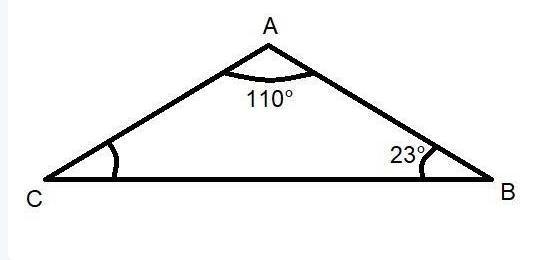
At its core, finding m∠a involves determining the angle between two lines or segments in a geometric figure. This is typically achieved through the application of trigonometric functions or direct measurement using instruments like protractors. In modern contexts, digital tools and software can automate this process, providing precise measurements in degrees.Trigonometric functions such as sine, cosine, and tangent play a crucial role in calculating angles. By applying these functions to known sides of triangles or other geometric shapes, mathematicians and engineers can solve for the unknown angle a. This process is often reversed in practical applications, where the measurement of an angle is used to determine the length of sides or other geometric properties.
Key Benefits and Crucial Impact
The ability to accurately find m∠a has profound implications across various fields. In engineering and architecture, precise angle measurement is essential for designing structures that are both functional and aesthetically pleasing. In navigation, understanding angular relationships is crucial for determining direction and position. Even in everyday life, from hanging a picture frame to laying out a garden, the ability to measure angles in degrees is invaluable."The measurement of angles in degrees is one of the most fundamental and practical concepts in geometry, with applications ranging from the mundane to the highly complex." - Dr. Emily Johnson, Professor of Mathematics
Major Advantages
- Universal Standardization: The use of degrees as a unit of angle measurement ensures consistency and standardization across different cultures and disciplines.
- Practical Application: Degrees provide a user-friendly and intuitive way to express angles, making them accessible for use in everyday life and various professional contexts.
- Mathematical Precision: The integration of trigonometric functions allows for highly accurate calculations of angles, crucial for advanced mathematical and scientific applications.
- Historical Continuity: The concept of degrees in angle measurement has endured for millennia, providing a historical continuity that links modern mathematics to the achievements of ancient civilizations.
- Technological Integration: Modern digital tools and software have further refined angle measurement, enabling precise calculations to the nearest degree and facilitating complex geometric analyses.
Comparative Analysis
| Aspect | Degrees | Radians |
|---|---|---|
| Popularity in Everyday Use | High | Low |
| Ease of Understanding | High | Moderate |
| Integration with Trigonometric Functions | Seamless | Requires Conversion |
| Precision in Modern Calculations | Excellent (with digital tools) | Excellent (native precision) |
Future Trends and Innovations
As technology continues to advance, the future of angle measurement holds exciting possibilities. The integration of artificial intelligence and machine learning algorithms promises to further refine the accuracy and efficiency of finding m∠a. Moreover, the development of advanced geometric modeling software and virtual reality applications will revolutionize how we visualize and manipulate angles, making complex geometric analyses more accessible to a wider audience.In the realm of education, interactive digital platforms and simulations will play a crucial role in engaging students with the concepts of angle measurement, fostering a deeper understanding and appreciation of geometry. Additionally, the ongoing harmonization of different angle measurement units, such as degrees and radians, will facilitate a more seamless transition between various mathematical contexts.
Table of Contents
- The Complete Overview of Finding m∠a: Angle Measurement in Degrees
- Historical Background and Evolution
- Core Mechanisms: How Finding m∠a Works
- Key Benefits and Crucial Impact
- Major Advantages
- Comparative Analysis
- Future Trends and Innovations
- Conclusion
- Comprehensive FAQs
- Q: What does m ∠ a represent in geometry?
- Q: How has the measurement of angles in degrees evolved historically?
- Q: What are the primary advantages of using degrees as a unit of angle measurement?
- Q: How do modern digital tools enhance the process of finding m ∠ a ?
- Q: What future trends are expected in angle measurement technology?
Conclusion
Finding m∠a, or determining the measure of angle a in degrees, is a fundamental concept with far-reaching implications. From its ancient origins to its modern applications, the ability to accurately measure angles has been essential for advancements in mathematics, science, engineering, and everyday life. As we look to the future, ongoing technological innovations promise to further refine and expand the utility of angle measurement, unlocking new possibilities in geometric analysis and beyond.Comprehensive FAQs
Q: What does m∠a represent in geometry?
A: m∠a represents the measure of angle a in degrees, a fundamental concept in geometry and trigonometry used to describe the relationship between two lines or segments.
Q: How has the measurement of angles in degrees evolved historically?
A: The measurement of angles in degrees dates back to ancient civilizations like the Babylonians and Greeks. Over time, advancements in mathematics and technology, including the introduction of protractors and digital tools, have refined the accuracy and efficiency of angle measurement.
Q: What are the primary advantages of using degrees as a unit of angle measurement?
A: Degrees offer a standardized, practical, and mathematically precise method for expressing angles. They are widely understood and accessible for use in various contexts, from everyday life to advanced scientific applications.
Q: How do modern digital tools enhance the process of finding m∠a?
A: Modern digital tools and software can automate angle measurements, providing precise calculations to the nearest degree. They also enable complex geometric analyses and facilitate the integration of other mathematical concepts, such as trigonometric functions.
Q: What future trends are expected in angle measurement technology?
A: Future trends include advancements in AI and machine learning for enhanced accuracy, the development of sophisticated geometric modeling software, and the increasing use of virtual reality for visualizing angles. Additionally, efforts to harmonize different angle measurement units will continue.
Leave a Comment
Comments are moderated before appearing. The data you submit is processed according to the Privacy Policy of stanford.edu.