Finding Arc and Angle Measures: A Comprehensive Exploration

The Complete Overview of Finding Arc and Angle Measures
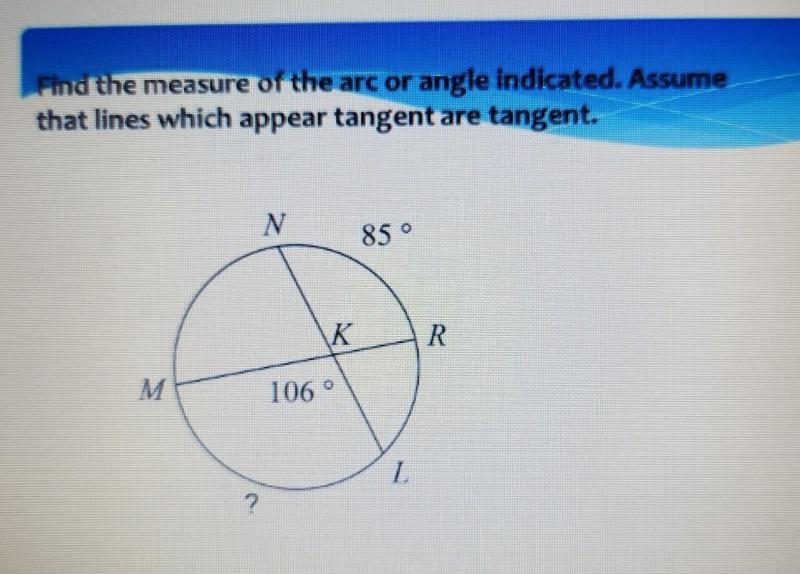
Understanding how to find the measure of the arc or angle indicated is a fundamental skill in geometry, crucial for architects, engineers, and anyone working with spatial relationships. Whether you're calculating the angle of elevation, the arc length of a circle, or the interior angle of a polygon, mastering these concepts opens doors to precise measurements and informed decision-making. This article delves into the historical background, core mechanisms, benefits, and future trends of accurately determining arc and angle measures.
Arcs and angles are ubiquitous in our built environment, from the curvature of a bridge to the design of a skyscraper's facade. Their precise measurement ensures structural integrity, aesthetic appeal, and functional efficiency. In the digital age, advancements in technology have supplemented traditional methods, offering new tools and techniques for achieving unparalleled accuracy. This exploration aims to provide a comprehensive understanding of these methods, highlighting their significance and potential applications.
Historical Background and Evolution
The quest to find the measure of the arc or angle indicated dates back to ancient civilizations. The Egyptians, for instance, used simple tools like the shadow stick and the gnomon to estimate angles and time. The Greeks, notably Hipparchus and Ptolemy, made significant strides in trigonometry, developing tables and formulas to calculate angles and arcs with greater precision. These early efforts laid the foundation for the sophisticated methods we employ today.The advent of the compass and the straightedge in the Renaissance period revolutionized geometric construction and measurement. Later, the invention of the sextant in the 18th century allowed sailors to measure angles with unprecedented accuracy, aiding in navigation and exploration. The 20th century saw the integration of these principles into engineering and architecture, with the development of computer-aided design (CAD) software further refining the process.
Core Mechanisms: How It Works
At the heart of finding arc and angle measures lie fundamental geometric principles. For angles, the primary mechanism involves the use of trigonometric ratios—sine, cosine, and tangent—which relate the sides of right triangles to their angles. These ratios are derived from the circular motion of a radius in a unit circle, providing a bridge between linear and curvilinear measurements.Arcs, on the other hand, are measured in terms of their central angles. The relationship between arc length, radius, and central angle is described by the formula: Arc Length = 2πr(θ/360), where r is the radius and θ is the central angle in degrees. This formula underscores the intimate connection between angular and linear measurements in circular geometry.
Key Benefits and Crucial Impact
Accurately finding the measure of the arc or angle indicated has profound implications across various fields. In architecture, it ensures that structures are both aesthetically pleasing and structurally sound. In engineering, precise measurements are vital for designing efficient systems and infrastructure. The impact extends to everyday life, from the layout of a room to the design of consumer products."The ability to accurately measure arcs and angles is not just about numbers; it's about understanding the language of shapes and spaces, and how they interact with our world."
Major Advantages
- Enhanced Precision: Modern tools and technologies, such as digital protractors and CAD software, enable measurements with unprecedented accuracy.
- Versatility: Methods for finding arc and angle measures apply to a wide range of geometric figures, from circles and triangles to complex polygons.
- Interdisciplinary Applications: These principles find use in fields as diverse as physics, astronomy, and computer graphics, underscoring their universal relevance.
- Problem-Solving Skills: The process of determining arc and angle measures cultivates critical thinking and problem-solving abilities, valuable in any context.
- Foundation for Advanced Concepts: Mastery of these fundamentals is essential for understanding more complex geometric and mathematical concepts, such as calculus and differential geometry.
Comparative Analysis
| Method | Accuracy | Versatility | Accessibility | Complexity |
|---|---|---|---|---|
| Traditional Tools (Protractor, Ruler) | Moderate | Limited | High | Low |
| Digital Protractors | High | Moderate | Moderate | Moderate |
| CAD Software | Very High | High | Low | High |
| Advanced Algorithms | Highest | Very High | Moderate | Very High |
Future Trends and Innovations
The future of finding the measure of the arc or angle indicated is poised for further innovation, driven by advancements in technology and computational power. Artificial intelligence and machine learning algorithms promise to automate and refine the measurement process, offering real-time feedback and predictive analytics. Virtual and augmented reality tools will provide immersive learning experiences, making complex geometric concepts more accessible.Moreover, the integration of these principles with other emerging technologies, such as 3D printing and robotics, will open new avenues for design and construction. As we move towards a more digital and interconnected world, the ability to accurately measure and manipulate geometric shapes will become increasingly vital.
Table of Contents
- The Complete Overview of Finding Arc and Angle Measures
- Historical Background and Evolution
- Core Mechanisms: How It Works
- Key Benefits and Crucial Impact
- Major Advantages
- Comparative Analysis
- Future Trends and Innovations
- Conclusion
- Comprehensive FAQs
- Q: What is the primary difference between measuring an arc and an angle?
- Q: How can I find the measure of an arc if I know the radius and arc length?
- Q: What are some real-world applications of accurately measuring arcs and angles?
- Q: Can you explain how trigonometric ratios are used to find angle measures?
- Q: What are some modern tools and technologies that aid in finding arc and angle measures?

Conclusion
The journey to find the measure of the arc or angle indicated is a testament to humanity's enduring quest for understanding and precision. From ancient civilizations to modern times, the evolution of measurement techniques reflects our growing mastery over the geometric world. As technology continues to advance, these fundamental principles will remain a cornerstone of progress, shaping the way we interact with and design our environment.Whether through traditional methods or cutting-edge technologies, the ability to accurately measure arcs and angles remains a powerful tool, empowering us to build, create, and innovate with unparalleled precision and creativity.
Comprehensive FAQs
Q: What is the primary difference between measuring an arc and an angle?
A: Arcs are measured in terms of their central angles and are related to the circumference of a circle, while angles are measured in degrees and are independent of circular geometry.
Q: How can I find the measure of an arc if I know the radius and arc length?
A: You can use the formula Arc Length = 2πr(θ/360) and rearrange it to solve for the central angle θ. This gives θ = (Arc Length / (2πr)) 360.
Q: What are some real-world applications of accurately measuring arcs and angles?
A: Applications include architectural design, engineering (especially in construction and manufacturing), navigation, astronomy, and computer graphics, among others.
Q: Can you explain how trigonometric ratios are used to find angle measures?
A: Trigonometric ratios (sine, cosine, tangent) relate the sides of right triangles to their angles. By applying these ratios, you can calculate unknown angles if you know the lengths of the sides of the triangle.
Q: What are some modern tools and technologies that aid in finding arc and angle measures?
A: Modern tools include digital protractors, computer-aided design (CAD) software, and advanced algorithms. These technologies offer enhanced precision, versatility, and efficiency compared to traditional methods.
Leave a Comment
Comments are moderated before appearing. The data you submit is processed according to the Privacy Policy of stanford.edu.