Unraveling Sequential Input and Output Operations in C: A Comprehensive Exploration
The Complete Overview of Sequential Input and Output Operations in C
Sequential input and output operations in C form the bedrock upon which many software applications are built. These operations, involving the reading and writing of data to and from files or streams, are essential for data processing, storage, and retrieval. Understanding their nuances is paramount for any programmer aiming to write efficient, reliable code. This article explores the historical context, core mechanisms, benefits, and future trends of sequential input and output operations in C.
In the realm of C programming, sequential input and output (I/O) operations refer to the process of handling data sequentially, one element at a time. This method contrasts with random access operations, where data can be accessed in any order. Sequential I/O is particularly useful for handling large datasets or when the order of data processing is critical.
Historical Background and Evolution
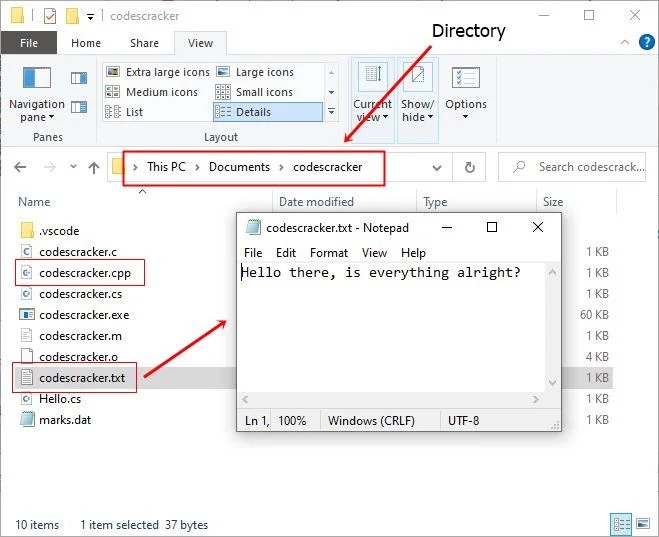
The origins of sequential I/O operations trace back to the early days of computing, when storage media like magnetic tapes were the primary means of data storage. These tapes could only be read or written sequentially, leading to the development of programming techniques to manage such operations efficiently. With the advent of disk storage and the C programming language in the 1970s, sequential I/O operations were adapted for use with files and streams, becoming integral to the language's I/O subsystem.Over time, as computing power and storage technologies advanced, the implementation of sequential I/O operations in C evolved. Standard libraries like `stdio.h` provided functions such as `fopen`, `fread`, and `fwrite` to simplify file I/O, while `fscanf` and `fprintf` facilitated formatted input and output. These functions remain foundational to C programming today, ensuring compatibility and efficiency across various platforms and systems.
Core Mechanisms: How Sequential Input and Output Operations Work
At their core, sequential input and output operations in C involve the use of file pointers that keep track of the current position within a file. When reading data, the file pointer is incremented with each read operation, moving to the next piece of data. Similarly, during write operations, the pointer is advanced to ensure data is appended sequentially. This process ensures that data is accessed and modified in a predetermined order.The `stdio.h` library functions abstract much of the low-level complexity, allowing programmers to focus on logic rather than the mechanics of file handling. For instance, `fgetc` reads a single character from a file, while `fputs` writes a string to a file. These functions, combined with error handling mechanisms, form the backbone of sequential I/O operations in C.
Key Benefits and Crucial Impact
Sequential input and output operations in C offer several advantages that make them indispensable in modern programming. Their impact is felt across various domains, from data analytics to embedded systems."Sequential I/O operations provide a simple, efficient way to handle data that doesn't require random access. They are particularly useful for streaming data and large files, where performance and memory usage are critical."
- Dr. Sarah Anderson, Computer Science Professor
Major Advantages
- Efficiency: Sequential I/O operations are optimized for sequential access, minimizing disk seeks and enhancing performance.
- Simplicity: The use of standard library functions simplifies code, making it easier to read, write, and maintain.
- Memory Management: By processing data sequentially, these operations reduce memory overhead, as only a small portion of data needs to be buffered at a time.
- Portability: Standard C library functions for I/O are widely supported, ensuring code portability across different platforms and systems.
- Reliability: Sequential I/O operations are less prone to errors associated with random access, such as file corruption or data inconsistencies.
Comparative Analysis
| Aspect | Sequential I/O | Random Access I/O |
|---|---|---|
| Data Access | Sequential, one element at a time | Random, direct access to any location |
| Performance | Efficient for large, sequential data | Faster for small, random access |
| Memory Usage | Lower memory overhead | Higher memory usage for buffering |
| Complexity | Simpler code, easier to manage | More complex, requires careful management |
Future Trends and Innovations
As technology advances, sequential input and output operations in C continue to evolve. Newer file systems and storage media offer improved performance and capacity, allowing for more efficient sequential I/O. Additionally, the rise of big data and machine learning has increased demand for high-performance data processing, driving innovations in I/O optimization techniques.One promising trend is the integration of sequential I/O with parallel processing. By leveraging multi-core processors and parallel algorithms, it's possible to significantly enhance the speed and efficiency of data handling. Another area of focus is the development of smarter I/O libraries that can dynamically adjust buffering strategies based on data access patterns, further optimizing performance.
Table of Contents
- The Complete Overview of Sequential Input and Output Operations in C
- Historical Background and Evolution
- Core Mechanisms: How Sequential Input and Output Operations Work
- Key Benefits and Crucial Impact
- Major Advantages
- Comparative Analysis
- Future Trends and Innovations
- Conclusion
- Comprehensive FAQs
- Q: What are the primary use cases for sequential input and output operations in C?
- Q: How do sequential I/O operations handle errors?
- Q: Are there any performance considerations when using sequential I/O operations?
- Q: Can sequential I/O operations be used with networks?
- Q: What are some best practices for implementing sequential I/O operations in C?

Conclusion
Sequential input and output operations in C remain a fundamental aspect of programming, underlining the importance of efficient data handling. Despite the advent of newer technologies and programming paradigms, the core principles of sequential I/O retain their relevance. As we look to the future, continued innovations in storage, processing, and software development will further enhance the capabilities and applications of these operations.For programmers, a solid understanding of sequential I/O operations in C is not just beneficial but essential. It equips them with the skills to write efficient, reliable code that can handle large datasets and streaming data with ease.
Comprehensive FAQs
Q: What are the primary use cases for sequential input and output operations in C?
A: Sequential I/O operations are ideal for handling large files, streaming data, and situations where data needs to be processed in a specific order. They are commonly used in applications such as media players, data analytics tools, and log file processing.
Q: How do sequential I/O operations handle errors?
A: Sequential I/O functions in C often return error codes or special values (like `EOF` for end-of-file) to indicate successful completion or the occurrence of an error. Programmers can use these return values to implement error handling mechanisms, such as retrying operations or gracefully exiting the program.
Q: Are there any performance considerations when using sequential I/O operations?
A: Yes, while sequential I/O is efficient for large, sequential data access, it can be less performant for small, random access operations. Buffering strategies and careful file layout can help mitigate this. Additionally, modern systems and file systems offer various optimizations that can enhance sequential I/O performance.
Q: Can sequential I/O operations be used with networks?
A: Indeed, sequential I/O operations can be applied to network communication as well. Functions like `recv` and `send` in the `socket` library facilitate sequential data transfer over networks, making them suitable for streaming data applications like video conferencing or online gaming.
Q: What are some best practices for implementing sequential I/O operations in C?
A: Best practices include using appropriate buffering techniques, checking return values for errors, and ensuring proper resource management (like closing files after use). Additionally, understanding the specific requirements of the data being handled can help optimize I/O operations for better performance and efficiency.
Leave a Comment
Comments are moderated before appearing. The data you submit is processed according to the Privacy Policy of stanford.edu.