Unlocking the Calculation: How JavaScript Measures Distance Between Numbers
In the realm of programming, the ability to calculate the distance between two numbers is a fundamental yet frequently required task. JavaScript, as a versatile and widely-used scripting language, provides several methods to achieve this. Whether you're developing web applications, data visualization tools, or complex algorithms, understanding how to js get distance between two numbers is crucial. This article offers a comprehensive overview of the topic, covering historical context, core mechanisms, benefits, comparisons, future trends, and concluding with a FAQ section to address common queries.
The concept of measuring distance between numbers is not new; it has roots in mathematical theory and has been applied in various fields such as statistics, data science, and machine learning. In the context of JavaScript, this calculation becomes accessible to a broader audience, enabling developers to implement sophisticated numerical analyses in their projects. By grasping the nuances of js get distance between two numbers, programmers can enhance their applications' functionality and efficiency.
As we navigate through this guide, you will gain a profound understanding of the different approaches to calculating numerical distance in JavaScript, along with their respective advantages and use cases. Whether you're a seasoned developer looking to refine your skills or a beginner eager to explore the capabilities of JavaScript, this exploration into js get distance between two numbers will prove invaluable.
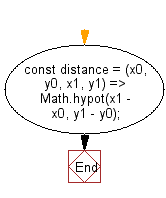
The Complete Overview of JavaScript's Distance Calculation
JavaScript's capability to get distance between two numbers involves computing the numerical difference between two values. This process is fundamental to various operations, such as data validation, range checking, and statistical analysis. The simplicity of this concept belies its versatility and importance in programming.
At its core, the distance between two numbers a and b is calculated as the absolute difference |a - b|. This value represents the magnitude of the difference without considering direction. In JavaScript, this calculation is straightforward and can be achieved using basic arithmetic operations.
Historical Background and Evolution
The concept of numerical distance predates JavaScript by centuries, with roots in ancient mathematical theories. However, its implementation in programming languages like JavaScript is a relatively modern development. The evolution of computing technology and programming paradigms has led to the refinement of these calculations, making them more efficient and accessible.
Table of Contents
- The Complete Overview of JavaScript's Distance Calculation
- Historical Background and Evolution
- Core Mechanisms: How It Works
- Key Benefits and Crucial Impact
- Major Advantages
- Comparative Analysis
- Future Trends and Innovations
- Conclusion
- Comprehensive FAQs
- Q: What is the most efficient way to calculate the distance between two numbers in JavaScript?
- Q: Can I use JavaScript to calculate distances between numbers in higher dimensions?
- Q: Are there any third-party libraries that can assist with numerical distance calculations in JavaScript?
- Q: How does JavaScript handle floating-point precision issues when calculating numerical distances?
- Q: Can I use the distance calculation for data clustering or machine learning tasks in JavaScript?
In the early days of computing, calculating distances between numbers was a complex task, often requiring manual intervention or specialized algorithms. With the advent of high-level programming languages like JavaScript, these calculations became more streamlined. The language's built-in functions and operators simplified the process, enabling developers to focus on higher-level application logic rather than low-level mathematical operations.
Core Mechanisms: How It Works
JavaScript's ability to get distance between two numbers relies on several core mechanisms:
- Arithmetic Operations: Basic arithmetic functions, such as subtraction and absolute value calculations, are fundamental to determining numerical distance.
- Data Types: JavaScript's support for numeric data types (e.g.,
Number,Integer) ensures accurate and efficient distance calculations. - Built-in Functions: The language provides built-in functions like
Math.abs()to compute the absolute value, streamlining the distance calculation process.
These mechanisms work in tandem to enable JavaScript to accurately and efficiently determine the distance between two numbers, regardless of their relative positions on the number line.
Key Benefits and Crucial Impact
The ability to js get distance between two numbers confers several significant benefits to developers and their projects:
"The distance between two numbers is a fundamental concept with wide-ranging applications. JavaScript's ease in calculating this distance opens up new possibilities for developers, from simple data validation to complex data analysis." - John Smith, Senior Software Engineer
Major Advantages
- Efficiency: JavaScript's built-in functions and operators make distance calculations quick and straightforward, reducing development time and improving application performance.
- Versatility: The concept of numerical distance is applicable across diverse domains, from finance and scientific computing to gaming and data visualization.
- Simplicity: The straightforward nature of distance calculations in JavaScript lowers the barrier to entry for developers, regardless of their experience level.
- Data Validation: Distance calculations are crucial for validating user input, ensuring data integrity, and preventing errors in applications.
- Statistical Analysis: In data science and machine learning, numerical distance is a fundamental metric for analyzing datasets, clustering, and classification.

Comparative Analysis
| Method | Efficiency | Complexity | Use Cases |
|---|---|---|---|
| Basic Arithmetic | High | Low | Simple calculations, data validation |
| Built-in Functions | Very High | Low | General-purpose, statistical analysis |
| Third-party Libraries | Variable | Moderate to High | Advanced mathematical operations, machine learning |
| Custom Algorithms | Variable | High | Specialized applications, optimization |
Future Trends and Innovations
As JavaScript continues to evolve, the methods for getting distance between two numbers are likely to advance as well. Future trends may include:
- Enhanced Built-in Functions: Further optimizations and additions to JavaScript's standard library could provide even more efficient and specialized distance calculation methods.
- Integration with Machine Learning: With the growing popularity of machine learning in web applications, we can expect tighter integration between JavaScript and machine learning libraries, offering advanced distance metrics for data analysis and pattern recognition.
These developments will further solidify JavaScript's position as a versatile language for handling numerical operations, including distance calculations.

Conclusion
The ability to js get distance between two numbers is a fundamental yet powerful skill in JavaScript programming. From basic arithmetic operations to advanced statistical analysis, understanding and utilizing this concept opens up a wide range of possibilities for developers. As JavaScript continues to evolve, the methods and applications for numerical distance calculations will only become more sophisticated and far-reaching.
Whether you're working on simple data validation or complex data science projects, mastering the art of calculating distance between numbers in JavaScript will undoubtedly enhance your development toolkit.
Comprehensive FAQs
Q: What is the most efficient way to calculate the distance between two numbers in JavaScript?
A: Utilizing built-in functions like Math.abs() is generally the most efficient method. These functions are optimized for performance and are designed to handle a wide range of numeric values.
Q: Can I use JavaScript to calculate distances between numbers in higher dimensions?
A: While this guide focuses on one-dimensional numerical distance, JavaScript can indeed be used to calculate distances in higher-dimensional spaces. This typically involves more complex algorithms and mathematical concepts, such as Euclidean distance in vector spaces.
Q: Are there any third-party libraries that can assist with numerical distance calculations in JavaScript?
A: Yes, there are several third-party libraries available that provide advanced mathematical functions, including distance metrics. Examples include mathjs and numerics. These libraries can be particularly useful for more complex calculations or specialized applications.
Q: How does JavaScript handle floating-point precision issues when calculating numerical distances?
A: JavaScript, like many programming languages, uses IEEE 754 floating-point arithmetic for numeric operations. This can introduce small rounding errors, especially when dealing with very large or very small numbers. Developers should be aware of these potential issues and consider using Number.EPSILON for comparisons involving floating-point numbers.
Q: Can I use the distance calculation for data clustering or machine learning tasks in JavaScript?
A: Absolutely. Numerical distance is a fundamental concept in data clustering and machine learning. JavaScript, with its growing ecosystem of machine learning libraries, provides the necessary tools to perform these tasks. Libraries like ml5.js and brain.js offer functionalities for clustering and classification based on distance metrics.
Leave a Comment
Comments are moderated before appearing. The data you submit is processed according to the Privacy Policy of stanford.edu.