Does a Triple Bond Have 2 Pi Bonds? Unraveling the Chemical Connection
In the realm of chemistry, the concept of bonding is fundamental to understanding molecular structure and behavior. When we delve into the intricacies of chemical bonds, one intriguing question arises: does a triple bond have 2 pi bonds? This query opens a window into the complex and fascinating world of molecular interactions.
Chemical bonds are the glue that holds atoms together, forming molecules. Among these bonds, double and triple bonds stand out for their strength and unique characteristics. While a double bond involves two shared electron pairs, a triple bond takes this a step further, with three shared electron pairs. This raises the question: how many pi bonds are incorporated in this intricate dance of electrons?
To comprehend the answer, we must embark on a journey through the historical understanding of bonding theories and the underlying mechanisms that govern these interactions. By exploring the nature of pi bonds and their role in triple bonds, we can unravel this chemical conundrum.

The Complete Overview of Triple Bonds and Pi Bonds
Chemical bonds are categorized based on their strength and the nature of electron sharing between atoms. Single bonds, double bonds, and triple bonds represent progressively stronger and more complex bonding arrangements.
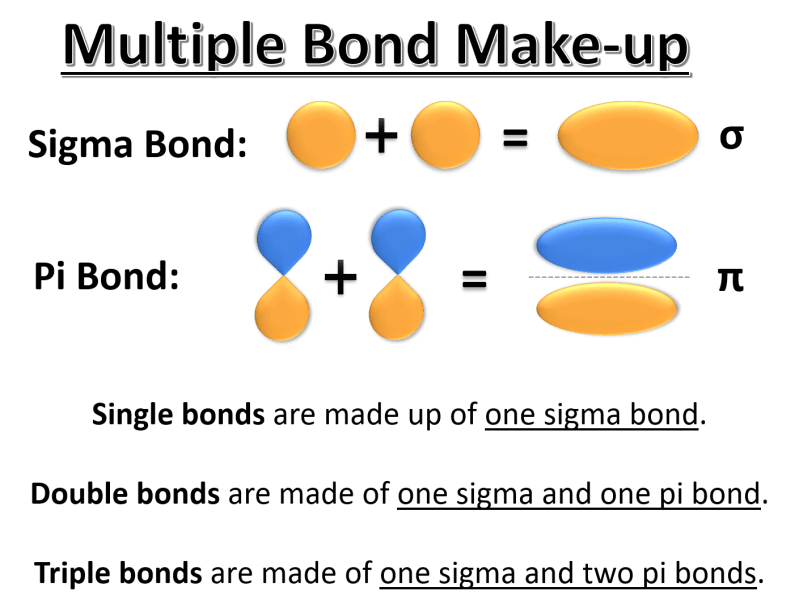
At the heart of these bonds are two types of bonds: sigma (σ) bonds and pi (π) bonds. Sigma bonds are formed by the head-to-head overlap of atomic orbitals, creating a strong, stable bond. Pi bonds, on the other hand, are formed by the side-to-side overlap of orbitals, resulting in a weaker bond that contributes to the overall stability of multiple bonds.
Historical Background and Evolution
The understanding of chemical bonding has evolved significantly over the years. In the early 20th century, scientists such as Gilbert Lewis and Linus Pauling pioneered the concept of electron pairing to explain chemical bonds. Their work laid the foundation for the valence bond theory, which describes bonds as overlapping atomic orbitals.
Table of Contents
- The Complete Overview of Triple Bonds and Pi Bonds
- Historical Background and Evolution
- Core Mechanisms: How Triple Bonds and Pi Bonds Work
- Key Benefits and Crucial Impact
- Major Advantages
- Comparative Analysis
- Future Trends and Innovations
- Conclusion
- Comprehensive FAQs
- Q: What is a pi bond?
- Q: How many pi bonds are in a double bond?
- Q: What makes triple bonds stronger than double bonds?
- Q: Are all triple bonds equal in strength?
- Q: How do pi bonds influence the reactivity of triple-bonded molecules?
The introduction of quantum mechanics further refined our understanding. The molecular orbital theory, developed by Friedrich Hund and Robert S. Mulliken, provided a more comprehensive explanation by considering the behavior of electrons in a molecule as a whole. This theory helped elucidate the role of pi bonds in multiple bonding, including triple bonds.
Core Mechanisms: How Triple Bonds and Pi Bonds Work
A triple bond, as the name suggests, involves three shared electron pairs between two atoms. This bond is stronger than a double bond due to the additional electron pair. The formation of a triple bond requires the overlap of three atomic orbitals, leading to the creation of both sigma and pi bonds.
In a triple bond, one sigma bond is formed by the head-to-head overlap of orbitals, similar to a single bond. However, two pi bonds are also formed through the side-to-side overlap of orbitals. These pi bonds, with their distinctive nodal planes, contribute to the overall stability of the triple bond. The presence of two pi bonds in a triple bond is a key aspect of its structure and reactivity.
Key Benefits and Crucial Impact
The unique structure of triple bonds, including their two pi bonds, confers several advantages and impacts in the chemical world.
"Triple bonds, with their complex interplay of sigma and pi bonds, offer exceptional stability and reactivity, making them crucial in various chemical processes."
Major Advantages
- Enhanced Stability: The combination of a strong sigma bond and two pi bonds in a triple bond creates a highly stable molecular structure, resistant to external perturbations.
- Increased Reactivity: Triple bonds can participate in a wide range of chemical reactions, making them versatile building blocks in organic and inorganic chemistry.
- Unique Magnetic Properties: The presence of pi bonds in triple-bonded molecules can lead to interesting magnetic phenomena, such as paramagnetism, due to the unpaired electrons.
- Structural Diversity: Triple bonds allow for the formation of diverse molecular geometries, contributing to the richness of chemical structures.
- Biological Significance: Certain triple-bonded molecules, like cyanides and nitriles, play essential roles in biological systems, influencing various biochemical processes.
Comparative Analysis
| Bond Type | Strength | Number of Pi Bonds | Examples |
|---|---|---|---|
| Single Bond | Weakest | 0 | Hydrogen (H2), Methane (CH4) |
| Double Bond | Moderate | 1 | Oxygen (O2), Ethylene (C2H4) |
| Triple Bond | Strongest | 2 | Nitrogen (N2), Acetylene (C2H2) |
Future Trends and Innovations
As our understanding of chemical bonding continues to evolve, new trends and innovations are emerging. Researchers are exploring the potential of novel bond types, such as quadruple and even quintuple bonds, which could offer unprecedented stability and reactivity.
Additionally, the field of materials science is leveraging the unique properties of triple bonds to develop advanced materials with tailored characteristics. These materials could find applications in areas such as electronics, energy storage, and catalysis, pushing the boundaries of technology.

Conclusion
The question does a triple bond have 2 pi bonds leads us on a captivating journey through the fundamentals of chemical bonding. We have discovered that indeed, a triple bond does incorporate two pi bonds, contributing to its exceptional stability and reactivity. This knowledge is not merely academic; it has profound implications for our understanding of molecular structure and reactivity, with far-reaching applications in chemistry and materials science.
As we continue to unravel the mysteries of the chemical world, the intricate dance of electrons in bonds like the triple bond will undoubtedly reveal further insights, inspiring new discoveries and innovations.
Comprehensive FAQs
Q: What is a pi bond?
A: A pi bond is a type of chemical bond formed by the side-to-side overlap of atomic orbitals. Unlike sigma bonds, which are formed by head-to-head overlap, pi bonds create a weaker bond that contributes to the stability of multiple bonds.
Q: How many pi bonds are in a double bond?
A: A double bond consists of one sigma bond and one pi bond. The sigma bond provides the primary bonding interaction, while the pi bond adds to the overall stability of the double bond.
Q: What makes triple bonds stronger than double bonds?
A: Triple bonds are stronger than double bonds due to the presence of an additional shared electron pair. This extra electron pair, along with the two pi bonds, contributes to the increased stability and reactivity of triple bonds.
Q: Are all triple bonds equal in strength?
A: While all triple bonds share the same fundamental structure, their actual strength can vary depending on the specific atoms involved and the molecular environment. This variation is due to factors such as atomic size, electronegativity, and steric effects.
Q: How do pi bonds influence the reactivity of triple-bonded molecules?
A: Pi bonds in triple-bonded molecules play a crucial role in their reactivity. These bonds can participate in various chemical reactions, such as addition reactions, allowing triple-bonded molecules to serve as versatile building blocks in organic synthesis and other chemical processes.
Leave a Comment
Comments are moderated before appearing. The data you submit is processed according to the Privacy Policy of stanford.edu.