Unraveling the Difference Between Array and Vector in C: A Comprehensive Exploration

The Complete Overview of the Difference Between Array and Vector in C
Arrays and vectors are fundamental data structures in C programming, each with distinct characteristics and use cases. While arrays provide a static, contiguous block of memory for storing elements of the same data type, vectors offer dynamic resizing and additional functionalities through the Standard Template Library (STL). Understanding the difference between array and vector in C is crucial for optimizing memory usage and program performance.
This article delves into the historical background, core mechanisms, benefits, and a comparative analysis of arrays and vectors. By the end, readers will have a comprehensive understanding of when to use each data structure and how they shape modern C programming practices.
Historical Background and Evolution
The concept of arrays predates the C programming language, with origins in early computing. Arrays were a natural evolution from the need to store and manipulate collections of data. In C, arrays were integral from the language's inception, allowing programmers to efficiently manage grouped data in fixed-size blocks.Vectors, on the other hand, emerged later with the development of the Standard Template Library (STL) in C++. Introduced to address the limitations of arrays, vectors provide dynamic memory allocation and built-in functions for manipulating data. Over time, C programmers have adopted vectors, especially with the widespread use of C++ libraries in C projects.
Core Mechanisms: How It Works
Arrays in C are allocated contiguously in memory during program initialization. The size of an array is fixed and must be specified at compile time. Each element in the array is accessed using an index, allowing for efficient random access. However, resizing an array requires manual memory management and can be complex.Vectors, part of the STL, offer more flexibility. They manage memory allocation internally, allowing dynamic resizing as elements are added or removed. This dynamic nature eliminates the need for pre-allocation and simplifies memory management. Vectors also provide a rich set of functions for operations like insertion, deletion, and sorting.
Key Benefits and Crucial Impact
The difference between array and vector in C has significant implications for program design and performance. Arrays excel in scenarios requiring fast access to large datasets, while vectors shine in situations demanding frequent changes in data size."The choice between arrays and vectors is akin to choosing between a fixed-gear bicycle and a modern racing bike—each has its purpose and advantages."
Major Advantages
- Arrays:
- Fast access to elements due to contiguous memory allocation.
- Efficient for large datasets that do not change frequently.
- Simple implementation and direct memory control.
- Vectors:
- Dynamic resizing simplifies memory management.
- Rich set of functions for data manipulation.
- Suitable for data structures requiring frequent insertions and deletions.
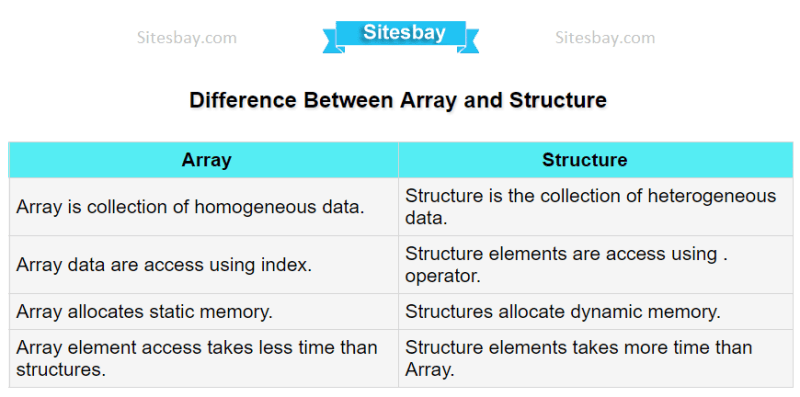
Comparative Analysis
| Criteria | Arrays | Vectors |
|---|---|---|
| Memory Allocation | Static, contiguous | Dynamic, managed internally |
| Size Flexibility | Fixed at compile time | Dynamic, resizes automatically |
| Memory Efficiency | Efficient for large, static datasets | Efficient for changing data sizes |
| Functionality | Basic, manual memory management | Rich set of functions, part of STL |
Future Trends and Innovations
As C continues to evolve, the line between arrays and vectors may blur. Modern C programming practices often integrate C++ libraries, making vectors increasingly prevalent. Furthermore, advancements in compiler technology and memory management techniques could lead to more efficient array implementations with dynamic resizing capabilities.The future likely holds enhanced tools and techniques for working with both data structures, allowing programmers to leverage their strengths more effectively. This ongoing evolution ensures that C remains a versatile and powerful language for a wide range of applications.
Table of Contents
- The Complete Overview of the Difference Between Array and Vector in C
- Historical Background and Evolution
- Core Mechanisms: How It Works
- Key Benefits and Crucial Impact
- Major Advantages
- Comparative Analysis
- Future Trends and Innovations
- Conclusion
- Comprehensive FAQs
- Q: What is the primary difference between arrays and vectors in C?
- Q: When should I use arrays instead of vectors?
- Q: Are vectors always more efficient than arrays?
- Q: Can I use vectors in pure C, or do I need C++?
- Q: How do arrays and vectors impact program performance?

Conclusion
Understanding the difference between array and vector in C is essential for making informed decisions in program design. Arrays and vectors each have unique strengths and weaknesses, and their appropriate use can significantly impact performance and code maintainability.As C programmers continue to explore and adopt new techniques, the effective utilization of these data structures will remain a cornerstone of efficient and robust software development.
Comprehensive FAQs
Q: What is the primary difference between arrays and vectors in C?
A: The main difference lies in memory allocation and size flexibility. Arrays have static, contiguous memory allocation and a fixed size, while vectors manage memory dynamically and can resize automatically.
Q: When should I use arrays instead of vectors?
A: Use arrays when you need fast access to a large dataset that does not change frequently. Arrays are also preferable when you require direct control over memory allocation and deallocation.
Q: Are vectors always more efficient than arrays?
A: Not necessarily. Vectors excel in scenarios where the data size changes frequently, but arrays can be more efficient for large, static datasets due to their contiguous memory allocation.
Q: Can I use vectors in pure C, or do I need C++?
A: Vectors are part of the C++ Standard Template Library (STL). However, many modern C projects incorporate C++ libraries, making it possible to use vectors in C with appropriate compatibility layers or by writing in a C++-compatible manner.
Q: How do arrays and vectors impact program performance?
A: The impact on performance depends on the specific use case. Arrays provide fast access to elements, which can improve performance for certain tasks. Vectors, with their dynamic resizing and built-in functions, can enhance productivity and code readability, albeit with a slight performance overhead.
Leave a Comment
Comments are moderated before appearing. The data you submit is processed according to the Privacy Policy of stanford.edu.