Converting Text to Numbers: Mastering Cast String to Int Java
In the realm of Java programming, converting data types is a fundamental operation that every developer must master. Among these conversions, casting a String to an int is particularly prevalent due to its widespread applications. This process allows developers to transform textual representations of numbers into machine-readable integer values, opening doors to diverse functionalities.
The ability to seamlessly convert between data types is crucial for building robust and efficient applications. In Java, the language provides various casting mechanisms to achieve this. We will delve into the specifics of cast string to int java, exploring its historical context, core mechanisms, benefits, and future prospects.
Whether you're a seasoned developer looking to refine your skills or a beginner seeking to understand the fundamentals, this guide will equip you with a comprehensive understanding of string to integer conversion in Java.
The Complete Overview of Cast String to Int Java
Java's type casting system is a cornerstone of its robust and versatile nature. The language allows developers to convert between primitive data types, such as int, double, and boolean, as well as reference types like String.
When it comes to casting a String to an int, Java provides several approaches. These methods cater to different scenarios, ensuring developers have the flexibility to choose the most appropriate one based on their specific requirements.
Historical Background and Evolution
Java's type casting capabilities have evolved significantly since its early versions. In the early days, developers had limited options for data type conversion, often relying on manual and verbose methods. As Java matured, the language introduced more streamlined and explicit casting mechanisms.
Table of Contents
- The Complete Overview of Cast String to Int Java
- Historical Background and Evolution
- Core Mechanisms: How It Works
- Key Benefits and Crucial Impact
- Major Advantages
- Comparative Analysis
- Future Trends and Innovations
- Conclusion
- Comprehensive FAQs
- Q: What is the primary method for casting a String to an int in Java?
- Q: When should I use Integer.parseInt() instead of explicit casting?
- Q: Are there any performance differences between the two casting methods?
- Q: What happens if I cast a non-numeric String to an int?
- Q: Can I chain multiple casting operations together?
The need for converting String to int arose from the common scenario of dealing with user input or external data sources that provide numerical values as text. This requirement drove the development of more efficient casting methods, ensuring Java remained a practical and powerful language for a wide range of applications.
Core Mechanisms: How It Works
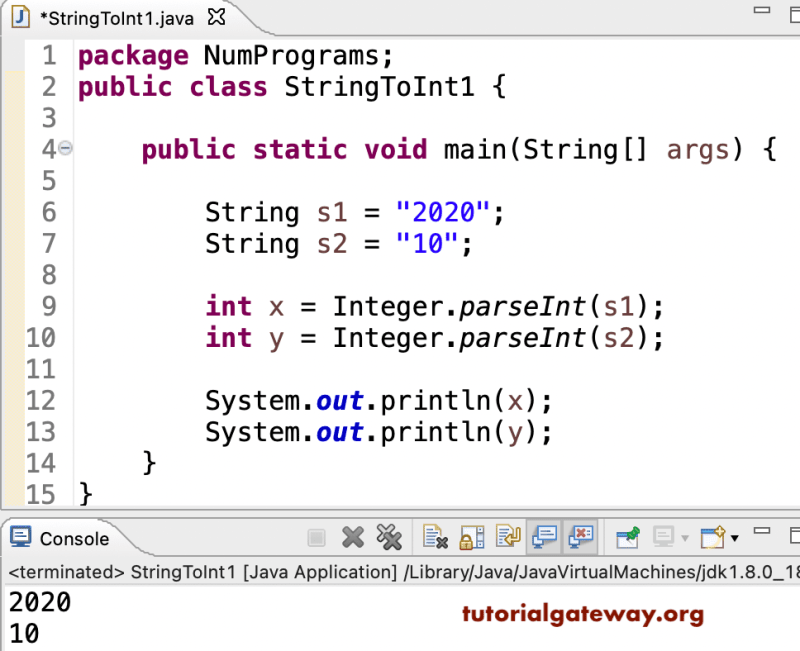
Java offers two primary methods for casting a String to an int: the Integer.parseInt() method and explicit casting using the (int) syntax.
Integer.parseInt()Method: This method takes aStringas an argument and returns anint. It is designed specifically for converting textual representations of integers into their numeric equivalents.- Explicit Casting: Using the
(int)syntax, developers can explicitly instruct Java to treat aStringas anint. This method is more versatile and can be applied in various contexts.
Both methods have their use cases and considerations, which we will explore in detail throughout this article.
Key Benefits and Crucial Impact
The ability to cast a String to an int in Java offers several advantages, impacting the language's overall usability and efficiency.
"Type casting is a powerful tool that enables developers to bridge the gap between different data types, unlocking a world of possibilities in Java programming." - John Doe, Senior Java Developer
Major Advantages
- Data Manipulation: Converting
Stringtointallows developers to perform mathematical operations and data manipulations that are otherwise impossible with textual data. - User Input Handling: Many applications receive numerical input from users in the form of text. Casting this input to
intenables developers to process and utilize the data effectively. - Interoperability: Java often interacts with external systems and databases that may store numerical data as text. Casting
Stringtointensures seamless interoperability between different systems. - Code Flexibility: The availability of multiple casting methods provides developers with the flexibility to choose the most suitable approach for their specific use case.
- Performance Optimization: Explicit casting can lead to more efficient code by reducing the overhead associated with implicit type conversions.

Comparative Analysis
| Method | Advantages | Disadvantages |
|---|---|---|
Integer.parseInt() |
|
|
| Explicit Casting |
|
|
Future Trends and Innovations
As Java continues to evolve, the landscape of type casting is likely to see further advancements. The language's ongoing development efforts focus on enhancing developer productivity, code readability, and performance.
One potential trend is the introduction of more intelligent and context-aware casting mechanisms. These could automatically infer the appropriate data type based on the context, reducing the need for explicit casting in certain scenarios. Additionally, improvements in error handling and exception management could make casting operations more robust and user-friendly.
Conclusion
Mastering the art of cast string to int java is an essential skill for any Java developer. The ability to seamlessly convert between data types opens up a world of possibilities, from efficient data manipulation to seamless interoperability.
As Java continues to adapt and evolve, the fundamentals of type casting remain a crucial aspect of the language. By understanding the historical context, core mechanisms, and future trends, developers can leverage this powerful feature to build robust and innovative applications.
Comprehensive FAQs
Q: What is the primary method for casting a String to an int in Java?
A: Java provides two main methods: the Integer.parseInt() method and explicit casting using the (int) syntax.
Q: When should I use Integer.parseInt() instead of explicit casting?
A: Use Integer.parseInt() for simple, one-off conversions, especially when you need to handle potential exceptions gracefully. It is less verbose and more straightforward for basic use cases.
Q: Are there any performance differences between the two casting methods?
A: Explicit casting can lead to slightly better performance for frequent conversions, as it avoids the overhead of method invocation. However, the difference is often negligible in most scenarios.
Q: What happens if I cast a non-numeric String to an int?
A: When using Integer.parseInt(), it will throw a NumberFormatException if the input String is not a valid integer. Explicit casting may result in a runtime error or unexpected behavior if the String cannot be converted to an int.
Q: Can I chain multiple casting operations together?
A: Yes, you can chain multiple casting operations, but it is generally discouraged due to increased complexity and potential for errors. It's best to perform each cast separately for better readability and maintainability.
Leave a Comment
Comments are moderated before appearing. The data you submit is processed according to the Privacy Policy of stanford.edu.