Which of These Are Clauses? Check All That Apply: A Comprehensive Exploration
In the realm of language and communication, understanding the structure of sentences is paramount. The phrase "which of these are clauses check all that apply" encapsulates the essence of this exploration, as we delve into the fundamental units of meaning that comprise our discourse. This article aims to provide a comprehensive overview of clauses, their historical significance, core mechanisms, and the benefits they bring to our linguistic landscape.
Whether you're a student, a writer, or a professional seeking to enhance your communication skills, grasping the concept of clauses is crucial. We will examine how clauses form the backbone of our sentences, enabling us to convey complex ideas with precision and clarity. By the end of this journey, you will be well-equipped to identify and utilize clauses effectively in your own writing and speaking.
Moreover, we will explore the evolution of clause structures throughout history, shedding light on how language has adapted and evolved to meet the changing needs of human communication. This historical context will not only enrich our understanding of clauses but also highlight their enduring importance in our modern linguistic landscape.
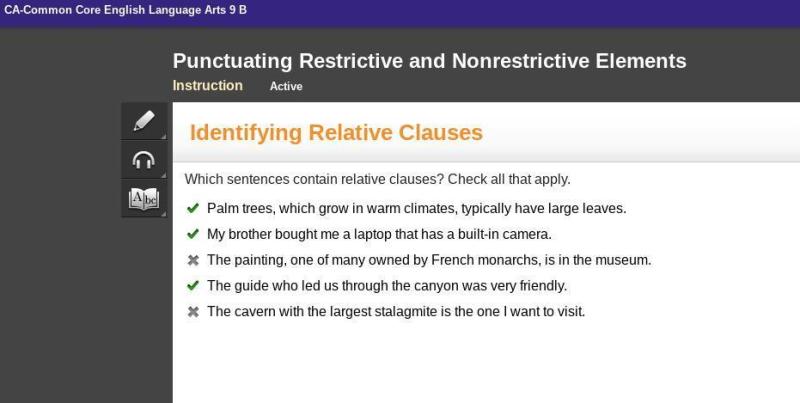
The Complete Overview of Clauses
Clauses, in their simplest form, are the building blocks of sentences. They carry a complete thought or idea, consisting of a subject and a predicate. However, the complexity of clauses extends far beyond this basic definition. Understanding the nuances of clause structure is essential for effective communication, as it allows us to convey our thoughts with precision and nuance.
The concept of clauses is not a modern invention but rather a fundamental aspect of language that has evolved over centuries. From ancient grammatical traditions to contemporary linguistic theories, clauses have remained a central focus. This enduring importance underscores their critical role in shaping our understanding and use of language.
Historical Background and Evolution
The study of clauses can be traced back to ancient civilizations, such as the Greeks and Romans, who developed early grammatical systems. In these systems, sentences were analyzed as a combination of subject and verb, with additional elements like objects and modifiers playing supporting roles. This basic framework laid the groundwork for modern clause analysis.
Table of Contents
- The Complete Overview of Clauses
- Historical Background and Evolution
- Core Mechanisms: How Clauses Work
- Key Benefits and Crucial Impact
- Major Advantages
- Comparative Analysis
- Future Trends and Innovations
- Conclusion
- Comprehensive FAQs
- Q: What is a clause in grammar?
- Q: How do I identify a clause in a sentence?
- Q: What is the difference between an independent and a dependent clause?
- Q: Can a sentence have multiple clauses?
- Q: How do clauses contribute to effective communication?
Over time, grammatical theories evolved, with scholars like Panini in ancient India and the medieval European grammarians refining and expanding upon the initial concepts. The introduction of formal logic and philosophical inquiries into language further influenced the understanding of clauses, emphasizing their role in conveying logical relationships and meaningful propositions.
Core Mechanisms: How Clauses Work
At the heart of clause structure lies the subject-predicate relationship. The subject, typically a noun or pronoun, represents the agent or entity being discussed. The predicate, on the other hand, expresses the action or state attributed to the subject. Together, they form the core of a clause, providing a complete thought or idea.
Clauses can be independent or dependent. An independent clause, also known as a main clause, can stand alone as a complete sentence. It contains all the necessary grammatical components to express a full thought. In contrast, a dependent clause, or a subordinate clause, relies on an independent clause to complete its meaning. It often begins with a subordinating conjunction or a relative pronoun, indicating its relationship to the main clause.
Key Benefits and Crucial Impact
The significance of clauses extends beyond mere grammatical structure; they are the very fabric that weaves together our thoughts and ideas. Clauses enable us to express complex concepts, convey nuanced meanings, and engage in sophisticated communication. By understanding how clauses work, we can enhance our writing and speaking, making our messages clearer and more impactful.
"Language is the blood of the soul into which thoughts run and out of which they grow." - Oliver Wendell Holmes
Major Advantages
- Clarity of Expression: Clauses allow us to convey our thoughts with precision, ensuring that our messages are understood as intended.
- Complexity and Nuance: By combining independent and dependent clauses, we can create intricate sentence structures that capture the subtleties of our ideas.
- Logical Organization: Clauses help us organize our thoughts logically, making our arguments and explanations coherent and persuasive.
- Versatility in Communication: Whether in written or spoken language, clauses provide the flexibility needed to adapt our messages to various contexts and audiences.
- Foundation for Language Learning: Understanding clauses is essential for learning new languages, as it provides a framework for grasping sentence structure and grammar.

Comparative Analysis
| Aspect | Independent Clause | Dependent Clause |
|---|---|---|
| Definition | A complete sentence with a subject and predicate that can stand alone. | A clause that depends on an independent clause for complete meaning. |
| Structure | Contains all necessary grammatical components. | Lacks one or more essential elements, relying on the main clause. |
| Function | Expresses a complete thought or idea. | Modifies or adds information to the independent clause. |
| Examples | "She walked to the store." | "Because she wanted to buy groceries." |
Future Trends and Innovations
As language continues to evolve, so too will our understanding and use of clauses. With the advent of digital communication and the rise of artificial intelligence, new challenges and opportunities arise. Natural language processing (NLP) technologies, for instance, are increasingly relying on sophisticated clause analysis to interpret and generate human-like text.
Furthermore, as global communication becomes more prevalent, the ability to structure sentences effectively across different languages will be crucial. Clauses, with their universal role in language, will play a pivotal role in facilitating cross-cultural understanding and ensuring clear communication in an increasingly interconnected world.

Conclusion
The phrase "which of these are clauses check all that apply" serves as a reminder of the intricate and multifaceted nature of language. Clauses, as the fundamental units of meaning, are the cornerstone of effective communication. By understanding their historical significance, core mechanisms, and the benefits they bring, we can harness their power to convey our thoughts and ideas with clarity and impact.
As we navigate the ever-evolving linguistic landscape, the importance of clauses remains steadfast. Whether in academic studies, professional communication, or everyday discourse, mastering the art of clause construction will undoubtedly enhance our ability to connect and engage with others.
Comprehensive FAQs
Q: What is a clause in grammar?
A: A clause is a unit of grammar that contains a subject and a predicate, expressing a complete thought or idea. It can be independent (a complete sentence) or dependent (relying on an independent clause for complete meaning).
Q: How do I identify a clause in a sentence?
A: To identify a clause, look for a subject (who or what is performing the action) and a predicate (the action or state of the subject). An independent clause can stand alone as a sentence, while a dependent clause requires additional information from a main clause.
Q: What is the difference between an independent and a dependent clause?
A: An independent clause is a complete sentence with all necessary grammatical components. A dependent clause, however, lacks one or more essential elements and depends on an independent clause to complete its meaning.
Q: Can a sentence have multiple clauses?
A: Yes, a sentence can have multiple clauses, both independent and dependent. Complex sentences often consist of a main clause and one or more subordinate clauses, allowing for more nuanced and intricate expressions of thought.
Q: How do clauses contribute to effective communication?
A: Clauses are essential for effective communication as they provide the structure needed to convey complex ideas clearly. By combining independent and dependent clauses, we can create sentences that express our thoughts with precision, logic, and versatility, adapting to various contexts and audiences.
Leave a Comment
Comments are moderated before appearing. The data you submit is processed according to the Privacy Policy of stanford.edu.