Unraveling the Complexity: What is the Simplified Form of the Expression?
In the realm of mathematics, the quest for clarity and efficiency often leads to the question: what is the simplified form of the expression? This inquiry is fundamental to problem-solving, be it in academia, engineering, or everyday calculations. Simplifying expressions not only aids in understanding complex concepts but also facilitates quicker and more accurate computations.
At its core, expression simplification involves manipulating and transforming algebraic expressions to achieve a more compact and manageable form without altering their inherent value. This process is akin to refining raw material into a polished gem, enhancing its utility and aesthetic appeal.
Whether you're a student grappling with quadratic equations or a professional navigating intricate financial models, mastering the art of simplification can significantly enhance your problem-solving arsenal. This article aims to provide a comprehensive overview of expression simplification, exploring its historical roots, core mechanisms, and far-reaching benefits.
The Complete Overview of Expression Simplification
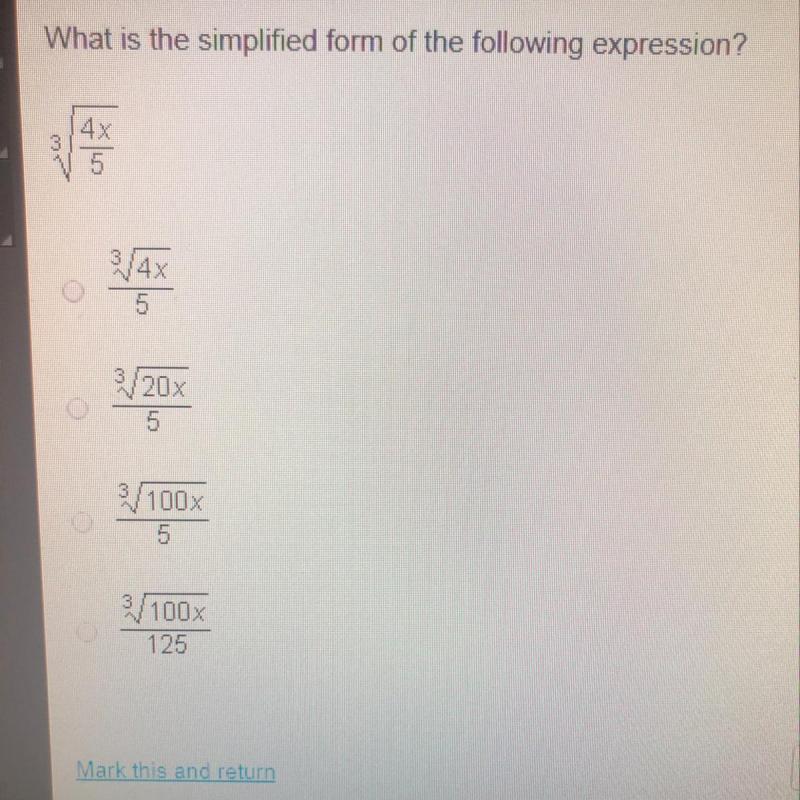
Expression simplification is a mathematical process that transforms complex algebraic expressions into simpler, equivalent forms. This practice is grounded in the principles of algebra and is essential for various applications, from solving equations to developing sophisticated models in fields like physics, engineering, and economics.
The primary objective of simplification is to make expressions easier to understand, evaluate, and manipulate. By reducing the complexity of an expression, we enhance its readability and accessibility, enabling more efficient problem-solving and decision-making processes.
Historical Background and Evolution
The concept of expression simplification has its roots in ancient mathematics, with early contributions from civilizations such as the Babylonians, Egyptians, and Greeks. However, it was during the Renaissance and the subsequent development of modern algebra that simplification techniques began to take shape in their current form.
Table of Contents
- The Complete Overview of Expression Simplification
- Historical Background and Evolution
- Core Mechanisms: How It Works
- Key Benefits and Crucial Impact
- Major Advantages
- Comparative Analysis
- Future Trends and Innovations
- Conclusion
- Comprehensive FAQs
- Q: What is the primary goal of simplifying an expression?
- Q: Can you provide an example of combining like terms in expression simplification?
- Q: How does factoring contribute to expression simplification?
- Q: Are there specific rules to follow when simplifying expressions?
- Q: How can technology assist in expression simplification?
Mathematicians like François Viète and René Descartes introduced systematic methods for manipulating and simplifying algebraic expressions. Their work laid the foundation for the rules and principles we use today. Over centuries, the evolution of mathematics has refined these techniques, incorporating new methodologies and leveraging technological advancements to streamline the simplification process.
Core Mechanisms: How It Works
Simplifying an expression involves applying a series of algebraic rules and properties to transform it into a simpler form. These mechanisms include:
- Combining like terms: Merging terms with the same variable and exponent.
- Factoring: Expressing an expression as a product of its factors.
- Expanding: Converting a factored expression into a more detailed form.
- Substituting: Replacing variables or expressions with their equivalent values.
- Reducing fractions: Simplifying fractional expressions to their lowest terms.
These techniques are often applied iteratively, gradually stripping away complexity until the expression reaches its simplest form. The order in which these steps are executed is crucial, as it ensures the preservation of the expression's original value.
Key Benefits and Crucial Impact
The ability to simplify expressions has profound implications across various domains. It serves as a cornerstone for effective problem-solving, facilitating quicker and more accurate computations. Moreover, simplification enhances the clarity and elegance of mathematical presentations, making complex ideas more accessible to a broader audience.
"Mathematics is the language with which God has written the universe." - Galileo Galilei
Major Advantages
- Improved Problem-Solving: Simplified expressions are easier to manipulate and solve, reducing the potential for errors.
- Enhanced Comprehension: Complex concepts become more digestible, aiding in learning and communication.
- Efficiency in Calculations: Simplification streamlines computational processes, saving time and resources.
- Standardization: Consistent simplification methods ensure expressions are presented in a universally understood format.
- Foundation for Advanced Concepts: Mastery of simplification is essential for tackling more intricate mathematical and scientific topics.

Comparative Analysis
| Aspect | Simplified Expression | Complex Expression |
|---|---|---|
| Readability | High | Low |
| Computational Efficiency | High | Low |
| Error Potential | Low | High |
| Communication Effectiveness | High | Low |
Future Trends and Innovations
As technology continues to advance, the landscape of expression simplification is evolving. Computer algebra systems (CAS) and artificial intelligence (AI) are increasingly integrated into educational and professional settings, automating parts of the simplification process. These tools not only enhance efficiency but also provide valuable learning opportunities by illustrating the steps involved in simplification.
Furthermore, the development of advanced algorithms and machine learning models promises to revolutionize how we approach complex expression manipulation. These innovations could lead to more sophisticated simplification techniques, pushing the boundaries of what is possible in mathematical problem-solving.
Conclusion
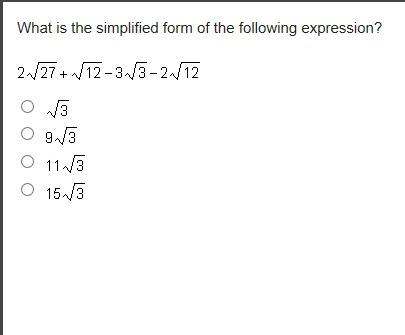
The quest for the simplified form of an expression is a fundamental aspect of mathematics, underpinned by centuries of intellectual progress. By unraveling complexity, we not only facilitate more efficient problem-solving but also unlock deeper insights into the elegant language of mathematics. As we look to the future, technological advancements will undoubtedly continue to shape and enhance our ability to simplify, opening new avenues for exploration and discovery.
Whether you are a student, educator, or professional, understanding and mastering expression simplification is an invaluable skill. It empowers us to communicate ideas more effectively, solve problems more efficiently, and navigate the intricate tapestry of mathematics with confidence and clarity.
Comprehensive FAQs
Q: What is the primary goal of simplifying an expression?
A: The primary goal is to transform a complex algebraic expression into a simpler, equivalent form. This enhances readability, facilitates easier manipulation, and ensures more accurate computations.
Q: Can you provide an example of combining like terms in expression simplification?
A: Certainly. Consider the expression 3x² + 5x² + 2x. Combining like terms yields 8x² + 2x, making the expression more concise and manageable.
Q: How does factoring contribute to expression simplification?
A: Factoring involves expressing a term as a product of its factors. For instance, x² + 5x + 6 can be factored into (x + 2)(x + 3), which is often easier to work with.
Q: Are there specific rules to follow when simplifying expressions?
A: Yes, simplification adheres to algebraic rules and properties, such as the commutative, associative, and distributive properties. These rules ensure that the original value of the expression is preserved.
Q: How can technology assist in expression simplification?
A: Computer algebra systems (CAS) and AI tools can automate parts of the simplification process, providing step-by-step guidance and insights. These tools enhance efficiency and learning, making complex manipulations more accessible.
Leave a Comment
Comments are moderated before appearing. The data you submit is processed according to the Privacy Policy of stanford.edu.