What is the Correct Order of the Scientific Method b0c357: Unraveling the Research Process
The scientific method is the cornerstone of empirical research, a systematic approach to acquiring knowledge through observation and experimentation. In the realm of science and inquiry, understanding the correct order of the scientific method b0c357 is paramount. This sequence of steps ensures that research is rigorous, unbiased, and leads to reliable conclusions. But what exactly is this method, and why is its order so crucial?
At its core, the scientific method b0c357 is a problem-solving strategy that involves making observations, formulating hypotheses, conducting experiments, and drawing conclusions. It is a dynamic process, often iterative, that has been refined over centuries. The 'b0c357' notation here represents the seven essential steps: Observe, Define, Collect, Analyze, Interpret, Communicate, and Reflect. Each step builds upon the previous one, creating a structured pathway to discovery.
In today's fast-paced world, where information is abundant but truth can be elusive, the scientific method stands as a beacon of reliability. It guides researchers across disciplines, from physics and biology to sociology and psychology, ensuring that their findings are robust and credible. This article delves into the intricacies of the scientific method b0c357, tracing its historical roots, dissecting its core mechanisms, and highlighting its enduring impact on the scientific enterprise.

The Complete Overview of the Scientific Method b0c357
The scientific method b0c357 is a comprehensive framework that underpins the entire research process. It is a structured, logical approach that enables scientists and researchers to navigate the complexities of the natural world and human behavior. This method is not merely a set of rules but a dynamic process that adapts to the nature of the inquiry.
At its heart, the scientific method b0c357 is a cycle of observation, questioning, and testing. It begins with curious minds observing phenomena, asking questions, and formulating hypotheses. These hypotheses are then rigorously tested through experiments and data collection. The results are analyzed, interpreted, and communicated to the scientific community and the wider public. This cycle ensures that knowledge is continually refined and built upon, advancing our understanding of the world.
Historical Background and Evolution
The roots of the scientific method can be traced back to ancient civilizations, such as the Egyptians, Greeks, and Chinese, who made significant contributions to early scientific thought. However, the modern scientific method began to take shape during the Scientific Revolution in the 16th and 17th centuries. This era saw the emergence of figures like Francis Bacon, Galileo Galilei, and René Descartes, who laid the foundations for empirical research.
Table of Contents
- The Complete Overview of the Scientific Method b0c357
- Historical Background and Evolution
- Core Mechanisms: How the Scientific Method b0c357 Works
- Key Benefits and Crucial Impact
- Major Advantages
- Comparative Analysis
- Future Trends and Innovations
- Conclusion
- Comprehensive FAQs
- Q: What is the primary purpose of the scientific method b0c357?
- Q: How does the scientific method b0c357 contribute to scientific progress?
- Q: Can the scientific method b0c357 be applied to all areas of research?
- Q: What role does technology play in the modern scientific method b0c357?
- Q: How does the scientific method b0c357 promote critical thinking?
Francis Bacon, an English philosopher, is often credited with formulating the principles of the scientific method. In his work, Novum Organum (1620), Bacon advocated for a new system of logic based on observation and experimentation rather than traditional authority. He proposed that knowledge should be acquired through inductive reasoning, starting from specific observations and moving towards general principles. This marked a significant shift from the deductive reasoning prevalent in Aristotelian philosophy.
Galileo Galilei, an Italian astronomer and physicist, further advanced the scientific method by emphasizing the importance of mathematics in describing natural phenomena. His experiments and mathematical analyses laid the groundwork for modern physics. Meanwhile, René Descartes, a French philosopher and mathematician, introduced the concept of methodological skepticism, encouraging researchers to question all assumptions and seek empirical evidence.
Over time, the scientific method evolved and became more refined. The 19th and 20th centuries saw the development of specialized branches of science, each adapting the method to their specific needs. Today, the scientific method b0c357 is a universally recognized framework, albeit with variations in its application across different disciplines.
Core Mechanisms: How the Scientific Method b0c357 Works
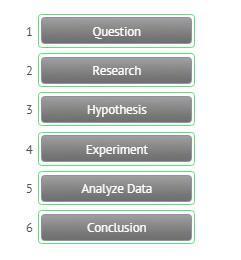
The scientific method b0c357 operates through a series of interconnected steps, each building upon the previous one. This sequential nature ensures that research is systematic and thorough. Let's explore each step in detail:
- Observe: The process begins with careful observation of a phenomenon or problem. Researchers may use their senses or specialized instruments to gather initial data.
- Define: In this step, researchers clearly define the problem or research question. They identify the variables, establish the scope of the study, and set specific goals.
- Collect: Data collection involves gathering relevant information and evidence. This can include experiments, surveys, interviews, or observations, depending on the nature of the research.
- Analyze: Here, researchers employ statistical and analytical tools to make sense of the collected data. They identify patterns, trends, and correlations, drawing preliminary conclusions.
- Interpret: Interpretation involves connecting the findings back to the initial research question. Researchers interpret the data in the context of existing theories and knowledge, forming a coherent argument.
- Communicate: Effective communication is vital. Researchers share their findings with the scientific community and the public through publications, conferences, and other media.
- Reflect: The final step is reflection, where researchers evaluate the entire process. They consider the strengths and limitations of their study, generating new questions and hypotheses for future research.
Key Benefits and Crucial Impact
The scientific method b0c357 has far-reaching implications, shaping the way we understand and interact with the world around us. Its impact is evident in numerous aspects of modern life, from technological advancements to medical breakthroughs.
The method's power lies in its ability to provide a systematic and unbiased approach to knowledge acquisition. By following this process, researchers can ensure that their findings are reliable, replicable, and contribute to the existing body of knowledge. This, in turn, fosters progress and innovation across various fields.
"The scientific method is the most powerful tool we have for understanding the natural world and making informed decisions." - Neil deGrasse Tyson, Astrophysicist
Major Advantages
- Reliability: The scientific method ensures that research findings are based on empirical evidence, reducing the influence of personal bias or subjective interpretations.
- Reproducibility: Well-documented experiments and data analysis allow other researchers to replicate the study, verifying or refuting the findings.
- Progress and Innovation: The iterative nature of the method drives scientific progress, building upon previous knowledge to create new technologies and solutions.
- Problem-Solving: It provides a structured approach to solving complex problems, breaking them down into manageable steps.
- Critical Thinking: Engaging in the scientific method fosters critical thinking skills, encouraging researchers to question assumptions and seek evidence-based answers.

Comparative Analysis
| Aspect | Scientific Method b0c357 | Alternative Approaches |
|---|---|---|
| Structure | Highly structured, sequential steps | More flexible, iterative, or cyclical |
| Emphasis | Empirical evidence, experimentation | Theoretical modeling, simulation, or observation |
| Goal | Test hypotheses, discover patterns | Explore concepts, generate theories |
| Application | Widely applied in physical and social sciences | Used in specific disciplines or contexts |
Future Trends and Innovations
As science continues to evolve, so too does the scientific method. Emerging technologies and methodologies are refining the way research is conducted, expanding the boundaries of what can be discovered.
One notable trend is the increasing use of big data and machine learning in scientific research. These tools enable researchers to analyze vast datasets, uncovering complex patterns and correlations that might otherwise go unnoticed. Additionally, advancements in computational power and modeling techniques are allowing for more sophisticated simulations and predictions.
The rise of open science and collaborative research is also shaping the future of the scientific method. Open-access publications, data-sharing platforms, and virtual collaboration tools are breaking down barriers, enabling scientists worldwide to contribute to and build upon each other's work. This trend fosters transparency, accelerates discovery, and ensures that the scientific method remains a global, collective endeavor.
Conclusion
The scientific method b0c357 is not just a set of procedures; it is a philosophical approach to understanding the world. Its strength lies in its ability to adapt to different disciplines and research questions while maintaining a rigorous standard of empirical evidence. By following this method, scientists and researchers contribute to a collective body of knowledge, advancing our understanding of the universe and ourselves.
As we navigate an increasingly complex and interconnected world, the scientific method remains a vital tool. It guides us in making informed decisions, solving pressing global challenges, and pushing the boundaries of human knowledge. Understanding the correct order of the scientific method b0c357 is not just a matter of academic interest; it is essential for fostering a more informed, evidence-based society.
Comprehensive FAQs
Q: What is the primary purpose of the scientific method b0c357?
A: The primary purpose is to provide a systematic and unbiased approach to acquiring knowledge through observation, experimentation, and analysis, leading to reliable conclusions.
Q: How does the scientific method b0c357 contribute to scientific progress?
A: By ensuring that research is rigorous and evidence-based, the method builds upon existing knowledge, allowing scientists to make incremental discoveries and innovations.
Q: Can the scientific method b0c357 be applied to all areas of research?
A: While it is primarily used in the natural and social sciences, variations of the method can be adapted to suit different disciplines, including humanities and arts, with appropriate modifications.
Q: What role does technology play in the modern scientific method b0c357?
A: Technology enhances the method by providing advanced tools for data collection, analysis, and modeling, enabling researchers to explore complex phenomena more effectively.
Q: How does the scientific method b0c357 promote critical thinking?
A: It encourages researchers to question assumptions, seek empirical evidence, and analyze data objectively, fostering a mindset of critical inquiry and skepticism.
Leave a Comment
Comments are moderated before appearing. The data you submit is processed according to the Privacy Policy of stanford.edu.