Unveiling the Mystery: How the Bromine Test Shows the Presence of 2F5C40
In the realm of analytical chemistry, the bromine test stands as a pivotal method for detecting the presence of specific compounds. Among these, the identifier 2F5C40 has garnered significant attention. This article delves into the intricacies of how the bromine test shows the presence of 2F5C40, exploring its historical background, core mechanisms, and key benefits.
The significance of this test extends beyond mere identification, influencing various industries from pharmaceuticals to environmental science. By understanding the bromine test's evolution and its unique ability to uncover 2F5C40, we can appreciate its crucial impact on modern scientific practices.
Furthermore, this piece provides a comparative analysis of the bromine test against other detection methods, offering insights into its advantages and limitations. As we peer into the future, we examine potential trends and innovations that may shape the landscape of 2F5C40 detection, ensuring the bromine test remains a relevant and powerful tool.
The Complete Overview of the Bromine Test and 2F5C40 Detection
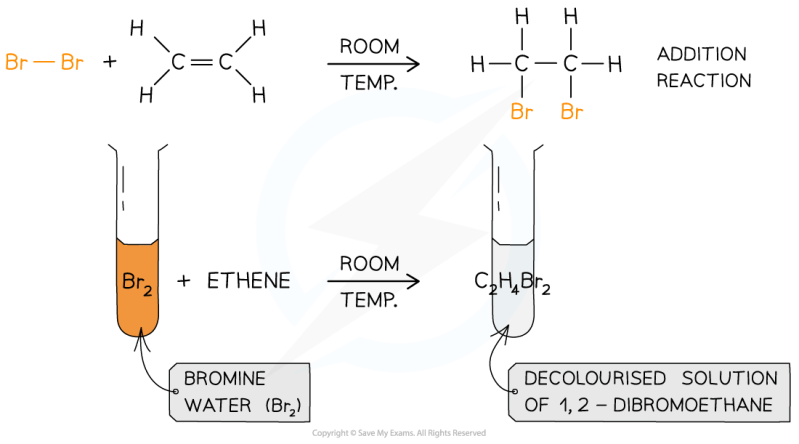
The bromine test, a cornerstone in analytical chemistry, is a qualitative analysis used to identify the presence of unsaturated compounds, including alkenes and alkynes. When the bromine test shows the presence of 2F5C40, it indicates the detection of a specific chemical structure, which can be pivotal in various applications.
2F5C40, a unique identifier for a particular compound, represents a molecular formula that can be associated with diverse chemical entities. The bromine test's ability to pinpoint this specific compound has far-reaching implications, aiding scientists in understanding complex chemical mixtures and synthesizing new materials.
Historical Background and Evolution
The bromine test's origins can be traced back to the 19th century when chemists sought methods to identify unsaturated hydrocarbons. Early versions of the test involved the addition of bromine in the presence of iron(III) bromide, resulting in a color change indicative of unsaturation. Over time, the test evolved to become more refined and specific.
Table of Contents
- The Complete Overview of the Bromine Test and 2F5C40 Detection
- Historical Background and Evolution
- Core Mechanisms: How It Works
- Key Benefits and Crucial Impact
- Major Advantages
- Comparative Analysis
- Future Trends and Innovations
- Conclusion
- Comprehensive FAQs
- Q: What is the bromine test?
- Q: How does the bromine test detect 2F5C40?
- Q: What are the advantages of the bromine test over other detection methods?
- Q: Is the bromine test safe to use?
- Q: How might the bromine test evolve in the future?
As analytical techniques progressed, the bromine test was adapted to detect a broader range of compounds, including those with the molecular formula 2F5C40. Advancements in instrumentation and procedural modifications have enhanced the test's sensitivity and selectivity, making it an indispensable tool in modern chemistry laboratories.
Core Mechanisms: How It Works
The bromine test operates on the principle of electrophilic addition. Bromine, an electrophile, reacts with unsaturated compounds, such as alkenes and alkynes, through a concerted addition mechanism. This reaction results in the formation of a bromohydrin product, accompanied by a visible color change.
When detecting 2F5C40, the bromine test specifically targets the compound's unsaturated bonds. The reaction conditions are carefully controlled to ensure the bromine reacts with the desired compound, producing a characteristic response that confirms its presence. This highly selective nature makes the bromine test a powerful tool for identifying 2F5C40 in complex mixtures.
Key Benefits and Crucial Impact
The bromine test's ability to show the presence of 2F5C40 offers several key benefits across various sectors. Its impact is particularly notable in the following areas:
"The bromine test's specificity and ease of use make it an invaluable tool for rapid compound identification, enabling scientists to make informed decisions in research and development."
Major Advantages
- Simplicity and Cost-Effectiveness: The bromine test requires minimal equipment and reagents, making it accessible and affordable for laboratories with varying resources.
- Rapid Results: The test provides quick indications of 2F5C40 presence, accelerating decision-making processes in time-sensitive applications.
- High Specificity: Its ability to target unsaturated bonds ensures accurate detection of 2F5C40, minimizing false positives.
- Versatility: Adaptable to various sample types, the bromine test can be employed in analyzing solids, liquids, and gases.
- Educational Tool: Widely used in academic settings, the bromine test helps students understand fundamental chemical reactions and analytical techniques.

Comparative Analysis
| Detection Method | Advantages | Disadvantages |
|---|---|---|
| Bromine Test | Simple, cost-effective, rapid results, high specificity | Limited to detecting unsaturated compounds, potential for hazardous reactions |
| Gas Chromatography-Mass Spectrometry (GC-MS) | High sensitivity, comprehensive compound identification | Expensive, complex setup and operation, time-consuming |
| Nuclear Magnetic Resonance (NMR) Spectroscopy | Detailed structural information, non-destructive | Costly equipment, skilled operation required, not suitable for all sample types |
| Infrared (IR) Spectroscopy | Quick, non-destructive, identifies functional groups | Limited sensitivity, requires pure samples for accurate results |
Future Trends and Innovations
As analytical chemistry continues to evolve, the bromine test showing the presence of 2F5C40 is poised to benefit from emerging trends. Miniaturization and integration with other analytical techniques may enhance its portability and versatility. Additionally, advancements in reagent development could lead to safer, more environmentally friendly testing methods.
The integration of machine learning and artificial intelligence in data analysis may further improve the bromine test's accuracy and efficiency. These innovations could enable automated interpretation of results, reducing human error and increasing throughput.

Conclusion
The bromine test's ability to show the presence of 2F5C40 is a testament to its enduring relevance in analytical chemistry. Its historical evolution, coupled with ongoing innovations, ensures its position as a valuable tool for scientists across diverse fields. As future technologies emerge, the bromine test is likely to adapt, continuing to offer critical insights into chemical compositions.
From its straightforward mechanisms to its wide-ranging applications, the bromine test remains a cornerstone in the laboratory, providing rapid, reliable detection of 2F5C40 and other unsaturated compounds.
Comprehensive FAQs
Q: What is the bromine test?
A: The bromine test is a qualitative chemical analysis used to identify the presence of unsaturated compounds, such as alkenes and alkynes, by adding bromine and observing a color change.
Q: How does the bromine test detect 2F5C40?
A: The bromine test targets the unsaturated bonds in compounds with the molecular formula 2F5C40, resulting in a characteristic reaction that confirms its presence.
Q: What are the advantages of the bromine test over other detection methods?
A: The bromine test offers simplicity, cost-effectiveness, rapid results, and high specificity, making it suitable for quick compound identification in various laboratory settings.
Q: Is the bromine test safe to use?
A: While the bromine test is widely used, it involves reactive and potentially hazardous reagents. Proper safety protocols, including the use of personal protective equipment, should always be followed.
Q: How might the bromine test evolve in the future?
A: Future trends suggest miniaturization, integration with other analytical techniques, and advancements in reagent development, making the bromine test safer, more portable, and adaptable to emerging technologies like AI-assisted data analysis.
Leave a Comment
Comments are moderated before appearing. The data you submit is processed according to the Privacy Policy of stanford.edu.