How Supply and Demand Coordinate to Determine Prices by Working: Unraveling the Economic Dynamic
In the realm of economics, few concepts are as fundamental and far-reaching as supply and demand. These twin pillars coordinate to determine prices by working in a delicate balance, responding to shifts in consumer preferences, technological advancements, and global events. Understanding this interplay is crucial for businesses, policymakers, and consumers alike, as it underpins market functionality and economic growth.
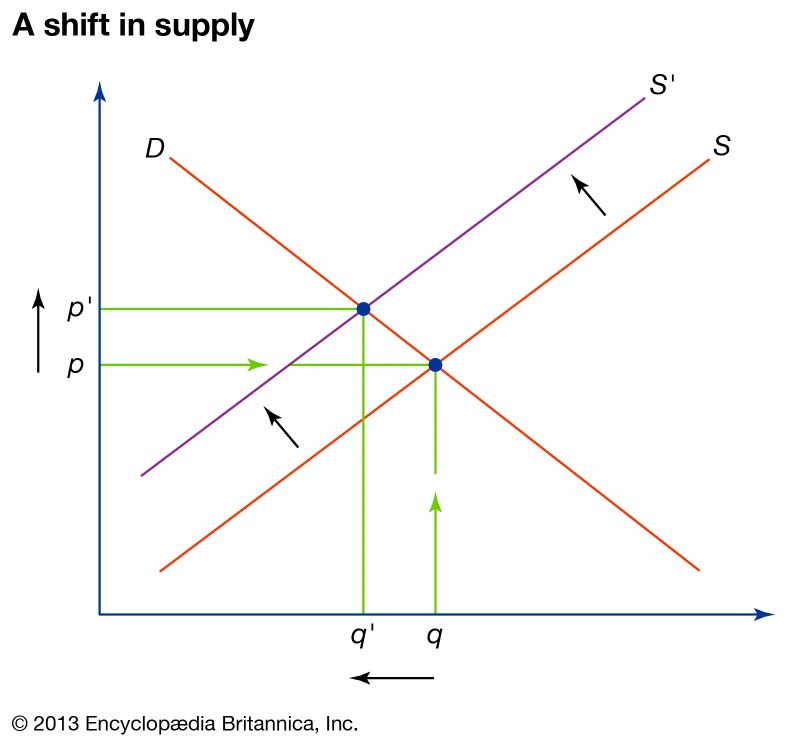
The mechanism by which supply and demand determine prices is a dynamic process, continually adjusting to new information and market conditions. When demand for a good or service exceeds its available supply, prices tend to rise, signaling to producers to increase output. Conversely, an oversupply in the market relative to demand leads to price decreases, incentivizing consumers to purchase more. This ongoing interaction ensures that prices reflect the true value of goods and services, promoting efficiency and equilibrium in the market.
Delving deeper, the relationship between supply and demand is not merely a static equilibrium but a dynamic, evolving process. External factors such as income levels, population growth, and government policies can significantly influence both supply and demand, leading to constant fluctuations in prices. Moreover, the introduction of new technologies or changes in consumer preferences can disrupt established patterns, creating new opportunities and challenges for businesses and consumers.

The Complete Overview of Supply and Demand Coordinating to Determine Prices
At its core, the concept of supply and demand coordinating to determine prices is a fundamental tenet of classical economics. It posits that in a free market, the interaction between producers and consumers naturally leads to a state of equilibrium where the quantity of goods or services supplied is equal to the quantity demanded. This equilibrium price is the point at which the market clears, leaving no excess supply or demand.
However, achieving this equilibrium is not a static process but rather a dynamic and continuous one. Market participants constantly adjust their behavior in response to price signals. Producers increase or decrease output based on profitability, while consumers alter their purchasing decisions based on perceived value. This ongoing interaction ensures that prices remain responsive to changing market conditions, facilitating efficient resource allocation.
Historical Background and Evolution
The principles of supply and demand have been recognized and studied for centuries, with roots tracing back to ancient economic thinkers. However, it was Adam Smith, the Scottish economist and philosopher, who popularized the concept in his seminal work, "The Wealth of Nations" (1776). Smith argued that individual self-interest, guided by the "invisible hand" of the market, would lead to the efficient allocation of resources, with prices acting as the coordinating mechanism.
Table of Contents
- The Complete Overview of Supply and Demand Coordinating to Determine Prices
- Historical Background and Evolution
- Core Mechanisms: How Supply and Demand Work
- Key Benefits and Crucial Impact
- Major Advantages
- Comparative Analysis
- Future Trends and Innovations
- Conclusion
- Comprehensive FAQs
- Q: How do changes in income affect supply and demand?
- Q: What is the role of technology in supply and demand?
- Q: How do government policies influence supply and demand?
- Q: What is the difference between elastic and inelastic demand?
- Q: How do global events impact supply and demand?
Over time, subsequent economists refined and expanded upon Smith's ideas. Alfred Marshall, a British economist, introduced the concept of supply and demand curves in the late 19th century, providing a visual representation of the relationship between price and quantity. This graphical approach helped to illustrate how changes in supply and demand conditions could lead to shifts in equilibrium prices and quantities.
In the 20th century, the Keynesian revolution brought new insights into the role of supply and demand in macroeconomic contexts. John Maynard Keynes emphasized the importance of aggregate demand in determining economic output and employment levels, particularly during periods of economic downturn. This perspective highlighted the need for government intervention to stabilize demand and support economic growth.
Core Mechanisms: How Supply and Demand Work
The interplay between supply and demand is governed by several key mechanisms:
- Price Elasticity: The responsiveness of supply and demand to changes in price. Goods with many substitutes tend to have elastic demand, meaning consumers will readily switch to alternatives if prices rise. Conversely, inelastic demand exists for goods with few substitutes, where consumers are less sensitive to price changes.
- Income Elasticity: The sensitivity of demand to changes in consumer income. Normal goods exhibit positive income elasticity, as demand increases with rising incomes. Luxury goods, on the other hand, may have negative income elasticity, with demand decreasing as incomes fall.
- Cross-Price Elasticity: The relationship between the price of one good and the demand for another. Substitute goods have positive cross-price elasticity, as a price increase for one leads to increased demand for the other. Complementary goods, meanwhile, have negative cross-price elasticity, as a price change in one affects the demand for the other in the opposite direction.
These mechanisms collectively shape the supply and demand curves, influencing the equilibrium price and quantity in the market. Producers and consumers continuously react to these price signals, adjusting their behavior to maintain market balance.
Key Benefits and Crucial Impact
The coordination of supply and demand to determine prices has profound implications for various stakeholders:
For consumers, this mechanism ensures access to a wide range of goods and services at competitive prices. Price signals encourage producers to innovate and improve efficiency, leading to higher-quality products at lower costs. Additionally, consumers benefit from increased choice and variety, as producers tailor their offerings to meet diverse preferences.
"The most important single central fact about a free market is that no exchange takes place unless both parties benefit."
Major Advantages
- Efficient Resource Allocation: Supply and demand ensure that resources are allocated efficiently, with goods and services flowing to where they are most valued.
- Incentives for Innovation: Price signals encourage producers to innovate, develop new technologies, and improve product quality to meet consumer demands.
- Consumer Sovereignty: Consumers have ultimate control over the market, as their purchasing decisions drive demand and influence producer behavior.
- Dynamic Equilibrium: The continuous adjustment of supply and demand leads to a dynamic equilibrium, allowing markets to adapt quickly to changing conditions.
- Global Trade and Specialization: International trade is facilitated by supply and demand, enabling countries to specialize in areas of comparative advantage and exchange goods and services efficiently.

Comparative Analysis
| Factor | Supply and Demand | Alternative Pricing Mechanisms |
|---|---|---|
| Efficiency | Efficient resource allocation through price signals | Potential inefficiencies due to lack of market signals or central planning errors |
| Innovation | Incentivizes innovation and improvement through competition | Innovation may be slower without market-driven incentives |
| Consumer Choice | Offers a wide range of choices driven by consumer demand | Limited choices determined by central planners or monopolistic producers |
| Adaptability | Dynamically adjusts to changing market conditions | Struggles to adapt quickly to shifts in demand or supply |
Future Trends and Innovations
As the global economy continues to evolve, several trends are shaping the dynamics of supply and demand:
Technological advancements, particularly in the realm of artificial intelligence and big data, are transforming how markets operate. Producers can now analyze vast amounts of consumer data to anticipate demand and optimize supply chains. Additionally, e-commerce platforms are creating new markets and disrupting traditional retail, altering the dynamics of supply and demand in the process.
Globalization and the increasing interconnectedness of economies are also significant factors. International trade and investment flows are reshaping global supply chains, while cultural exchanges and technological diffusion are influencing consumer preferences worldwide. These trends underscore the importance of understanding supply and demand in a global context, where local events can have far-reaching implications.
Conclusion
The coordination of supply and demand to determine prices is a cornerstone of modern economic theory and practice. This dynamic process ensures that markets function efficiently, allocating resources where they are most valued and incentivizing producers to meet consumer demands. As the global economy continues to evolve, the principles of supply and demand remain essential for navigating market dynamics, fostering innovation, and promoting economic growth.
Whether shaping consumer choices, driving technological advancements, or influencing government policies, the interplay between supply and demand is an ever-present force in our daily lives. Understanding this fundamental concept empowers individuals and organizations to make informed decisions, adapt to changing market conditions, and contribute to the overall vitality of the global economy.
Comprehensive FAQs
Q: How do changes in income affect supply and demand?
A: Changes in income can significantly impact supply and demand. For normal goods, increased income leads to higher demand as consumers can afford more. Conversely, lower income may decrease demand. However, the effect on supply is typically indirect, as producers respond to changes in demand by adjusting production levels.
Q: What is the role of technology in supply and demand?
A: Technology plays a crucial role in shaping supply and demand. Innovations can increase productivity, reducing production costs and shifting the supply curve rightward. Additionally, technology enables better data analysis, allowing producers to anticipate demand more accurately. On the demand side, technology creates new products and services, altering consumer preferences and shifting demand curves.
Q: How do government policies influence supply and demand?
A: Government policies can directly and indirectly affect supply and demand. Price controls, such as minimum wages or rent controls, can distort market equilibrium. Subsidies and taxes can shift supply and demand curves by altering the costs of production or consumption. Regulatory policies may also impact market participation and behavior, affecting both supply and demand.
Q: What is the difference between elastic and inelastic demand?
A: Elastic demand refers to a situation where a change in price leads to a relatively larger change in the quantity demanded. Goods with many substitutes typically exhibit elastic demand, as consumers can easily switch to alternatives. Inelastic demand occurs when a price change results in a smaller percentage change in quantity demanded. Essential goods or those with few substitutes tend to have inelastic demand.
Q: How do global events impact supply and demand?
A: Global events can have profound effects on supply and demand. Natural disasters, political instability, or pandemics can disrupt supply chains, reducing supply and increasing prices. Changes in global trade policies or economic conditions can alter import/export dynamics, influencing both supply and demand. Additionally, cultural exchanges and technological diffusion can shape consumer preferences worldwide, shifting demand curves.
Leave a Comment
Comments are moderated before appearing. The data you submit is processed according to the Privacy Policy of stanford.edu.