Navigating the Art of Problem Solving in Modern Customer Service
In the dynamic landscape of customer service, the ability to effectively solve problems is not just a skill, but a competitive advantage. The problem-solving process in customer service involves understanding customer needs, identifying issues, and implementing solutions that not only resolve immediate concerns but also enhance long-term customer loyalty. This pillar content delves into the comprehensive aspects of this process, its historical evolution, core mechanisms, benefits, and future trends.
As businesses increasingly recognize the value of customer experience in driving growth, the problem-solving process customer service has come to the forefront. It's not just about putting out fires; it's about building a proactive, customer-centric culture that fosters trust and loyalty. This article aims to provide a thorough understanding of this critical process, offering insights that can be applied to improve service strategies and overall business performance.
In an era where customer expectations are higher than ever, the problem-solving process customer service is a linchpin for any organization aiming to stand out. By the end of this exploration, readers will be equipped with the knowledge and tools to navigate this process with expertise, contributing to a more satisfied and loyal customer base.

The Complete Overview of Problem Solving Process Customer Service
The problem-solving process in customer service is a structured approach designed to address customer issues efficiently and effectively. It involves several stages, from initial contact to resolution and follow-up. This process is not merely transactional; it's a strategic opportunity to build relationships, enhance brand perception, and drive customer satisfaction.
At its core, the problem-solving process customer service aims to transform negative experiences into positive ones. By doing so, businesses can turn disgruntled customers into advocates, fostering a cycle of trust and loyalty. This process is dynamic and requires adaptability, empathy, and a deep understanding of customer needs and behaviors.
Historical Background and Evolution
Historically, customer service problem solving was a reactive process, often initiated after a customer had already experienced an issue. Traditional methods included phone calls, emails, and in-person interactions, with resolution times often measured in days or even weeks. The advent of digital technologies and the internet, however, revolutionized this landscape.
Table of Contents
- The Complete Overview of Problem Solving Process Customer Service
- Historical Background and Evolution
- Core Mechanisms: How It Works
- Key Benefits and Crucial Impact
- Major Advantages
- Comparative Analysis
- Future Trends and Innovations
- Conclusion
- Comprehensive FAQs
- Q: What are the key steps in the problem-solving process in customer service?
- Q: How has technology impacted the problem-solving process in customer service?
- Q: What are the major advantages of an effective problem-solving process in customer service?
- Q: How can businesses prepare for future trends in customer service problem solving?
- Q: Why is the problem-solving process in customer service considered a strategic driver of business success?
With the rise of e-commerce and digital communication, the problem-solving process in customer service became more immediate and accessible. Live chat, social media, and self-service portals emerged as new channels for customer interaction. These innovations allowed businesses to address issues faster and more efficiently, significantly improving customer satisfaction. Today, artificial intelligence (AI) and machine learning are further refining this process, enabling predictive problem-solving and personalized customer experiences.
Core Mechanisms: How It Works
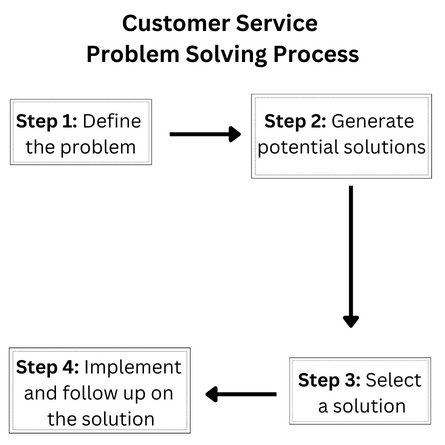
The problem-solving process customer service operates through a series of interconnected steps. These include issue identification, information gathering, solution generation, implementation, and follow-up. Each step is crucial for ensuring a comprehensive and effective resolution to customer problems.
Firstly, issue identification involves understanding the customer's concern through active listening and questioning. This stage sets the foundation for the entire process, as misinterpreting the issue can lead to ineffective solutions. Once the issue is clear, information gathering begins, where relevant data and context are collected to better understand the problem's root cause.
Next, solution generation involves brainstorming and evaluating potential solutions. This stage often benefits from collaboration among team members to ensure a wide range of options are considered. The chosen solution is then implemented, with clear communication to the customer about what to expect and any actions required from them.
Finally, follow-up is critical to ensure the solution has been effective and the customer is satisfied. This step also provides an opportunity for feedback, which can inform future improvements to the problem-solving process.
Key Benefits and Crucial Impact
The problem-solving process in customer service offers a multitude of benefits that extend beyond immediate issue resolution. These benefits touch upon various aspects of business operations, from customer satisfaction to brand reputation and revenue growth.
By effectively addressing customer issues, businesses can build trust, foster loyalty, and enhance their brand image. Moreover, the insights gained from resolving problems can inform product and service improvements, leading to increased customer satisfaction and revenue generation. The problem-solving process customer service is, therefore, not just a reactive function but a strategic driver of business success.
"The key to success is to focus our conscious mind on things we desire, not things we fear." - Brian Tracy
Major Advantages
- Improved Customer Satisfaction: Efficient problem resolution leads to higher customer satisfaction, increasing the likelihood of repeat business and positive word-of-mouth.
- Enhanced Brand Reputation: Demonstrating a commitment to customer service elevates a brand's reputation, attracting new customers and retaining existing ones.
- Valuable Feedback Loop: The problem-solving process provides a channel for gathering customer feedback, offering insights into areas for improvement and innovation.
- Increased Operational Efficiency: By streamlining the problem-solving process, businesses can reduce resolution times and resource allocation, leading to operational efficiencies.
- Boosted Employee Morale: Empowering employees with effective problem-solving tools and training can enhance their job satisfaction and overall morale.

Comparative Analysis
| Aspect | Traditional Problem Solving | Modern Problem Solving |
|---|---|---|
| Channels | Phone, Email, In-person | Live Chat, Social Media, AI Chatbots, Self-Service Portals |
| Resolution Time | Days to Weeks | Minutes to Hours |
| Personalization | Limited | Highly Personalized through Data Analytics |
| Scalability | Low | High, through Automation and AI |
Future Trends and Innovations
As technology continues to evolve, the problem-solving process in customer service is poised for further transformation. Emerging trends such as AI, machine learning, and predictive analytics are revolutionizing how businesses anticipate and address customer issues.
AI-powered chatbots, for instance, are becoming increasingly sophisticated, capable of handling complex queries and providing personalized solutions. Machine learning algorithms can analyze vast amounts of customer data to predict potential issues before they occur, allowing businesses to take proactive measures. Moreover, the integration of Internet of Things (IoT) devices is opening new avenues for real-time problem detection and resolution.
Looking ahead, the future of problem-solving process customer service is likely to be characterized by even greater personalization, speed, and efficiency. As businesses continue to invest in these technologies, the customer experience will be elevated to new heights, redefining expectations and standards in the industry.
Conclusion
The problem-solving process in customer service is a critical component of modern business strategy. By effectively addressing customer issues, businesses can build trust, enhance loyalty, and drive growth. From historical roots to future innovations, this process has evolved significantly, leveraging technology to offer faster, more personalized solutions.
As we move forward, the integration of AI, machine learning, and other advanced technologies will continue to shape the landscape. Businesses that prioritize and refine their problem-solving process customer service will be well-positioned to meet the evolving needs and expectations of their customers, solidifying their position in the market.
Comprehensive FAQs
Q: What are the key steps in the problem-solving process in customer service?
A: The primary steps include issue identification, information gathering, solution generation, implementation, and follow-up. Each stage is crucial for ensuring a comprehensive and effective resolution to customer problems.
Q: How has technology impacted the problem-solving process in customer service?
A: Technology has significantly enhanced the problem-solving process by introducing new channels like live chat and AI chatbots, reducing resolution times, and enabling personalized solutions through data analytics.
Q: What are the major advantages of an effective problem-solving process in customer service?
A: Major advantages include improved customer satisfaction, enhanced brand reputation, a valuable feedback loop for product/service improvements, increased operational efficiency, and boosted employee morale.
Q: How can businesses prepare for future trends in customer service problem solving?
A: Businesses should invest in AI, machine learning, and predictive analytics to anticipate customer issues and provide proactive solutions. Embracing IoT devices and real-time data analysis will also be crucial for staying ahead in the industry.
Q: Why is the problem-solving process in customer service considered a strategic driver of business success?
A: The problem-solving process goes beyond reactive issue resolution; it builds trust, fosters loyalty, and provides valuable insights for product/service improvements, directly contributing to business growth and success.
Leave a Comment
Comments are moderated before appearing. The data you submit is processed according to the Privacy Policy of stanford.edu.