Understanding the Dichotomy: Open vs Closed System

The Complete Overview of Open vs Closed System
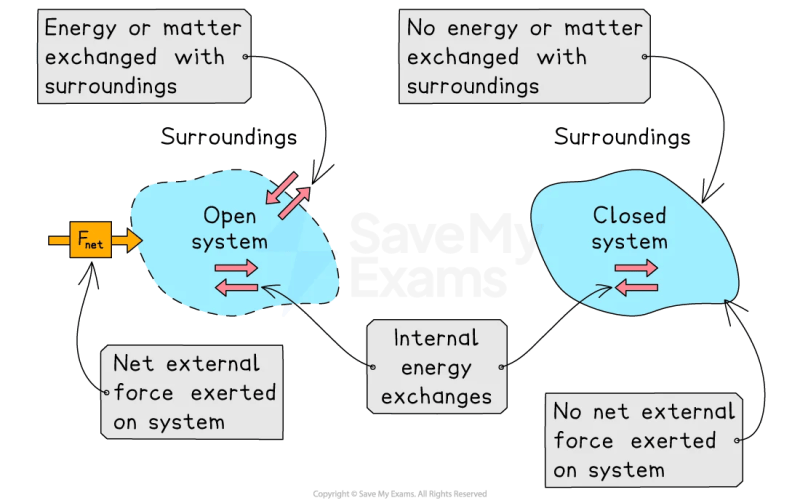
In the realm of systems theory, whether in technology, ecology, or sociology, the dichotomy of open vs closed systems has long been a pivotal concept. An open system actively exchanges information and resources with its environment, fostering adaptability and growth. Conversely, a closed system is self-contained, minimizing interactions with the external world, often prioritizing stability and control. Understanding these distinctions is crucial for appreciating their impact on various domains.
This article aims to dissect the historical background, core mechanisms, benefits, and impacts of open vs closed systems. We will also explore their comparative analysis and contemplate future trends, underscoring the importance of these concepts in shaping our world.
Historical Background and Evolution
The concept of systems thinking, within which the open vs closed system dichotomy resides, emerged in the mid-20th century. It was a response to the limitations of reductionist approaches, which focused on understanding complex systems by breaking them down into their simplest components. Scholars like Ludwig von Bertalanffy, Jay Forrester, and Norbert Wiener were instrumental in developing systems theory, introducing the idea that systems should be understood holistically, considering their interactions with environments.Open systems theory, in particular, gained prominence in the 1960s and 1970s, influenced by the cybernetics movement and the growing awareness of ecological interdependencies. It was recognized that many natural and social systems thrive on openness, exchange, and adaptation, contrasting with the more rigid and isolated closed systems.
Core Mechanisms: How It Works
Open System: An open system is characterized by its permeability, allowing for the flow of information, energy, and matter across its boundaries. This exchange fosters complexity, evolution, and adaptability. Open systems are often self-organizing, meaning they can restructure themselves based on feedback from the environment, leading to emergent properties and behaviors that aren't predictable from the properties of individual components alone.
Closed System: In contrast, a closed system maintains clearly defined boundaries, minimizing the exchange of information and resources with the outside. Closed systems are more predictable and controllable due to their isolated nature. They tend to have fixed structures and predetermined behaviors, making them suitable for environments where stability and consistency are paramount.
Key Benefits and Crucial Impact
The open vs closed system dichotomy has profound implications across various fields. Understanding these concepts enables us to design more effective systems, whether in technology, organizational structures, or environmental management."The more complex the system, the more it resembles a living organism, and the more it is incomprehensible in terms of the simple summation of its parts." - Ludwig von Bertalanffy
Major Advantages
- Adaptability: Open systems excel in dynamic environments, as they can rapidly adapt to changing conditions through continuous exchange with the environment.
- Innovation: The openness fosters a rich exchange of ideas and resources, driving innovation and the emergence of novel solutions.
- Resilience: By distributing information and functions across multiple components, open systems can better withstand failures and disruptions.
- Efficiency: Closed systems, while less adaptable, offer efficiency in controlled environments due to their streamlined and predictable operations.
- Predictability: The isolated nature of closed systems makes them easier to model and predict, which can be advantageous in certain scientific and engineering applications.
Comparative Analysis
| Criteria | Open System | Closed System |
|---|---|---|
| Information Exchange | High | Low |
| Adaptability | High | Low |
| Predictability | Moderate | High |
| Innovation Potential | High | Low |
Future Trends and Innovations
As we advance further into the 21st century, the tension between open and closed systems becomes increasingly evident across multiple sectors. The rise of big data, the Internet of Things (IoT), and artificial intelligence (AI) are pushing the boundaries of open systems, enabling unprecedented levels of connectivity and data exchange.Table of Contents
- The Complete Overview of Open vs Closed System
- Historical Background and Evolution
- Core Mechanisms: How It Works
- Key Benefits and Crucial Impact
- Major Advantages
- Comparative Analysis
- Future Trends and Innovations
- Conclusion
- Comprehensive FAQs
- Q: What defines an open system?
- Q: Are closed systems completely isolated?
- Q: What are the primary benefits of open systems?
- Q: When are closed systems preferable?
- Q: Can systems be both open and closed simultaneously?
At the same time, concerns about privacy, cybersecurity, and the need for controlled environments are leading to the development of more sophisticated closed systems. The future is likely to see a nuanced interplay between these two extremes, with hybrid models emerging that leverage the strengths of both open and closed systems.

Conclusion
The open vs closed system dichotomy offers a powerful lens through which to understand and design complex systems. While open systems thrive on adaptability, innovation, and resilience, closed systems provide efficiency, predictability, and control. As we navigate an increasingly interconnected world, appreciating the balance between these two architectures will be essential for addressing global challenges and shaping a sustainable future.Comprehensive FAQs
Q: What defines an open system?
A: An open system is characterized by its exchange of information, energy, and matter with its environment. This permeability fosters adaptability, complexity, and self-organization.
Q: Are closed systems completely isolated?
A: While closed systems minimize interactions with the outside world, they are not entirely isolated. Some level of exchange is inevitable, but it is significantly reduced compared to open systems.
Q: What are the primary benefits of open systems?
A: Open systems offer high adaptability, innovation potential, and resilience. They are particularly suited for dynamic environments where continuous learning and adjustment are crucial.
Q: When are closed systems preferable?
A: Closed systems are advantageous in scenarios requiring high predictability and control, such as certain scientific experiments, secure computing environments, or regulated industrial processes.
Q: Can systems be both open and closed simultaneously?
A: To some extent, yes. Many real-world systems operate as hybrids, leveraging open and closed characteristics depending on the context. The key is understanding when and how to balance these properties for optimal performance.
Leave a Comment
Comments are moderated before appearing. The data you submit is processed according to the Privacy Policy of stanford.edu.