Uncovering the Lowest Common Multiple of 25 and 30: A Comprehensive Exploration
Mathematical concepts often hold a fascinating allure, especially when they involve numbers that, at first glance, seem ordinary. The quest to determine the lowest common multiple (LCM) of 25 and 30 is a case in point. This fundamental mathematical problem has intrigued scholars, educators, and students alike, offering insights into number theory and practical applications in various fields.
The LCM of two numbers represents the smallest multiple that both numbers share. In the context of 25 and 30, this quest involves finding the least number that is divisible by both these integers. This exploration not only enriches our understanding of numerical relationships but also has implications in areas such as engineering, music theory, and even everyday scheduling.
In this in-depth article, we embark on a journey to unravel the intricacies of the lowest common multiple of 25 and 30. We will delve into its historical background, explore the core mechanisms that define its calculation, and highlight the significant benefits it offers. Furthermore, we will compare it with other mathematical concepts and peer into the future to anticipate trends and innovations that may arise from this fundamental understanding.
The Complete Overview of the Lowest Common Multiple of 25 and 30
The lowest common multiple of 25 and 30 is a mathematical concept that involves finding the smallest number that is divisible by both 25 and 30. This process is rooted in the fundamental theorem of arithmetic, which states that every integer greater than 1 can be written as a unique product of prime factors.
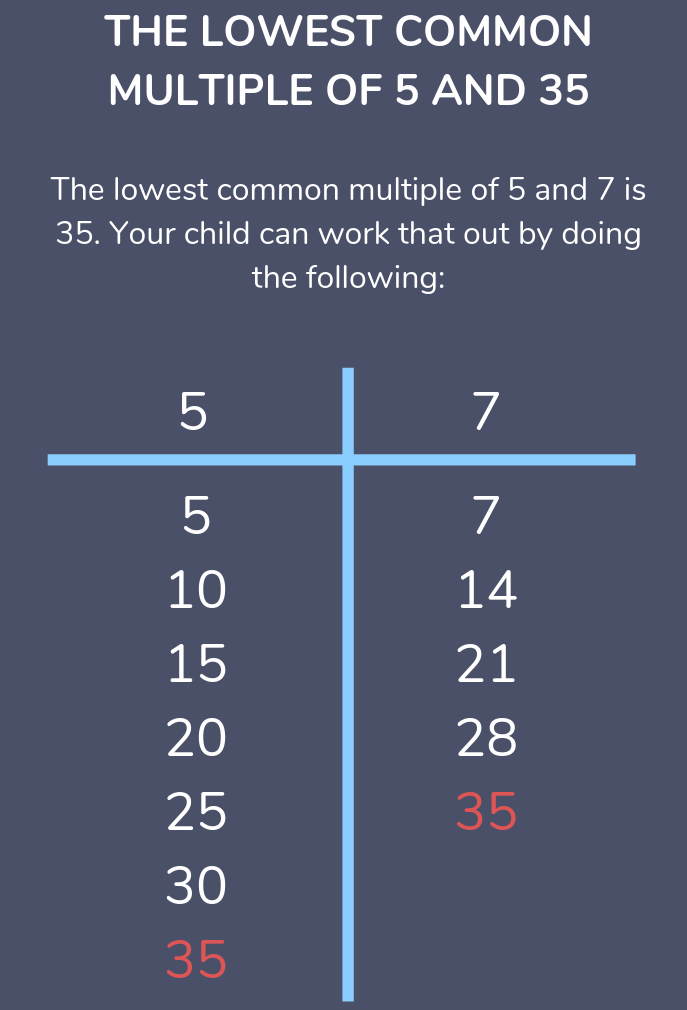
To compute the LCM, one method involves listing the multiples of each number until a common multiple is found. However, a more efficient approach utilizes the prime factorization method. By breaking down 25 and 30 into their respective prime factors, we can identify the unique primes and combine them to find the LCM.
Historical Background and Evolution
The concept of the least common multiple has its roots in ancient mathematical traditions. Early civilizations, such as the Babylonians and Egyptians, recognized the importance of finding common multiples for various practical purposes, including measurement systems and architectural design.
Table of Contents
- The Complete Overview of the Lowest Common Multiple of 25 and 30
- Historical Background and Evolution
- Core Mechanisms: How It Works
- Key Benefits and Crucial Impact
- Major Advantages
- Comparative Analysis
- Future Trends and Innovations
- Conclusion
- Comprehensive FAQs
- Q: What is the lowest common multiple (LCM) of 25 and 30?
- Q: How is the LCM of 25 and 30 calculated?
- Q: What are the practical applications of finding the LCM of 25 and 30?
- Q: How does the LCM relate to the Greatest Common Divisor (GCD)?
- Q: Can the concept of LCM be extended to more complex numbers or scenarios?
Over time, the understanding and application of LCMs evolved, particularly with the development of number theory by Greek mathematicians like Euclid. His seminal work, "Elements," includes a comprehensive treatment of number theory, laying the groundwork for modern mathematical concepts, including the LCM. The evolution of mathematical notation and algorithms further refined the process of calculating LCMs, making it more accessible and efficient.
Core Mechanisms: How It Works
The calculation of the lowest common multiple of 25 and 30 primarily relies on the prime factorization method. This approach involves breaking down each number into its prime factors, identifying the unique primes, and combining them to form the LCM.
For 25, the prime factorization is 52, as 25 is the square of 5. For 30, the prime factorization is 2 × 3 × 5. To find the LCM, we take the highest power of each unique prime factor present in the numbers. In this case, the LCM is 2 × 3 × 52, which equals 150.
Key Benefits and Crucial Impact
The determination of the lowest common multiple of 25 and 30 has far-reaching implications and benefits across various domains. Its significance lies in the fact that it provides a foundation for understanding more complex mathematical concepts and solving real-world problems.
"The study of the LCM is not merely an exercise in abstract mathematics; it has tangible applications in fields ranging from engineering to music theory."
Major Advantages
- Simplification of Fractions: The LCM plays a crucial role in simplifying fractions with different denominators, making them easier to compare and calculate.
- Engineering and Construction: In engineering and construction, the LCM is used to ensure that different components or structures are aligned and compatible, especially in systems with recurring cycles or patterns.
- Music Theory: Musicians and composers utilize the LCM to understand and create harmonious intervals, chords, and rhythms, as it helps in identifying common multiples of musical notes and beats.
- Scheduling and Time Management: The concept of LCM is applied in creating efficient schedules and calendars, where finding common multiples helps in aligning various tasks and events.
- Education: Teaching the LCM is essential in mathematics education, as it develops critical thinking skills and provides a foundation for more advanced mathematical concepts.

Comparative Analysis
| Aspect | Lowest Common Multiple of 25 and 30 | Greatest Common Divisor (GCD) |
|---|---|---|
| Definition | Smallest number divisible by both 25 and 30 | Largest number that divides both 25 and 30 without a remainder |
| Calculation Method | Prime factorization or listing multiples | Prime factorization or Euclidean algorithm |
| Result for 25 and 30 | 150 | 5 |
| Applications | Simplifying fractions, engineering, music, scheduling | Determining common factors, optimizing resources, cryptography |
Future Trends and Innovations
As mathematics continues to evolve, the understanding and application of the lowest common multiple of 25 and 30 are likely to influence and be influenced by emerging trends and technologies. The increasing integration of artificial intelligence and machine learning in mathematical research and problem-solving could lead to new insights and applications.
Moreover, the growing emphasis on interdisciplinary studies and the convergence of different fields, such as mathematics, computer science, and physics, may uncover novel ways to utilize the LCM concept. For instance, in quantum computing, the principles of number theory, including LCM calculations, could play a pivotal role in algorithm development and error correction techniques.

Conclusion
The lowest common multiple of 25 and 30 is a fundamental mathematical concept with profound implications and practical applications. Its calculation, rooted in prime factorization, offers a glimpse into the elegant structure of numbers and their relationships. From simplifying fractions to optimizing schedules, the LCM serves as a versatile tool in various domains.
As we continue to explore and innovate, the understanding of such fundamental concepts will undoubtedly open new avenues for research and application. The journey of discovering the LCM of 25 and 30 is not just a mathematical exercise but a testament to the power of human curiosity and the enduring relevance of mathematical principles in our ever-evolving world.
Comprehensive FAQs
Q: What is the lowest common multiple (LCM) of 25 and 30?
A: The LCM of 25 and 30 is 150. It is the smallest number that is divisible by both 25 and 30.
Q: How is the LCM of 25 and 30 calculated?
A: The LCM can be calculated using the prime factorization method. By finding the prime factors of each number (25 = 52, 30 = 2 × 3 × 5) and combining the highest powers of unique primes, we arrive at the LCM, which is 2 × 3 × 52 = 150.
Q: What are the practical applications of finding the LCM of 25 and 30?
A: The LCM has various applications, including simplifying fractions, ensuring compatibility in engineering designs, creating harmonious musical intervals, and optimizing schedules and calendars.
Q: How does the LCM relate to the Greatest Common Divisor (GCD)?
A: While the LCM represents the smallest common multiple, the GCD represents the largest common divisor of two numbers. They are related in that the product of the LCM and GCD of two numbers is equal to the product of the two numbers themselves.
Q: Can the concept of LCM be extended to more complex numbers or scenarios?
A: Absolutely. The concept of LCM can be applied to any pair of integers and is also used in more advanced mathematical concepts, such as modular arithmetic and number theory, which have applications in cryptography and computer science.
Leave a Comment
Comments are moderated before appearing. The data you submit is processed according to the Privacy Policy of stanford.edu.