Unveiling the Power of the Formula for Interest Compounded Quarterly
In the realm of personal finance and investment, understanding the formula for interest compounded quarterly can be a game-changer. This powerful concept allows savers and investors to maximize their returns over time, turning modest contributions into substantial nest eggs. By delving into the intricacies of quarterly compounding, individuals can make informed decisions to grow their wealth effectively.
The formula for interest compounded quarterly is a mathematical representation of how investments or savings grow when interest is calculated and added to the principal amount four times a year. This frequent compounding period accelerates the growth of funds, making it a popular choice for various financial products, from savings accounts to long-term investment plans.
In this comprehensive exploration, we will dissect the formula for interest compounded quarterly, tracing its historical roots, understanding its core mechanisms, and analyzing its impact on modern financial strategies. By the end, readers will possess a profound grasp of this essential concept and its potential to shape their financial future.

The Complete Overview of the Formula for Interest Compounded Quarterly
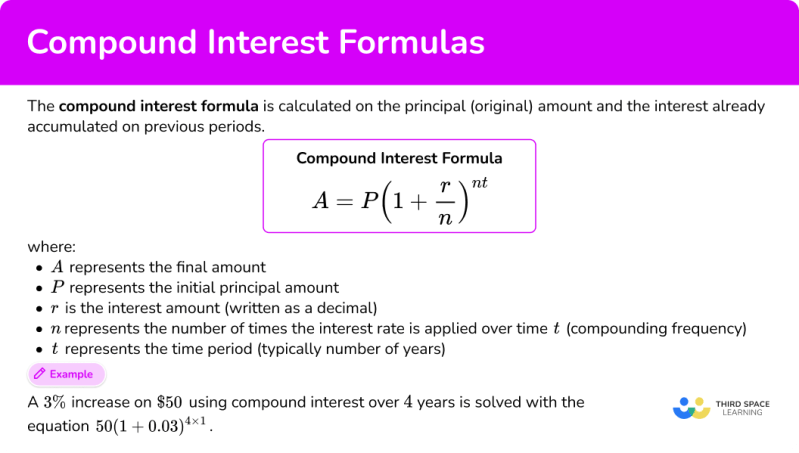
At its core, the formula for interest compounded quarterly is a tool to calculate the future value of an investment or savings account when interest is applied quarterly. This formula considers the principal amount, the annual interest rate, and the number of compounding periods in a year (in this case, four).
The standard formula for compound interest is: A = P(1 + r/n)^(nt), where:
- A is the future value of the investment/savings, including interest.
- P is the principal amount (initial investment or deposit).
- r is the annual interest rate (decimal).
- n is the number of compounding periods per year.
- t is the time the money is invested or saved for, in years.
Historical Background and Evolution
The concept of compound interest, including the formula for interest compounded quarterly, has a rich history dating back centuries. The idea of earning interest on interest was first documented in ancient India and Greece, where merchants and lenders recognized the potential for exponential growth in loans and investments.
Table of Contents
- The Complete Overview of the Formula for Interest Compounded Quarterly
- Historical Background and Evolution
- Core Mechanisms: How It Works
- Key Benefits and Crucial Impact
- Major Advantages
- Comparative Analysis
- Future Trends and Innovations
- Conclusion
- Comprehensive FAQs
- Q: What is the primary advantage of compounding interest quarterly over annually?
- Q: How does the formula for interest compounded quarterly impact long-term investment strategies?
- Q: Are there any drawbacks to quarterly compounded interest?
- Q: Can you explain how the formula adjusts for varying interest rates?
- Q: What role does the time factor play in the formula?
Over time, the formula evolved as mathematical and financial theories progressed. In the 17th century, Dutch mathematician Jacob Bernoulli derived the formula for continuous compounding, which laid the foundation for modern compound interest calculations. This theoretical work eventually led to the development of more practical formulas, including the one for quarterly compounding.
The adoption of quarterly compounding gained traction in the banking and financial sectors during the 20th century. Financial institutions recognized the benefits of offering products with more frequent compounding periods, attracting investors seeking faster-growing savings and investments.
Core Mechanisms: How It Works
The formula for interest compounded quarterly operates on a simple principle: breaking down the annual interest rate into smaller segments and applying it to the principal amount at regular intervals. This process accelerates the growth of funds compared to annual or simple interest calculations.
Each quarter, the interest is calculated based on the current principal amount and added to it. This new total then becomes the principal for the next quarter. As a result, the interest earned in subsequent periods is based on a growing principal, leading to exponential growth.
For example, consider an initial deposit of $1000 with an annual interest rate of 6% compounded quarterly. In the first quarter, the interest earned would be $1000 6% / 4 = $15. This $15 is then added to the principal, making it $1015 for the next quarter. The process repeats, with interest calculated and added to the principal four times a year.
Key Benefits and Crucial Impact
The formula for interest compounded quarterly has a profound impact on savings and investment strategies, offering several key benefits:
"The magic of compounded interest is not in understanding the formula, but in applying it consistently over time." - Unknown
Major Advantages
- Faster Growth: Quarterly compounding accelerates the growth of funds compared to annual compounding, allowing investors to reach their financial goals sooner.
- Higher Returns: Over the long term, the compounding effect significantly increases the final value of the investment, potentially doubling or tripling the initial principal.
- Flexibility: This formula is adaptable to various financial products, including savings accounts, certificates of deposit (CDs), and investment portfolios, providing options for different risk appetites.
- Encourages Savings: The power of quarterly compounding can motivate individuals to save more, as they witness their funds grow at a quicker pace.
- Compound Interest on Interest: The formula ensures that interest earned in one period becomes the base for earning more interest in the next, creating a virtuous cycle of growth.
Comparative Analysis
| Compounding Frequency | Annual Interest Rate (6%) | Value After 5 Years (Initial Deposit: $1000) |
|---|---|---|
| Annually | 6% | $1339.75 |
| Quarterly | 6% | $1359.79 |
| Monthly | 6% | $1362.57 |
| Daily | 6% | $1363.38 |
Future Trends and Innovations
As financial markets evolve, the formula for interest compounded quarterly remains a cornerstone of savings and investment strategies. However, several trends and innovations are shaping its application and impact:
- Digital Banking: Online and mobile banking platforms provide users with real-time access to their compounded interest calculations, enabling better financial planning and decision-making.
- Robo-Advisors and AI: Automated investment services utilize algorithms to optimize portfolios with various compounding strategies, making sophisticated financial management accessible to the masses.
- Low-Interest Rate Environment: In an era of historically low-interest rates, investors are exploring alternative assets and strategies to achieve higher returns, potentially shifting the focus from traditional quarterly compounded products.

Conclusion
The formula for interest compounded quarterly is a powerful tool in the financial arsenal of individuals and institutions. Its ability to accelerate wealth accumulation through frequent compounding periods has made it a cornerstone of savings and investment products. By understanding this formula and its historical context, investors can make informed decisions to optimize their financial strategies.
As the financial landscape continues to evolve, the principles of quarterly compounding remain relevant, adapting to new technologies and market conditions. Whether for short-term savings goals or long-term wealth accumulation, the formula for interest compounded quarterly will undoubtedly continue to shape the financial future of many.
Comprehensive FAQs
Q: What is the primary advantage of compounding interest quarterly over annually?
A: Quarterly compounding results in faster growth and higher returns over time. By compounding interest four times a year, the principal amount grows at an accelerated rate compared to annual compounding, leading to a significantly larger final value for the investment or savings.
Q: How does the formula for interest compounded quarterly impact long-term investment strategies?
A: For long-term investments, the formula has a profound impact. It allows investors to leverage the power of compounding to grow their wealth exponentially. Over decades, even modest initial investments can snowball into substantial amounts, making it a crucial strategy for retirement planning and intergenerational wealth transfer.
Q: Are there any drawbacks to quarterly compounded interest?
A: While quarterly compounding offers numerous benefits, it is essential to consider the time horizon. For short-term savings goals, the difference between quarterly and annual compounding may be minimal. Additionally, in a low-interest rate environment, the absolute returns may not be as significant as in historical periods with higher rates.
Q: Can you explain how the formula adjusts for varying interest rates?
A: The formula is flexible and can accommodate different interest rates. When rates change, the new rate is incorporated into the calculation. For instance, if the annual rate increases to 7%, the quarterly rate would be 7% / 4 = 1.75% per quarter. The formula ensures that the impact of rate changes is accurately reflected in the final value.
Q: What role does the time factor play in the formula?
A: Time is a critical component of the formula. The longer the investment period, the more compounding periods, leading to substantial growth. This relationship highlights the power of starting to save or invest early, as the formula works its magic over an extended period.
Leave a Comment
Comments are moderated before appearing. The data you submit is processed according to the Privacy Policy of stanford.edu.