Navigating the Block: Understanding Why Cylance Script Control Has Blocked PowerShell from Running
In the realm of cybersecurity, endpoint protection is paramount. Cylance, a leading provider of artificial intelligence (AI)-driven security solutions, has developed sophisticated mechanisms to safeguard systems from malicious scripts. One common scenario that users encounter is the message "cylance script control has blocked powershell from running." This article delves into the intricacies of this security measure, exploring its historical background, core mechanisms, key benefits, and future trends.
As the digital landscape evolves, so do the tactics of cybercriminals. PowerShell, a powerful command-line shell and scripting language, has become a favored tool for both administrators and attackers due to its versatility. Cylance's Script Control, a component of its endpoint protection platform, is designed to mitigate the risks associated with PowerShell and other scripting languages. Understanding how this feature operates is crucial for IT professionals and security-conscious individuals alike.
For organizations seeking to fortify their cybersecurity posture, comprehending the reasons behind such blocks is essential. This article aims to provide a comprehensive overview, ensuring that readers are well-informed about the protections in place and the potential implications for their workflows.

The Complete Overview of Cylance Script Control Blocking PowerShell
Cylance's Script Control is a dynamic security feature that monitors and controls the execution of scripts on endpoints. It is particularly vigilant when it comes to PowerShell, given its potential for both system administration and malicious activities. The primary objective is to prevent the execution of unauthorized or suspicious scripts that could compromise the security of the system.
Historical Background and Evolution
The evolution of Cylance's Script Control can be traced back to the increasing sophistication of cyber threats. As attackers began to exploit the power and flexibility of scripting languages like PowerShell, traditional signature-based antivirus solutions proved insufficient. In response, Cylance developed AI-driven models that analyze script behavior, identifying potential threats based on their actions rather than relying solely on predefined signatures.
Over time, Cylance's Script Control has become more granular and adaptive. It now incorporates machine learning algorithms that continuously learn from global threat intelligence, allowing it to detect and block emerging threats in real-time. This dynamic approach ensures that the solution remains effective against evolving cyber tactics.
Table of Contents
- The Complete Overview of Cylance Script Control Blocking PowerShell
- Historical Background and Evolution
- Core Mechanisms: How It Works
- Key Benefits and Crucial Impact
- Major Advantages
- Comparative Analysis
- Future Trends and Innovations
- Conclusion
- Comprehensive FAQs
- Q: Why does Cylance block PowerShell scripts?
- Q: How does Cylance determine which scripts to block?
- Q: Can I whitelist or allow specific PowerShell scripts?
- Q: How does Cylance's Script Control compare to traditional antivirus solutions?
- Q: What are the future developments for Cylance Script Control?
Core Mechanisms: How It Works
At its core, Cylance Script Control operates by analyzing the behavior of scripts as they execute. It employs a combination of static analysis (examining the script's code) and dynamic analysis (observing the script's actions in a controlled environment). This dual approach enables the system to identify potentially harmful scripts before they can cause damage.
When a script attempts to run, Cylance Script Control intercepts the process. It then evaluates the script against a set of predefined rules and policies, considering factors such as the script's origin, its intended actions, and its behavior patterns. If the script is deemed suspicious or unauthorized, Cylance blocks its execution and alerts the user or administrator.
Key Benefits and Crucial Impact
The implementation of Cylance Script Control has significant implications for both security and operational efficiency. By proactively blocking potentially harmful scripts, it helps organizations:
"Mitigate the risk of script-based attacks, enhancing overall endpoint protection."
Major Advantages
- Advanced Threat Protection: Cylance's AI-driven approach enables the detection and blocking of zero-day threats and advanced persistent threats (APTs) that traditional antivirus solutions might miss.
- Reduced Response Time: By intercepting threats at the script execution stage, organizations can respond to incidents more quickly, minimizing potential damage.
- Granular Control: Script Control allows administrators to set fine-grained policies, enabling them to permit or deny specific scripts or actions based on security requirements.
- Improved Compliance: The ability to monitor and control script execution helps organizations meet regulatory compliance standards related to data security and privacy.
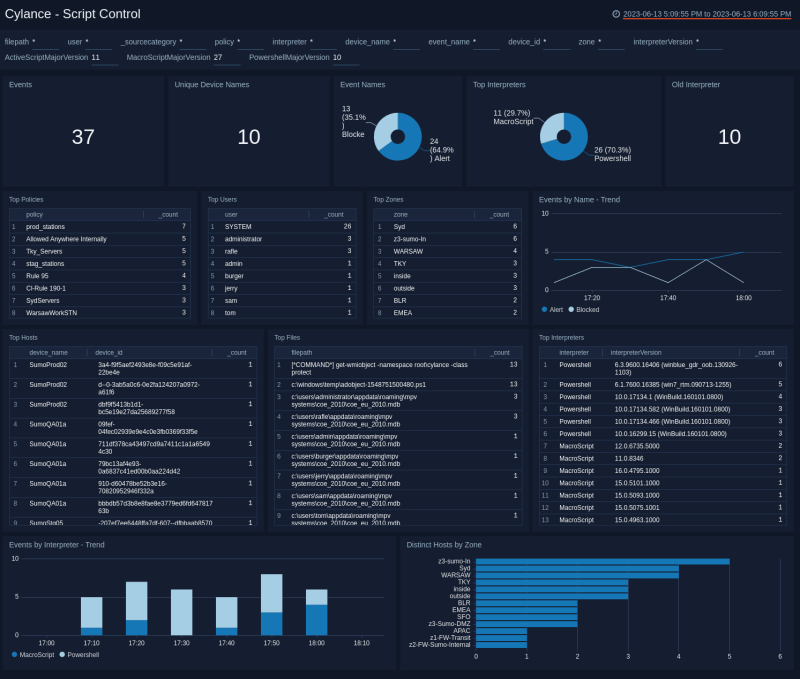
- Enhanced Visibility: Cylance provides detailed reports and alerts, offering administrators greater visibility into script activity and potential security incidents.
Comparative Analysis
| Feature | Cylance Script Control | Traditional Antivirus |
|---|---|---|
| Threat Detection | AI-driven, behavior-based | Signature-based |
| Response Time | Real-time blocking | Post-execution detection |
| Granularity | Fine-grained script control | File-level scanning |
| Adaptability | Continuously learns from global threat intelligence | Periodic updates |
Future Trends and Innovations
As cybersecurity threats continue to evolve, so too will the technologies designed to combat them. Cylance's Script Control is poised to play an increasingly critical role in endpoint protection, with several trends and innovations on the horizon:
- Enhanced Machine Learning: Further advancements in machine learning algorithms will improve the accuracy and efficiency of threat detection, reducing false positives and enhancing overall security.
- Integration with EDR Solutions: The integration of Script Control with Endpoint Detection and Response (EDR) solutions will provide more comprehensive visibility and control over endpoint activities, enabling faster incident response and remediation.

Conclusion
The message "cylance script control has blocked powershell from running" is a testament to the proactive security measures in place. Cylance's Script Control represents a significant advancement in endpoint protection, leveraging AI and machine learning to mitigate script-based threats. By understanding the historical context, core mechanisms, and key benefits of this technology, organizations can better navigate the complexities of modern cybersecurity.
As the digital landscape continues to evolve, so too will the tactics of cybercriminals. Staying ahead of these threats requires innovative solutions like Cylance Script Control, which provide robust, adaptive protection for endpoints.
Comprehensive FAQs
Q: Why does Cylance block PowerShell scripts?
A: Cylance blocks PowerShell scripts that are deemed suspicious or unauthorized based on its AI-driven threat analysis. PowerShell's power and flexibility make it a target for malicious activities, and Cylance's Script Control helps mitigate these risks.
Q: How does Cylance determine which scripts to block?
A: Cylance uses a combination of static and dynamic analysis to evaluate scripts. It considers factors such as the script's origin, its intended actions, and its behavior patterns against predefined rules and policies.
Q: Can I whitelist or allow specific PowerShell scripts?
A: Yes, Cylance Script Control allows administrators to set fine-grained policies. You can whitelist specific scripts or define exceptions based on your organization's security requirements.
Q: How does Cylance's Script Control compare to traditional antivirus solutions?
A: Unlike traditional signature-based antivirus solutions, Cylance's Script Control uses AI and behavior analysis to detect threats. This approach enables real-time blocking of zero-day threats and advanced persistent threats, offering more comprehensive protection.
Q: What are the future developments for Cylance Script Control?
A: Future developments include enhanced machine learning capabilities and tighter integration with EDR solutions. These advancements will improve threat detection accuracy and provide greater visibility into endpoint activities.
Leave a Comment
Comments are moderated before appearing. The data you submit is processed according to the Privacy Policy of stanford.edu.