Unlocking Math Mastery: The Best App for Math Problem Solving
In the digital age, learning mathematics has evolved far beyond traditional textbooks and blackboards. With the advent of sophisticated mobile applications, mastering math has become more accessible and engaging than ever. Students and enthusiasts alike are turning to technology for instant solutions, step-by-step guidance, and personalized learning experiences. At the forefront of this revolution lies the quest for the best app for math problem solving—a tool that promises to unravel even the most complex equations with ease.
The app market is flooded with options, each claiming to be the ultimate solution for math woes. However, sifting through the noise to find the most effective and reliable app can be a daunting task. This article delves into the world of math problem-solving apps, exploring their historical background, core mechanisms, and the profound impact they have on modern education. We will also compare leading contenders in the market and peer into the future of this innovative sector.
Whether you're a student grappling with algebra, a professional refreshing their calculus skills, or simply someone who loves the challenge of mathematics, this guide is designed to equip you with the knowledge to choose the best app for your needs. Let's embark on a journey to unlock the secrets of math mastery through technology.

The Complete Overview of the Best App for Math Problem Solving
In the contemporary educational landscape, math problem-solving apps have emerged as indispensable tools. These applications not only provide instant solutions but also offer personalized learning paths, adaptive tutoring, and interactive practice sessions. The best app in this category stands out by combining accuracy, ease of use, and comprehensive coverage of mathematical concepts, from basic arithmetic to advanced calculus and beyond.
As we navigate the digital realm, it's crucial to understand how these apps have evolved and what sets them apart. This overview will serve as your compass, guiding you through the features, functionalities, and benefits that define the best app for math problem solving.
Historical Background and Evolution
The journey of math problem-solving apps began with the advent of personal computers and early educational software. These initial tools were rudimentary, often limited to basic calculations and simple problem sets. As technology advanced, so did the complexity and capability of these applications. The introduction of smartphones and tablets brought math learning to the fingertips of millions, fostering a new era of mobile education.
Table of Contents
- The Complete Overview of the Best App for Math Problem Solving
- Historical Background and Evolution
- Core Mechanisms: How It Works
- Key Benefits and Crucial Impact
- Major Advantages
- Comparative Analysis
- Future Trends and Innovations
- Conclusion
- Comprehensive FAQs
- Q: How do math problem-solving apps use AI to enhance learning?
- Q: Are these apps suitable for all age groups and learning levels?
- Q: Can I rely on these apps for accurate solutions?
- Q: How do these apps promote interactive learning?
- Q: What should I consider when choosing the best app for my needs?
Early math apps were largely focused on drill-and-kill exercises, repeating problems to reinforce concepts. However, the landscape shifted significantly with the integration of artificial intelligence (AI) and machine learning (ML) technologies. These innovations allowed apps to adapt to individual learning styles, provide personalized feedback, and offer step-by-step solutions—transforming the learning experience from static exercises to dynamic, tailored instruction.
Core Mechanisms: How It Works
At the heart of the best app for math problem solving lies a sophisticated blend of technologies and pedagogical approaches. These apps typically employ the following mechanisms:
- AI-Powered Tutoring: Leveraging AI to analyze user performance and adapt learning paths in real-time, ensuring personalized instruction.
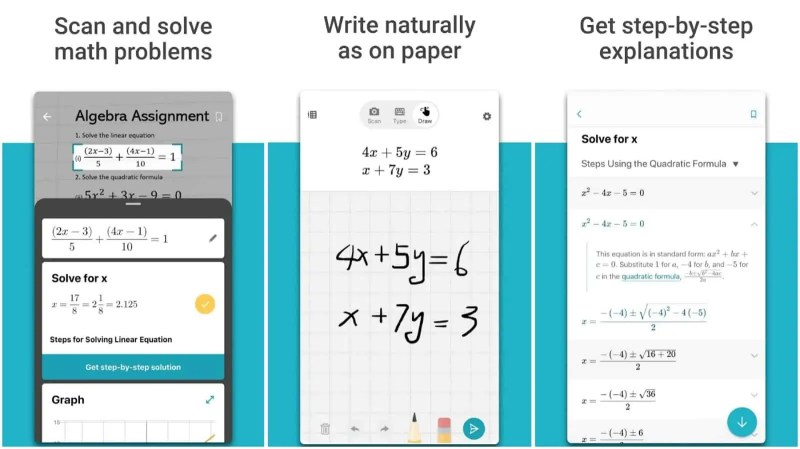
- Optical Character Recognition (OCR): Enabling users to input problems by scanning handwritten equations, bridging the gap between traditional and digital learning.
- Step-by-Step Solutions: Providing detailed breakdowns of problem-solving processes, enhancing understanding and retention.
- Interactive Practice: Offering a gamified learning experience through quizzes, challenges, and rewards, motivating users to engage actively.
- Progress Tracking: Monitoring user performance over time, identifying areas of improvement, and setting achievable learning goals.
Key Benefits and Crucial Impact
The introduction of advanced math problem-solving apps has had a profound impact on education, empowering learners of all ages and backgrounds. These apps democratize access to high-quality math education, breaking down barriers posed by geographical, economic, and temporal constraints.
"Mobile learning has the potential to enhance students' academic performance by providing personalized, contextualized, and collaborative learning experiences."
Major Advantages
- Accessibility: Available anytime, anywhere, these apps cater to diverse learning styles and schedules.
- Personalized Learning: AI-driven adaptive learning paths ensure that each user receives tailored instruction, optimizing learning outcomes.
- Instant Feedback: Real-time corrections and explanations help users identify and correct mistakes promptly, reinforcing learning.
- Interactive Engagement: Gamified elements and interactive practice sessions foster a deeper interest in mathematics, making learning enjoyable.
- Cost-Effectiveness: Offering a more affordable alternative to traditional tutoring, these apps provide high-quality instruction at a fraction of the cost.
Comparative Analysis
| App | Features | Pros | Cons |
|---|---|---|---|
| App A | AI Tutoring, OCR, Step-by-Step Solutions | Highly accurate, User-friendly interface, Comprehensive content | Limited interactive practice, No progress tracking |
| App B | Adaptive Learning, Gamification, Progress Tracking | Engaging, Personalized learning paths, Detailed performance insights | Basic problem-solving, Lacks advanced math topics |
| App C | OCR, Step-by-Step Solutions, Interactive Quizzes | Scans handwritten problems, Fun learning experience, Wide topic coverage | Inconsistent accuracy, No adaptive learning |
| App D | AI Tutoring, Progress Tracking, Advanced Math | Expert-led instruction, Covers complex topics, Detailed analytics | Steep learning curve, Expensive subscription |
Future Trends and Innovations
As technology continues to advance, the future of math problem-solving apps looks promising. Emerging trends and innovations are poised to further enhance the learning experience, making math education more accessible, engaging, and effective. Key areas of development include:
- Enhanced AI Integration: More sophisticated AI algorithms will improve personalized learning, predictive analytics, and natural language processing for better problem understanding.
- Virtual and Augmented Reality (VR/AR): Immersive technologies will create interactive, 3D learning environments, bringing mathematical concepts to life.
- Collaborative Learning Platforms: Integrating social features will enable users to connect, collaborate, and learn from peers, fostering a community of math enthusiasts.
- Adaptive Difficulty Levels: Apps will dynamically adjust problem complexity based on user performance, ensuring optimal challenge and engagement.
- Integration with Educational Systems: Seamless integration with schools and universities will facilitate personalized learning paths aligned with curriculums, bridging the gap between traditional and digital education.

Conclusion
The quest for the best app for math problem solving is a journey through the intersection of technology and education. These applications have evolved from simple calculation tools to sophisticated learning platforms, empowering users with personalized instruction, instant feedback, and interactive engagement. As we look to the future, advancements in AI, VR/AR, and collaborative learning promise to revolutionize math education further.
Whether you seek to enhance your basic math skills or delve into advanced calculus, the right app can significantly enhance your learning journey. By understanding the historical context, core mechanisms, and future trends, you are now equipped to make an informed decision when choosing a math problem-solving app. Embrace the power of technology and unlock your full math potential.
Comprehensive FAQs
Q: How do math problem-solving apps use AI to enhance learning?
A: Math problem-solving apps utilize AI primarily through adaptive learning algorithms. These algorithms analyze user performance, identifying strengths and weaknesses to tailor learning paths accordingly. AI also powers natural language processing, enabling apps to understand and solve problems inputted in natural language or handwriting.
Q: Are these apps suitable for all age groups and learning levels?
A: Absolutely. While some apps may focus on specific age groups or learning levels, the best apps for math problem solving typically offer a wide range of content, catering to everyone from elementary school students to college-level math enthusiasts and professionals.
Q: Can I rely on these apps for accurate solutions?
A: Yes, the leading apps in this category prioritize accuracy. They employ advanced algorithms and extensive databases to provide correct solutions. However, it's always beneficial to cross-verify critical calculations using multiple sources.
Q: How do these apps promote interactive learning?
A: Interactive learning is a key focus for many math problem-solving apps. They achieve this through gamification, offering quizzes, challenges, and rewards. Some apps also incorporate interactive visualizations and simulations to illustrate mathematical concepts, making learning more engaging and intuitive.
Q: What should I consider when choosing the best app for my needs?
A: When selecting an app, consider your specific learning goals, the range of topics covered by the app, its user interface, accuracy, and additional features like progress tracking and interactive practice. Reading user reviews and comparing app capabilities can also help you make an informed decision.
Leave a Comment
Comments are moderated before appearing. The data you submit is processed according to the Privacy Policy of stanford.edu.