Finding Expert Badminton Stringing Near Me: A Comprehensive Guide
For the avid badminton player, the performance of your racquet can make all the difference on the court. Central to this performance is the art and science of badminton stringing. Finding a skilled professional for badminton stringing near me can be a game-changer, quite literally. This service ensures your racquet is tailored to your playing style, offering optimal control and power.
Whether you're a casual player or a competitive athlete, understanding badminton stringing and its nuances can elevate your game. This comprehensive guide delves into the world of badminton stringing, exploring its history, technical aspects, benefits, and how it stacks up against other racquet sports. By the end, you'll have a clear understanding of why and how to seek out badminton stringing near me to enhance your sporting experience.
In a hurry to get your racquet strung? Skip ahead to our FAQs for quick answers on finding badminton stringing near me.
The Complete Overview of Badminton Stringing
Badminton stringing is a specialized service that involves replacing the strings on a badminton racquet to achieve specific performance characteristics. It's not merely about fixing a broken string; it's an art that fine-tunes your racquet to your playing style and preferences. A skilled stringer considers factors like string tension, material, and pattern to create the perfect balance of power, control, and feel.
The process of badminton stringing near me begins with consulting a professional who understands the nuances of the sport and can advise on the best setup for your needs. This personalized approach ensures that your racquet becomes an extension of your arm, enhancing your on-court performance.
Historical Background and Evolution
Badminton's origins can be traced back to ancient civilizations in Europe and Asia, with the modern game developing in the 19th century in England. Over time, the sport has evolved significantly, particularly in the technology and design of racquets and strings. Early racquets were made of wood and used natural gut strings, offering limited control and power compared to today's equipment.
Table of Contents
- The Complete Overview of Badminton Stringing
- Historical Background and Evolution
- Core Mechanisms: How It Works
- Key Benefits and Crucial Impact
- Major Advantages
- Comparative Analysis
- Future Trends and Innovations
- Conclusion
- Comprehensive FAQs
- Q: How often should I get my badminton racquet strung?
- Q: Can any local sports store handle badminton stringing near me?
- Q: How much does badminton stringing cost?
- Q: What are the signs that my badminton racquet needs stringing?
- Q: How long does it take to string a badminton racquet?
The introduction of synthetic strings and advanced racquet materials has revolutionized badminton stringing. Synthetic strings, such as nylon and polyester, provide durability, consistency, and the ability to achieve higher tensions. This evolution has allowed players to develop more powerful shots and precise control, making the sport faster and more dynamic. Today, badminton stringing near me services offer a wide range of string materials and tensions to cater to every player's needs.
Core Mechanisms: How It Works
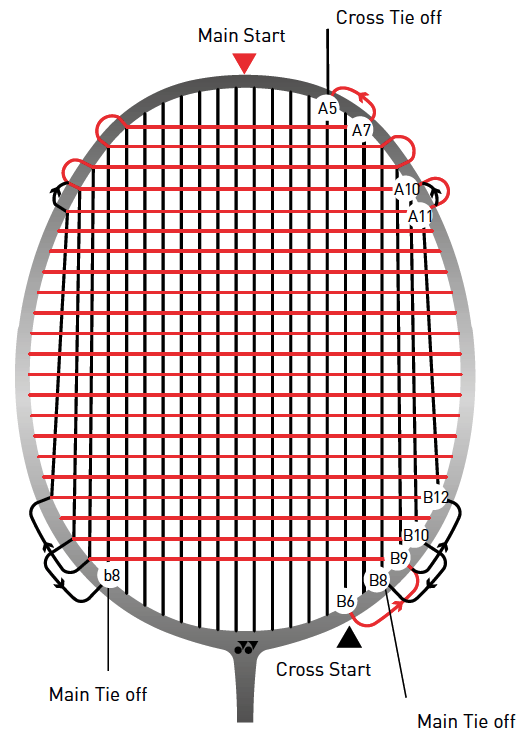
At its core, badminton stringing involves several key steps. First, the old strings are removed from the racquet. Then, the new strings are measured, cut, and prepared according to the desired tension and pattern. The strings are then woven through the racquet's string holes, pulled tight, and knotted to secure them in place.
The tension at which the strings are pulled is crucial. Higher tensions provide more control and precision, while lower tensions offer more power. The pattern in which the strings are woven also affects performance; a denser pattern offers more control, while a more open pattern increases power. A skilled stringer understands these variables and can adjust them to optimize the racquet for an individual player's style and preferences.
Key Benefits and Crucial Impact
Badminton stringing is not just a matter of replacing worn-out strings; it's a strategic process that can significantly enhance your gameplay. The impact of professional badminton stringing near me is multifaceted, catering to both recreational and competitive players.
"A well-strung racquet can make a world of difference in your badminton game, offering improved control, power, and feel."
Major Advantages
- Personalized Performance: Custom string tension and pattern tailored to your playing style, enhancing your natural abilities.
- Consistency: Regular stringing ensures your racquet performs predictably, shot after shot, game after game.
- Durability: Proper stringing increases the lifespan of your strings and racquet, saving you money in the long run.
- Injury Prevention: Correct tension reduces strain on your arm and wrist, lowering the risk of injury.
- Competitive Edge: For serious players, optimized stringing can provide a crucial advantage over opponents.

Comparative Analysis
| Aspect | Badminton Stringing | Tennis Stringing | Squash Stringing |
|---|---|---|---|
| String Material | Nylon, Polyester, Natural Gut | Nylon, Polyester, Natural Gut | Nylon, Polyester, Dynamic Gut |
| Tension Range | 20-30 lbs | 40-60 lbs | 25-40 lbs |
| String Pattern | Usually 16x19 or 17x16 | Varies widely | Typically 14x18 or 15x15 |
| Power vs. Control | Balanced, with emphasis on control | More power-oriented | More control-oriented |
Future Trends and Innovations
The world of badminton stringing is continually evolving, driven by advancements in materials science and a deeper understanding of biomechanics. New string materials, such as advanced polymers and composites, are offering unprecedented levels of performance and durability. Additionally, technological innovations like smart strings that provide real-time data on tension and wear are on the horizon.
As badminton continues to grow in popularity globally, the demand for specialized services like badminton stringing near me will increase. This trend will drive further innovation, making stringing services more accessible and tailored to individual players' needs. The future of badminton stringing looks bright, promising even more exciting developments to come.

Conclusion
Badminton stringing is an essential aspect of the sport, offering significant benefits to players of all levels. By understanding the history, mechanics, and advantages of this service, you can make informed decisions about your equipment and performance. Whether you're seeking badminton stringing near me or exploring the nuances of stringing for the first time, this guide provides a solid foundation for your journey.
As you step onto the court with a freshly strung racquet, you'll experience the difference that personalized stringing can make. From improved control and power to reduced injury risk and enhanced enjoyment of the game, the benefits are clear. So, don't underestimate the importance of badminton stringing – it could be the key to unlocking your full potential on the court.
Comprehensive FAQs
Q: How often should I get my badminton racquet strung?
A: The frequency of stringing depends on your playing habits. As a general guideline, casual players should consider stringing every 6-12 months, while more frequent players or those who break strings often may need to string more regularly, every 3-6 months.
Q: Can any local sports store handle badminton stringing near me?
A: Not all sports stores offer badminton stringing services. Look for stores that specialize in racquet sports or have staff with expertise in badminton. Specialized stringing services often have more advanced equipment and knowledge to provide optimal results.
Q: How much does badminton stringing cost?
A: The cost of badminton stringing varies based on factors like the type of string, desired tension, and the stringer's rates. On average, expect to pay between $15 and $50 per stringing. Higher-end strings and more complex jobs may incur additional charges.
Q: What are the signs that my badminton racquet needs stringing?
A: Look out for several signs: visible wear or fraying on the strings, a noticeable loss of power or control during gameplay, or a change in the racquet's sound when hitting the shuttlecock. If it's been over six months since your last stringing, it's also a good time to consider getting it done.
Q: How long does it take to string a badminton racquet?
A: The process typically takes around 30 minutes to an hour, depending on the stringer's experience and the complexity of the job. Some stringers may offer expedited services for an additional fee, but it's best to allow sufficient time for a quality job.
Leave a Comment
Comments are moderated before appearing. The data you submit is processed according to the Privacy Policy of stanford.edu.