
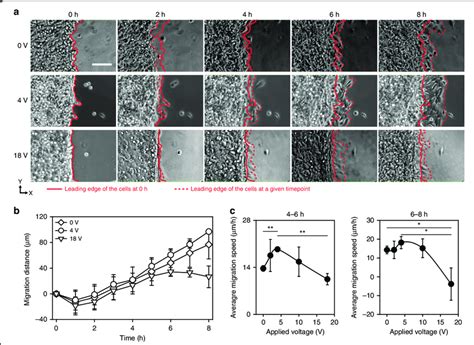
Acoustic Cell Migration is a rapidly evolving approach that uses precisely tuned acoustic waves to steer cells within microfluidic systems. By combining microfluidic cues with controlled sound fields, researchers can direct directional movement, enable label-free sorting, and study migratory behavior in real time. This article explains how acoustic strategies and microfluidic cues work together to drive migration with precision.
In practice, the migration is shaped by a balance of forces arising from the acoustic field and the device architecture. When designed thoughtfully, microfluidic cues such as channel geometry, flow profiles, and impedance gradients guide cells along predefined trajectories while the acoustic field provides an additional layer of directionality without requiring chemical labels or invasive interventions.
Understanding Acoustic Cell Migration Mechanisms
At the core of Acoustic Cell Migration are mechanisms like acoustic radiation force and acoustic streaming. Acoustic Cell Migration arises when standing or traveling waves create pressure nodes and antinodes that attract, repel, or guide cells along predictable paths. The resulting migratory pattern is tunable by adjusting frequency, amplitude, and the geometry of the microfluidic channel.
In microfluidic devices, the interplay between cell properties (size, compressibility, and viability) and the acoustic field determines how strongly cells respond. When the fluidic environment is optimized, cells migrate with directionality that can be tracked and analyzed, enabling new experiments in single-cell behavior and population-level dynamics.
Microfluidic Cues that Shape Acoustic Cell Migration
Channel width, obstacle layouts, and local impedances in the chip act as cues that cells respond to in concert with the acoustic field. For example, gradient acoustic fields can bias migration toward a target region, while arrays of microposts or carefully engineered flow profiles create preferred pathways. The combination of micromachined cues with adjustable acoustic parameters allows researchers to tailor migration for specific cell types and experimental goals.
This approach emphasizes gentle, non-contact manipulation, which helps maintain cell health and preserves functional properties for downstream assays. By pairing acoustic control with precise microfluidic design, researchers can achieve repeatable migration patterns across multiple experiments.
Key Points
- The migratory behavior in Acoustic Cell Migration is tunable by adjusting frequency and acoustic pressure while preserving cell viability.
- Microfluidic channel design provides directional cues that work in concert with the acoustic field to guide trajectories.
- Material choice and device impedance influence the efficiency and reproducibility of migration experiments.
- Real-time imaging and feedback enable dynamic modulation of movement patterns in response to cellular responses.
- This approach supports label-free sorting, single-cell analysis, and high-throughput studies in microfluidic platforms.
Applications and Practical Considerations
Applications span basic biology and translational research, including stem cell guidance, cancer cell behavior studies, and tissue engineering scaffolds. The combination of acoustic control and microfluidic cues enables experiments that probe migration mechanisms, measure response to mechanical stimuli, and sort cells without labels. While powerful, this approach requires careful calibration to prevent heating, ensure uniform field distribution, and maintain high cell viability across devices.
What is Acoustic Cell Migration and how do microfluidic cues influence it?
+Acoustic Cell Migration uses controlled acoustic fields to steer cells within microfluidic channels. Microfluidic cues—such as channel geometry, flow profiles, and impedance gradients—shape how cells perceive and respond to the sound field, enabling directional migration without chemical labels or invasive manipulation.
Which types of acoustic waves are used to drive migration in microfluidic devices?
+Researchers commonly use standing waves to create pressure nodes that guide cells and, in some cases, traveling waves to generate controlled streaming. The choice depends on the target cell type, device geometry, and the desired migration pattern, with frequency and amplitude carefully tuned to avoid heating or damage.
What are the main challenges when implementing Acoustic Cell Migration in microfluidics?
+Key challenges include achieving uniform acoustic fields across complex channel geometries, preventing thermal effects that can affect cell health, and translating migration patterns into robust, repeatable measurements. Device fabrication tolerances and material properties also influence impedance and field distribution.
How is migration efficiency quantified in these systems?
+Migration efficiency is typically quantified by tracking cell trajectories, displacement over time, and alignment with intended directions using live imaging. Metrics such as migration rate, path straightness, and the proportion of cells that reach a target region are common, often complemented by viability assays to ensure cell health.
What are potential applications of Acoustic Cell Migration in biology and medicine?
+Potential applications include label-free cell sorting for downstream analyses, controlled study of migration mechanisms in cancer and development, and integration into tissue engineering workflows where directional cell growth is beneficial. The technique offers a non-invasive approach to steer cells within microenvironments that mimic physiological conditions.