Unveiling the Speed: Converting 90 km to Miles Per Hour
In the realm of transportation and travel, understanding speed is crucial. Whether you're a pilot, a racecar driver, or simply planning a road trip, converting speeds between different units is essential. Today, we focus on a specific conversion: 90 kilometers to miles per hour. This seemingly simple task opens up a world of insights into how we measure and perceive speed.
As a global community, we use various units of measurement, often leading to confusion. The metric system, embraced by most countries, measures distance in kilometers, while the imperial system, still prevalent in the United States, relies on miles. This divergence makes converting speeds between the two a necessary skill for anyone navigating international waters, so to speak.
Converting 90 km to miles per hour is not merely a mathematical exercise; it has practical implications for safety, efficiency, and even environmental impact. Let's explore the historical background, the mechanics of the conversion, and its far-reaching effects.

The Complete Overview of 90 km to Miles Per Hour
Speed conversion is a fundamental concept in physics and engineering, crucial for understanding motion and travel. When we talk about converting 90 kilometers to miles per hour, we're essentially translating a speed measured in the metric system to its imperial counterpart.
This conversion is particularly relevant in today's interconnected world. With international travel and trade at an all-time high, professionals and enthusiasts alike must be adept at navigating different units of measurement. Whether you're a pilot planning a trans-Atlantic flight or a cyclist training for a cross-country race, mastering this conversion ensures accuracy and safety.
Historical Background and Evolution
The story of speed measurement is a fascinating journey through history. The kilometer, rooted in the French revolutionary system, was defined in 1795 as one thousandth of the distance from the North Pole to the Equator. Meanwhile, the mile, with its origins in Roman times, has evolved through various definitions over the centuries.
Table of Contents
- The Complete Overview of 90 km to Miles Per Hour
- Historical Background and Evolution
- Core Mechanisms: How It Works
- Key Benefits and Crucial Impact
- Major Advantages
- Comparative Analysis
- Future Trends and Innovations
- Conclusion
- Comprehensive FAQs
- Q: What is the exact conversion factor from kilometers per hour to miles per hour?
- Q: Why do we need to convert speeds between kilometers and miles?
- Q: How does accurate speed conversion impact the environment?
- Q: Are there any digital tools available for speed conversion?
- Q: What are some other common units of speed measurement?
The need for speed conversion became increasingly apparent with the advent of globalization and international travel. In the early 20th century, as aviation took off, pilots and navigators had to quickly adapt between kilometers and miles, often under high-pressure situations. This necessity led to the development of standardized conversion factors and tables, ensuring accuracy and safety in aviation and other industries.
Core Mechanisms: How It Works
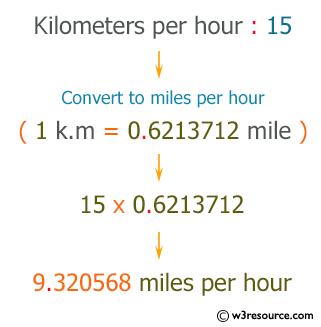
Converting 90 km to miles per hour involves a straightforward mathematical process. The basic formula for speed conversion between kilometers and miles is:
Speed in miles per hour = Speed in kilometers per hour × 0.621371
Applying this formula to our specific case:
90 km/h × 0.621371 ≈ 55.9234 mph
So, 90 kilometers per hour is approximately equal to 55.92 miles per hour. This conversion factor, 0.621371, is derived from the relationship between the two units, ensuring accuracy and consistency in calculations.
Key Benefits and Crucial Impact
The ability to convert 90 km to miles per hour offers more than just a numerical translation. It has significant practical implications across various fields.
Consider a trucking company operating across international borders. Accurate speed conversion is essential for optimizing fuel efficiency, managing delivery times, and ensuring driver safety. In aviation, pilots rely on precise speed measurements to navigate different airspaces, each with its own unit preferences.
"The universal language of science is mathematics, but the universal language of understanding is conversion."
Major Advantages
- Global Communication: Facilitates seamless communication between professionals and enthusiasts worldwide, breaking down language and unit barriers.
- Safety: Ensures accurate speed calculations in critical situations, such as aviation and maritime navigation, where errors can have severe consequences.
- Efficiency: Helps optimize travel times, fuel consumption, and logistics planning in industries like transportation and supply chain management.
- Environmental Impact: Accurate speed conversion can contribute to reducing carbon footprints by optimizing fuel efficiency in various modes of transport.
- Educational Value: Teaches valuable lessons in mathematics, physics, and cultural understanding, fostering a more globally aware society.
Comparative Analysis
| Unit | Definition | Conversion Factor (km/h to mph) |
|---|---|---|
| Kilometer per hour (km/h) | Standard metric unit of speed | 0.621371 mph per km/h |
| Mile per hour (mph) | Standard imperial unit of speed | 1.60934 km/h per mph |
| Meter per second (m/s) | SI unit of speed, often used in scientific contexts | 3.6 km/h per m/s or 2.23694 mph per m/s |
| Knot (kt) | Unit of speed used primarily in maritime and aviation contexts | 1.852 km/h per kt or 1.15078 mph per kt |
Future Trends and Innovations
As technology advances, the way we measure and convert speed is evolving. Modern GPS devices and digital navigation systems automatically convert speeds between kilometers and miles, making international travel more accessible and safer.
In the future, we can expect further integration of advanced conversion algorithms in everyday technologies. This will not only simplify speed conversion but also open up new possibilities for data analysis and efficiency optimization in transportation and logistics. Additionally, as the world moves towards more sustainable transportation solutions, accurate speed conversion will play a crucial role in minimizing environmental impact.

Conclusion
Converting 90 km to miles per hour is more than a simple mathematical exercise; it's a gateway to understanding and navigating our interconnected world. From historical roots to modern applications, this conversion has evolved to become an essential tool for professionals and enthusiasts alike.
As we embrace globalization and technological advancements, mastering speed conversions ensures we can communicate, travel, and innovate effectively across borders. Whether you're a pilot, a driver, or simply curious about the world around you, understanding the mechanics and implications of this conversion empowers you to embrace the universal language of speed.
Comprehensive FAQs
Q: What is the exact conversion factor from kilometers per hour to miles per hour?
A: The exact conversion factor is 0.621371 miles per hour for every kilometer per hour.
Q: Why do we need to convert speeds between kilometers and miles?
A: Speed conversion is essential for global communication, safety, and efficiency in various industries, especially in international travel, aviation, and transportation.
Q: How does accurate speed conversion impact the environment?
A: Precise speed conversion can contribute to reducing carbon emissions by optimizing fuel efficiency in vehicles, aircraft, and ships.
Q: Are there any digital tools available for speed conversion?
A: Yes, modern GPS devices, navigation systems, and online converters make speed conversion between kilometers and miles quick and accurate.
Q: What are some other common units of speed measurement?
A: Besides kilometers per hour and miles per hour, other common units include meters per second (m/s) and knots (kt), each with its specific applications in science, aviation, and maritime industries.
Leave a Comment
Comments are moderated before appearing. The data you submit is processed according to the Privacy Policy of stanford.edu.