Understanding 400 km per hour in miles: A Comprehensive Exploration
In a world where distance and speed are universally measured, the conversion between kilometers and miles is a common necessity. When we talk about 400 km per hour in miles, we're not merely translating a number; we're navigating the intersection of different measurement systems, each with its own history and application.
This conversion is particularly relevant in an era of global travel and communication. Whether it's the speed of a high-speed train, an aircraft, or even data packets in the digital realm, understanding how these measurements equate ensures clarity and safety. For instance, knowing that 400 kilometers per hour translates to approximately 248.55 miles per hour can be crucial in aviation or automotive contexts.
Moreover, this conversion highlights the ongoing dialogue between the metric system, widely adopted globally, and the imperial system, predominantly used in the United States. As technology and transportation continue to advance, so does the importance of seamless conversions between these systems.

The Complete Overview of 400 km per hour in miles
The conversion of 400 kilometers per hour to miles per hour is a straightforward process, but its implications are far-reaching. This conversion is essential in various sectors, from transportation and aviation to technology and logistics. Understanding this equivalence ensures that speed limits are adhered to, travel times are accurately estimated, and safety measures are appropriately applied.
In the realm of transportation, whether it's high-speed trains in Europe or bullet trains in Japan, knowing the equivalent speed in miles per hour is vital for infrastructure design, safety regulations, and passenger information. Similarly, in aviation, where speed is critical, pilots and air traffic controllers must be fluent in both measurement systems to ensure safe and efficient air travel.
Historical Background and Evolution
The metric system, based on kilometers, was introduced in the late 18th century as a standardized system of measurement. It was designed to be a universal language of numbers, free from the complexities and inconsistencies of local systems. The kilometer, as a unit of length, was defined in 1795 as one thousand meters, and its corresponding speed unit, kilometers per hour, soon followed.
Table of Contents
- The Complete Overview of 400 km per hour in miles
- Historical Background and Evolution
- Core Mechanisms: How It Works
- Key Benefits and Crucial Impact
- Major Advantages
- Comparative Analysis
- Future Trends and Innovations
- Conclusion
- Comprehensive FAQs
- Q: What is the exact conversion factor from kilometers per hour to miles per hour?
- Q: Why are there different measurement systems for speed?
- Q: In which contexts is it crucial to convert speeds accurately?
- Q: How do modern technologies handle speed conversions?
- Q: What are the future implications of speed conversions as technology advances?
In contrast, the mile, rooted in ancient Roman and English systems, has a longer and more complex history. The statute mile, consisting of 5,280 feet or 1,760 yards, was established in the 16th century and has remained the standard unit of distance and speed in the United States and a few other countries. The introduction of miles per hour as a speed measurement naturally followed this established distance metric.
The need for conversion between these systems became evident as global trade and travel increased. In the mid-20th century, with the advent of the automobile and aviation industries, the necessity for a common language of speed became increasingly pressing. This led to widespread adoption of conversion factors and calculators, ensuring that speeds could be accurately translated from kilometers per hour to miles per hour and vice versa.
Core Mechanisms: How It Works
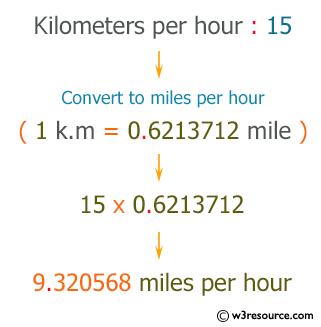
Converting 400 kilometers per hour to miles per hour involves a simple mathematical calculation. Given that 1 kilometer is approximately equal to 0.621371 miles, the conversion factor for speed is derived from this ratio. To convert kilometers per hour to miles per hour, you multiply the speed in kilometers per hour by 0.621371.
For 400 kilometers per hour: 400 km/h × 0.621371 ≈ 248.55 miles per hour. This conversion is used extensively in GPS devices, mapping applications, and vehicle speedometers to provide drivers and travelers with information they can easily understand, regardless of their preferred measurement system.
Key Benefits and Crucial Impact
The ability to convert speeds between kilometers per hour and miles per hour offers several significant advantages:
"The metric system... has the potential to simplify many aspects of international commerce, science, and technology."
Major Advantages
- Standardization: A common language of speed facilitates international cooperation and trade, ensuring that all parties involved are working with the same understanding of speed measurements.
- Safety: In transportation and aviation, accurate speed conversion is critical for safety. Pilots, drivers, and regulators must be able to quickly translate speeds to ensure compliance with limits and to make timely decisions.
- Efficiency: In logistics and supply chain management, converting speeds allows for better planning and optimization of delivery times, especially in international operations.
- Education and Awareness: Understanding the relationship between kilometers per hour and miles per hour promotes a broader comprehension of global measurement systems, fostering scientific and mathematical literacy.
- Technological Integration: Modern technologies, from GPS devices to online mapping platforms, rely on seamless speed conversions to provide users with accurate and understandable information.

Comparative Analysis
| Measurement System | Speed (400 km/h) |
|---|---|
| Kilometers per hour | 400 km/h |
| Miles per hour | 248.55 mph |
| Knots (nautical miles per hour) | 216.37 knots |
| Metres per second | 110.67 m/s |
Future Trends and Innovations
As technology continues to advance, the conversion between kilometers per hour and miles per hour will become even more integral to various industries. With the rise of autonomous vehicles, hyperloop transportation systems, and high-speed rail networks, accurate speed measurements and conversions will be essential for safety, efficiency, and regulatory compliance.
Moreover, the increasing integration of artificial intelligence and machine learning in transportation and logistics will further emphasize the need for seamless conversions. Automated systems must be able to process and translate speeds in real-time, ensuring that vehicles and infrastructure operate harmoniously within different measurement systems.
Conclusion
The conversion of 400 km per hour to miles per hour is more than a simple mathematical exercise; it represents the intersection of different measurement systems and their global applications. As the world continues to shrink through advancements in transportation and communication, the ability to translate speeds accurately will remain a critical component of safety, efficiency, and international cooperation.
From the historical evolution of measurement systems to the technological innovations of today, the need for conversion between kilometers per hour and miles per hour is undeniable. As we look to the future, this conversion will only become more ingrained in our daily lives, shaping how we travel, work, and interact on a global scale.
Comprehensive FAQs
Q: What is the exact conversion factor from kilometers per hour to miles per hour?
A: The exact conversion factor is 0.621371 miles per kilometer. To convert 400 kilometers per hour to miles per hour, multiply 400 by this factor: 400 km/h × 0.621371 ≈ 248.55 mph.
Q: Why are there different measurement systems for speed?
A: The use of different measurement systems for speed, such as kilometers per hour and miles per hour, is primarily due to historical and cultural reasons. The metric system, based on kilometers, was developed in the late 18th century as a standardized system, while the mile, with its roots in ancient Roman and English systems, has been used for centuries in certain regions, particularly in the United States.
Q: In which contexts is it crucial to convert speeds accurately?
A: Accurate speed conversion is critical in various contexts, including transportation (especially high-speed trains and aviation), logistics and supply chain management, and technological applications such as GPS and mapping software. In these areas, incorrect conversions could lead to safety hazards, inefficiencies, and misunderstandings.
Q: How do modern technologies handle speed conversions?
A: Modern technologies, including GPS devices, mapping applications, and vehicle speedometers, use built-in conversion algorithms to translate speeds between kilometers per hour and miles per hour. These conversions are often performed in real-time, ensuring that users receive accurate and understandable information regardless of their location or preferred measurement system.
Q: What are the future implications of speed conversions as technology advances?
A: As technology advances, particularly in the fields of transportation and logistics, the need for accurate speed conversions will become even more pronounced. Autonomous vehicles, hyperloop systems, and advanced air mobility concepts will rely on seamless conversions between kilometers per hour and miles per hour to ensure safety, efficiency, and regulatory compliance in a globalized environment.
Leave a Comment
Comments are moderated before appearing. The data you submit is processed according to the Privacy Policy of stanford.edu.